
Theopolis Logo

Writing

Explore our collection of theological essays, biblical studies, and reflections on faith and culture.

See all
giammarco-zeh-ljawhtg-unsplash
Biblical Horizons

OPEN BOOK: Views and Reviews

Isaac E. Mozeson, The Word: The Dictionary that Reveals the Hebrew Sources of English (Northvale, NJ: Jacob Aaronson Inc., 1995), 310 pp. Reviewed by James B. Jordan. Once there was only one language in the world, the language God spoke to Adam. At the Tower of Babel, there came to…

by James B. JordanJune 28, 1996
tim-wildsmith-j6jv-mkdzqs-unsplash
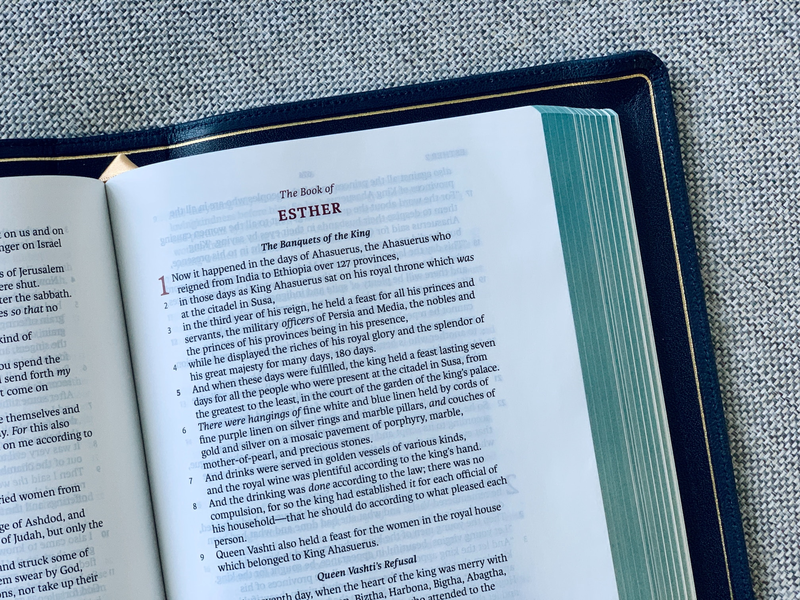
Esther

Esther: Historical & Chronological Comments (IV)

2. The Setting of the Book of Esther A. Xerxes (continued from previous issue) Ezra 6:14 says that the Jews finished building "according to the command of the God of Israel and the decree of Cyrus and Darius and Artaxerxes king of Persia." The problem with this verse is that…

by James B. JordanJune 28, 1996
ales-krivec-4mibe6zg5r0-unsplash
Acts

Jesus and Amalek

This essay goes with our previous study of the Amalek pattern back in Biblical Horizons No. 2. Since many do not have this essay, entitled "The Battle of Gog and Magog," let me cite the relevant paragraphs: Note in Genesis 12-15 that Abram moves into the land after escaping Pharaoh…

by James B. JordanJune 28, 1996
aaron-burden-1ebsmyrau-s-unsplash
Proverbs

The Strange Woman

Proverbs 7:6-23 is one of several passages early in the Proverbs in which Solomon warns his son about the wiles and dangers of the "strange woman." It is certainly quite proper to take these as straightforward warnings against sexual sins, and these are certainly warnings that need to be impressed…

by Peter LeithartJune 27, 1996
jan-kahanek-g3o5ztrk2e4-unsplash
Biblical Studies

Some Observations

1. In Luke 4:20 we read that after Jesus finished reading from Isaiah, "the eyes of all in the synagogue were fixed upon Him." This is usually taken in a psychological sense: They were amazed at Jesus somehow. I suggest that, as always, a merely psychological reading is a modern…

by James B. JordanMay 28, 1996
tim-wildsmith-j6jv-mkdzqs-unsplash
Esther

Esther: Historical & Chronological Comments (III)

2. The Setting of the Book of Esther Up to now we have assumed what we must prove, that the king in Esther is Darius the Great. While Biblical chronologists have usually taken this position, commentators on the book of Esther have often taken others as the king. One view,…

by James B. JordanMay 28, 1996

Showing page 265 of 309

See all

Showing page 37 of 43

See all
History

Tensions of Modernity

Whitney (the book is Francis Bacon and Modernity , Yale, 1986) offers some additional meditations on the meaning of “modern” particularly as it relates to Bacon. He defines modernity in terms of the tension between innovation and tradition, the frustration that arises from the revolutionary’s effort to start afresh and…

August 29, 2006
History

Revolutionary Reform

Whitney on Bacon again: “Reform invites analogy and multiple levels of meaning as it variously connects old and new; it exposes the poverty of brute facts by, for one thing, fixing knowledge in a hierarchy of literary kinds or genres. Reformative visions in history grow in part out of biblical…

August 29, 2006
History

Bacon the Prophet

In his defense of the legitimacy of the modern age, Hans Blumenberg attempts to pry apart the legitimate kernel ideas of modernity from the illegitimate, mostly medieval and superstitious, husks by which the kernel ideas were often expressed. Whether this works for any early modern thinker, it does not work,…

August 29, 2006
History

Honor in Therapeutic culture

Bowman examines a scene from The Sopranos where John “Johnny Sack” Sacramoni seeks permission, from Tony Soprano among others to “clip” Ralph Cifaretto for jokingly insulting his wife’s weight, which has done damage to her “body image, self esteem.” None of his superiors will bite, and Bowman notes that the…

August 28, 2006
History

Honor and the Right

There’s a scene in Malory where Launcelot has been caught in Guenevere’s bedroom by his enemies, Aggravayne and Mordred, and in the ensuing altercation Launcelot kills 14 knights, all but Mordred, who is wounded. Summoned to appear before Arthur, Launcelot still protests his innocence: “Those who told you such tales…

August 28, 2006
Philosophy

Virtue and Violence

Mandeville made explicit the connection between violence and ancient virtue that Milbank and others have commented on: “The Word Moral, without Doubt, comes from Mos, and signifies every Thing that relates to Manners: The Word Ethick is synonimous with Moral, and is derived from [Greek: ithik], which is exactly the…

August 28, 2006

Showing page 1802 of 2212

Browse by Category

In Medias Res

Your weekly digest for all things Theopolis.

Donate

Theopolis is nearly 100% donor-supported. Consider joining us on our mission.