Theopolis Logo

Writing

Explore our collection of theological essays, biblical studies, and reflections on faith and culture.

See all
tanner-mardis-xuxghzhibn4-unsplash-1-2
Biblical Studies

Tweets-turned-Notes on the Bible’s Chronology

Summary In what follows, I will consider the “year-stamps” employed in Scripture, i.e., statements of the form, “Such-and-such an event took place in the Xth year of Y.” In the process, I will suggest some ways in which the Biblical narrative might relate to events in the extra-Biblical world, though…

by James BejonJuly 16, 2019
durer-prodigal-son-2
Luke

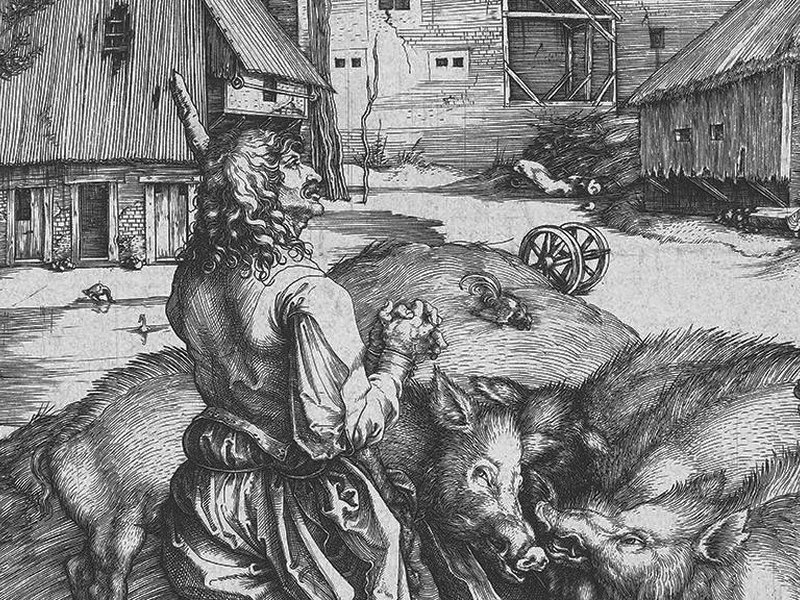
Perspectives on the Prodigal, (Part 2)

In the first essay on the parable of the Prodigal Son, I suggested that the problems commentators and others encounter in interpreting Jesus three-part parable are not accidental. These are not just problems in our ignorance of cultural background. They are intentional features of the stories —stories designed to poke…

by Ralph Allan SmithJuly 11, 2019
durer-prodigal-son-2
Luke

Perspectives on the Prodigal, (Part 1)

The story of the Prodigal Son is perhaps the most well-known story in the Bible. As others have observed, it may also be one of the most misunderstood. In two short essays, I will point out features of this story that are commonly neglected, aspects of Jesus’ parable that might…

by Ralph Allan SmithJuly 9, 2019
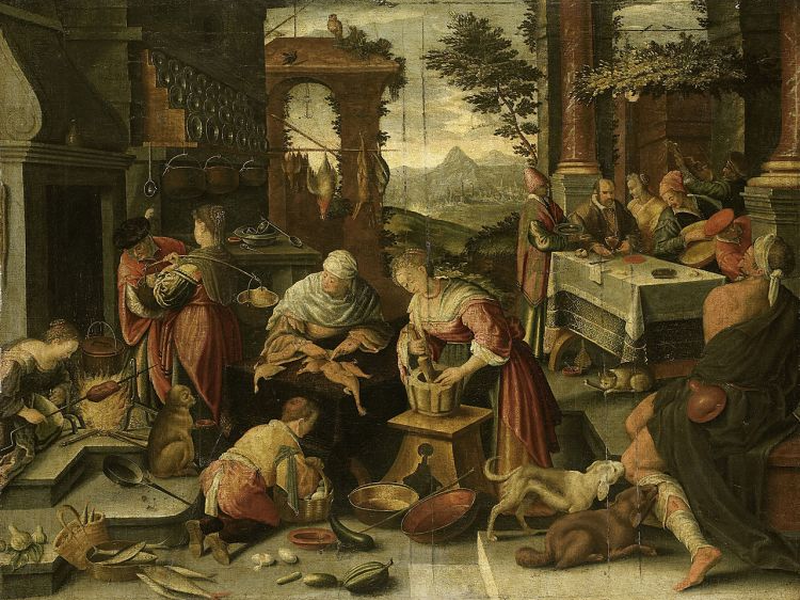
de-rijke-man-en-de-arme-lazarus-by-jacopo-da-ponte-16th-century
Luke

Lazarus and the Rich Man

The parable of Lazarus and the nameless rich man is not an independent story. It is part of a long context that begins in Luke 15:1, where Jesus is eating with tax collectors and sinners and the scribes and Pharisees grumble. In response to their hardheartedness, Jesus tells a three-part…

by Ralph Allan SmithJuly 4, 2019
aaron-burden-uynrnfdkjwg-unsplash
Luke

Everybody has Dropsy - Luke 14:1-24

The Bible is written so that even when a reader cannot pick up on what might be deeper or more detailed aspects of a text, there is virtually always a message to be heard. In the ancient world, where the “reader” of Scripture would likely be a church official facing…

by Ralph Allan SmithJuly 2, 2019
communion
Biblical Theology

Fruit Trees and Grain Plants

The distinction between garden (or vineyard) and field begins in Genesis 2. This relates to the ordering of the formless world. Plants of the field are contrasted with the garden planted by God in Genesis 2:5&8. Later on, under the Old Covenant the Israelites will be required to keep their…

by James B. JordanJune 27, 2019

Showing page 77 of 309

See all

Showing page 37 of 43

See all
History

Nature/Supernature in Luther

According to Oberman, “Luther’s critique of Aristotle concerns the disregard of that fundamental nominalist axioma , the demarcation line between the realms of reason and faith. Provided that this distinction is respected, Aristotle is not merely useful but indeed to be respected. In a Latin sermon probably preached to the…

May 4, 2006
Theology

Person v. Being

Oberman sees a crucial shift in late medieval theology from God as being to God as person, and sees Luther as both heir and critic of the late medieval theology proper. Without the earlier shift, “the Reformation breakthrough would be inconceivable,” but this does not mean that there is “unbroken…

May 4, 2006
History

Plague and Theology

Oberman again: “The experience of the [bubonic] plague may in fact help us understand the fifteenth-century ascendency of nominalism, its innovations in the whole field ranging from theology to science, and its successful invasion of schools and universities, where it was firmly established as the via moderna . What must…

May 4, 2006
History

Cultural history and religion

Heiko Oberman notes the impact of cultural history in his posthumously published book, The Two Reformations : “By moving from established politicla history to cultural and mentality studies, historians reestablished the crucial importance of religion, although they frequently marginalized it under the misleading category of popular religion . . .…

May 4, 2006

Proverbs 14:8-15

INTRODUCTION Waltke points to links between verses 8-9 and verses 1-2 of the same chapter: Wisdom and folly are contrasted in verses 1 and 8; the image of the “way” is used in both verses; and the term “upright” appears in verse 2 and 9. These links suggests that verses…

May 4, 2006
Theology

Simmel, Faithfulness and Gratitude

Notes on Georg Simmel, “Faithfulness and Gratitude,” printed in Kurt H. Wolff, The Sociology of Georg Simmel (Free Press, 1950). 1) Simmel describes faithfulness as “the inertia of the soul.” Less impressionistically, faithfulness is “the peculiar feeling which is not directed toward the possessor’s eudaemonistic good, nor toward the other’s…

May 3, 2006

Showing page 1846 of 2212

Browse by Category

In Medias Res

Your weekly digest for all things Theopolis.

Donate

Theopolis is nearly 100% donor-supported. Consider joining us on our mission.