Theopolis Logo

Writing

Explore our collection of theological essays, biblical studies, and reflections on faith and culture.

See all
aaron-burden-qjdzyt_k8xg-unsplash
Federal Vision

Justification by Union with Christ Only Through Living Faith

A Brief Comparison of Calvin’s Institutes with the Westminster Confession and Catechisms regarding the shape of imputation This essay is a brief argument that the soteriology of John Calvin in his Institutes of the Christian Religion regarding union with Christ and the imputation of his righteousness is the same as…

by Mark HorneJune 5, 2003

ben-white-mo9vkbg5csg-unsplash
Baptism

Some Thoughts on the Means of Grace: A Few Proposals

The thoughts in this paper were largely prompted by a study of Walter E. Krebs, “The Word and the Sacraments,” Mercersburg Review (July, 1867), 366-383. The discussion in this paper presupposes my earlier studies of baptism, “Baptismal Efficacy and the Reformed Tradition: Past, Present, and Future” and “Calvin on Baptism,…

by Rich LuskJune 3, 2003
aaron-burden-qjdzyt_k8xg-unsplash
Baptism

Faith, Baptism, & Justification

Sometimes our systematic theology creates an illusion of precision. For example, we distinguish the ground and instrument of justification. Justification is grounded in Christ’s work alone, and is instrumentally received by faith alone. That makes good sense and guards us from thinking that faith itself is somehow meritorious. All the…

by Rich LuskJune 1, 2003
todd-cravens-g2pdilavgcy-unsplash
Covenant

DO THIS AS MY MEMORIAL: Understanding How the Lord’s Supper Reminds God to Keep Covenant

Whenever we participate in the Sacrament of the Eucharist, we remember Christ and His Work for us. We remember. And in remembering, we imitate God, as His creatures made after His image. God remembers. This is mysterious to us because we usually think of remembering in the context of our…

by Mark HorneMay 30, 2003
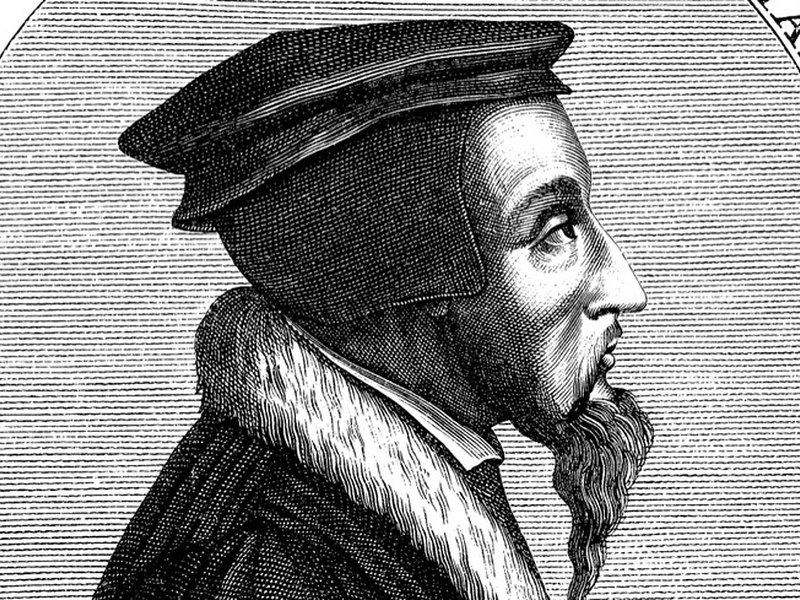
24542-cropped-john-calvin
Baptism

Calvin & the Efficacy of Infant Baptism

It is standard in paedobaptist circles to argue for the baptism of infants out of the Old Covenant system. Because there is no explicit command in the New Testament, we are left to the broader principles and patterns of Scripture. In the Old Covenant, we continually find that the children…

by Rich LuskMay 30, 2003
sixteen-miles-out-d40gdcd_-he-unsplash
Biblical Theology

Why the Law/Gospel Paradigm is Flawed

Luther popularized the law/gospel hermeneutic. Luther argued that any demands God made upon us fell into the category of “law” and could only condemn. By contrast, anything God gave us was “gospel” and came with no strings attached. Calvin paid lip service to this law/gospel antithesis, even though it was…

by Rich LuskMay 29, 2003

Showing page 232 of 309

See all

Showing page 37 of 43

See all
History

Modernity and antiquity

Kumar suggests that “some of the principal hall-marks of modernity” are already evident in the Christian notions of time and history. Both Christianity and modernity separate time from nature, and humanize time; time is seen by both as “linear and irreversible”; both see history as an Aristotelian drama with beginning,…

February 24, 2006
History

First Modernity

The Latin modernus was coined in the late fifth century, as an antonym to antiquus , and variations of modernus became particularly common after the 10th century. Thus, Krishan Kumar writes, “Modernity is . . . an invention of the Christian Middle Ages,” and was used to emphasize the radical…

February 24, 2006
Philosophy

Computer Communications and the Self

Poster lists four effects that computer communications (email, chat groups, etc) have on the self: “1 they introduce new possibilities for playing with identities; 2 they degender communications by removing gender cues; 3 they destabilize existing hierarchies in relationships and re-hierarchize communications according to criterio that were previously irrelevant; and…

February 24, 2006
Philosophy

Computers, subjects and objects

Descartes famously contrasted the mind (res cogitans) with the external world (res extensa), but Mark Poster suggests that computer writing fudges that distinction: “the computer dematerializes the written trace. As inputs are made to the computer through the keyboard, pixels of phosphor are illuminated on the screen, pixels that are…

February 24, 2006
Media

Community and New Communications

Mark Poster points to a tension between the modern institutions of production and the postmodern technologies of communication, particularly as they impact the formation of the self: “If modernity or the mode of production signifies patterned practices that elicit identities as autonomous and (instrumentally) rational, postmodernity or the mode of…

February 24, 2006
Media

Telephone

Prior to World War I, Telefon Hirmondo, the telephone system of Budapest, was used as a broadcast system, with a published schedule of programs that were restricted to certain classes of people in Hungary. Only later did it develop into a communications system in which everyone could pass information to…

February 24, 2006

Showing page 1878 of 2212

Browse by Category

In Medias Res

Your weekly digest for all things Theopolis.

Donate

Theopolis is nearly 100% donor-supported. Consider joining us on our mission.