Theopolis Logo

Writing

Explore our collection of theological essays, biblical studies, and reflections on faith and culture.

See all
tanner-mardis-xuxghzhibn4-unsplash-1-2
Biblical Studies

Tweets-turned-Notes on the Bible’s Chronology

Summary In what follows, I will consider the “year-stamps” employed in Scripture, i.e., statements of the form, “Such-and-such an event took place in the Xth year of Y.” In the process, I will suggest some ways in which the Biblical narrative might relate to events in the extra-Biblical world, though…

by James BejonJuly 16, 2019
durer-prodigal-son-2
Luke

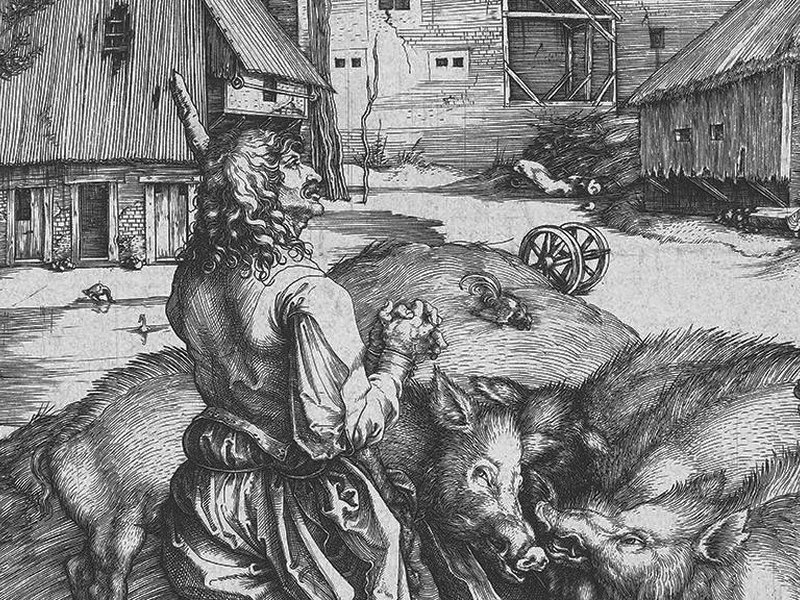
Perspectives on the Prodigal, (Part 2)

In the first essay on the parable of the Prodigal Son, I suggested that the problems commentators and others encounter in interpreting Jesus three-part parable are not accidental. These are not just problems in our ignorance of cultural background. They are intentional features of the stories —stories designed to poke…

by Ralph Allan SmithJuly 11, 2019
durer-prodigal-son-2
Luke

Perspectives on the Prodigal, (Part 1)

The story of the Prodigal Son is perhaps the most well-known story in the Bible. As others have observed, it may also be one of the most misunderstood. In two short essays, I will point out features of this story that are commonly neglected, aspects of Jesus’ parable that might…

by Ralph Allan SmithJuly 9, 2019
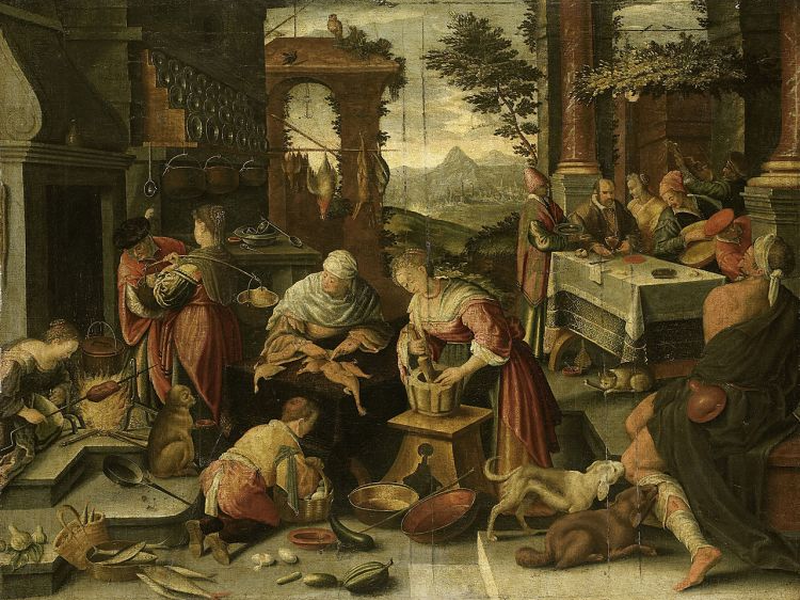
de-rijke-man-en-de-arme-lazarus-by-jacopo-da-ponte-16th-century
Luke

Lazarus and the Rich Man

The parable of Lazarus and the nameless rich man is not an independent story. It is part of a long context that begins in Luke 15:1, where Jesus is eating with tax collectors and sinners and the scribes and Pharisees grumble. In response to their hardheartedness, Jesus tells a three-part…

by Ralph Allan SmithJuly 4, 2019
aaron-burden-uynrnfdkjwg-unsplash
Luke

Everybody has Dropsy - Luke 14:1-24

The Bible is written so that even when a reader cannot pick up on what might be deeper or more detailed aspects of a text, there is virtually always a message to be heard. In the ancient world, where the “reader” of Scripture would likely be a church official facing…

by Ralph Allan SmithJuly 2, 2019
communion
Biblical Theology

Fruit Trees and Grain Plants

The distinction between garden (or vineyard) and field begins in Genesis 2. This relates to the ordering of the formless world. Plants of the field are contrasted with the garden planted by God in Genesis 2:5&8. Later on, under the Old Covenant the Israelites will be required to keep their…

by James B. JordanJune 27, 2019

Showing page 77 of 309

See all

Showing page 37 of 43

See all
Literature

Bardolater

Coleridge wrote, “Shakespeare knew the human mind; and its most minute and intimate workings, and he never introduces a word, or a thought, in vain or out of place: if we do not understand him, it is our own fault or the fault of copyists and typographers; but study, and…

January 18, 2006

Good Company

If Pascal were alive today, he would have a blog. Jonathan Edwards too.

January 18, 2006
History

Rise of Psychology

A thesis, which may prove, when the actual evidence is examined, to be wholly wrong: The thesis: Psychology and its related disciplines do not arise from clinical study or laboratory research, but as a branch of literary criticism. Evidence (extremely thin): Coleridge was the first to use the phrase “psycho-analytic.”…

January 17, 2006

Sermon Outline, Third Sunday After Epiphany

INTRODUCTION How are we to live in this world of vapor? Solomon tells us again and again to rejoice (e.g., 5:19-20), and implies that this joy comes in community with others. That theme of community is explicit in chapter 4, as Solomon reflects on the evils that destroy neighborliness and…

January 16, 2006
Philosophy

The Hebraism of Postmodernism, 2

James Smith offers this summary of one strand of Derrida’s essay, “Violence and Metaphysics”: “since philosophy is ‘primarily Greek,’ ‘it would not be possible to philosophize, or to speak philosophically, outside this medium.’ . . . But could one conceive philosophy otherwise? This, Derrida will show, is precisely what Levinas…

January 12, 2006
Philosophy

Theology and the Decentered self

Questioning the “self-present” ego did not begin with postmodern skeptics. Pascal already raised the question, what is the ego? and answered, “Suppose a man puts himself at a window to see those who pass by. If I pass by, can I say that he placed himself there to see me?…

January 12, 2006

Showing page 1899 of 2212

Browse by Category

In Medias Res

Your weekly digest for all things Theopolis.

Donate

Theopolis is nearly 100% donor-supported. Consider joining us on our mission.