
Theopolis Logo

Writing

Explore our collection of theological essays, biblical studies, and reflections on faith and culture.

See all
giammarco-zeh-ljawhtg-unsplash
Biblical Horizons

OPEN BOOK: Views and Reviews

Isaac E. Mozeson, The Word: The Dictionary that Reveals the Hebrew Sources of English (Northvale, NJ: Jacob Aaronson Inc., 1995), 310 pp. Reviewed by James B. Jordan. Once there was only one language in the world, the language God spoke to Adam. At the Tower of Babel, there came to…

by James B. JordanJune 28, 1996
tim-wildsmith-j6jv-mkdzqs-unsplash
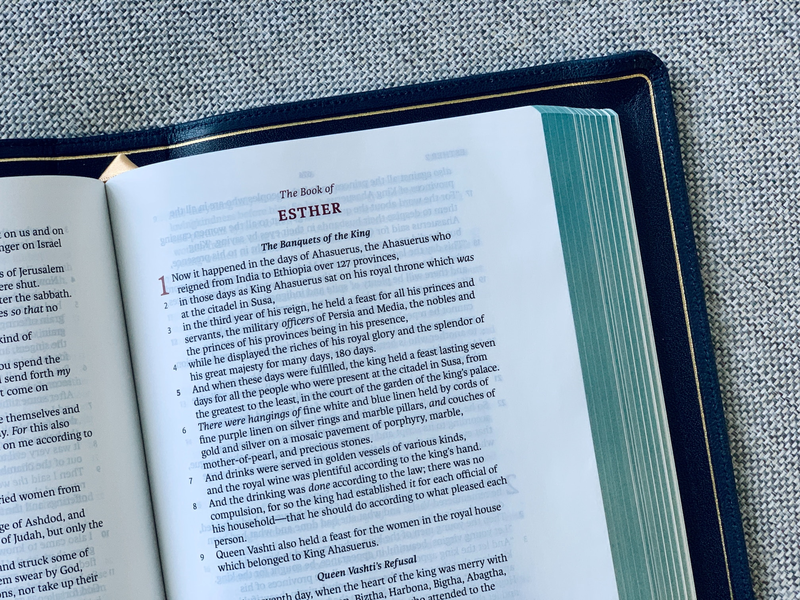
Esther

Esther: Historical & Chronological Comments (IV)

2. The Setting of the Book of Esther A. Xerxes (continued from previous issue) Ezra 6:14 says that the Jews finished building "according to the command of the God of Israel and the decree of Cyrus and Darius and Artaxerxes king of Persia." The problem with this verse is that…

by James B. JordanJune 28, 1996
ales-krivec-4mibe6zg5r0-unsplash
Acts

Jesus and Amalek

This essay goes with our previous study of the Amalek pattern back in Biblical Horizons No. 2. Since many do not have this essay, entitled "The Battle of Gog and Magog," let me cite the relevant paragraphs: Note in Genesis 12-15 that Abram moves into the land after escaping Pharaoh…

by James B. JordanJune 28, 1996
aaron-burden-1ebsmyrau-s-unsplash
Proverbs

The Strange Woman

Proverbs 7:6-23 is one of several passages early in the Proverbs in which Solomon warns his son about the wiles and dangers of the "strange woman." It is certainly quite proper to take these as straightforward warnings against sexual sins, and these are certainly warnings that need to be impressed…

by Peter LeithartJune 27, 1996
jan-kahanek-g3o5ztrk2e4-unsplash
Biblical Studies

Some Observations

1. In Luke 4:20 we read that after Jesus finished reading from Isaiah, "the eyes of all in the synagogue were fixed upon Him." This is usually taken in a psychological sense: They were amazed at Jesus somehow. I suggest that, as always, a merely psychological reading is a modern…

by James B. JordanMay 28, 1996
tim-wildsmith-j6jv-mkdzqs-unsplash
Esther

Esther: Historical & Chronological Comments (III)

2. The Setting of the Book of Esther Up to now we have assumed what we must prove, that the king in Esther is Darius the Great. While Biblical chronologists have usually taken this position, commentators on the book of Esther have often taken others as the king. One view,…

by James B. JordanMay 28, 1996

Showing page 265 of 309

See all

Showing page 37 of 43

See all
Philosophy

More Reflections on Postmodernism

Back to reflections on post-modernism: It seems that Freud, not Nietzsche, is the really grandfather of the movement, though, not unexpectedly, some sons and grandsons efface his memory and resist his influence (not all, of course).

October 28, 2003
History

Courtly Love

On courtly love: The basic shift is from the ancient and early medieval view that eros sapped and vitiated virtus to a belief that eros was a condition of the possibility of virtus and valor. This is, as Lewis said, a seismic shift in sensibility, one that we still do…

October 28, 2003

Structure of Romans 1:16ff.

Jouette Bassler’s 1984 article “Divine Impartiality in Romans” ( Novum Testamentum ) present structural arguments for saying that the section beginning in Rom 1:16-18 runs through the middle of chapter 2. This is evident from the repetition of the verb prasso in 1:32 and again in 2:1-3; thus the center…

October 28, 2003
Philosophy

Postmodernism and the ’60s

It’s not at all accidental that postmodernism takes its rise in the mid-1960s. Bloom wrote the first draft of the anxiety of influence in 1967, and revised it over several years before its initial publication in 1973. Derrida’s annus miraibilis was 1967, which saw the publication of Speech and Phenomena…

October 28, 2003
Philosophy

Postmodernism and the ’60s

It’s not at all accidental that postmodernism takes its rise in the mid-1960s. Bloom wrote the first draft of the anxiety of influence in 1967, and revised it over several years before its initial publication in 1973. Derrida’s annus miraibilis was 1967, which saw the publication of Speech and Phenomena…

October 28, 2003
Philosophy

Murder of Father

Turns out that Harold Bloom’s “anxiety of influence” is just another variation on the same set of themes that Derrida is obsessed with — the son’s murder of the father. For Bloom, the son is the “strong poet” who resists the influence of his predecessor/father in order to carve out…

October 28, 2003

Showing page 2176 of 2212

Browse by Category

In Medias Res

Your weekly digest for all things Theopolis.

Donate

Theopolis is nearly 100% donor-supported. Consider joining us on our mission.