Theopolis Logo

Writing

Explore our collection of theological essays, biblical studies, and reflections on faith and culture.

See all
tanner-mardis-xuxghzhibn4-unsplash-1-2
Biblical Studies

Tweets-turned-Notes on the Bible’s Chronology

Summary In what follows, I will consider the “year-stamps” employed in Scripture, i.e., statements of the form, “Such-and-such an event took place in the Xth year of Y.” In the process, I will suggest some ways in which the Biblical narrative might relate to events in the extra-Biblical world, though…

by James BejonJuly 16, 2019
durer-prodigal-son-2
Luke

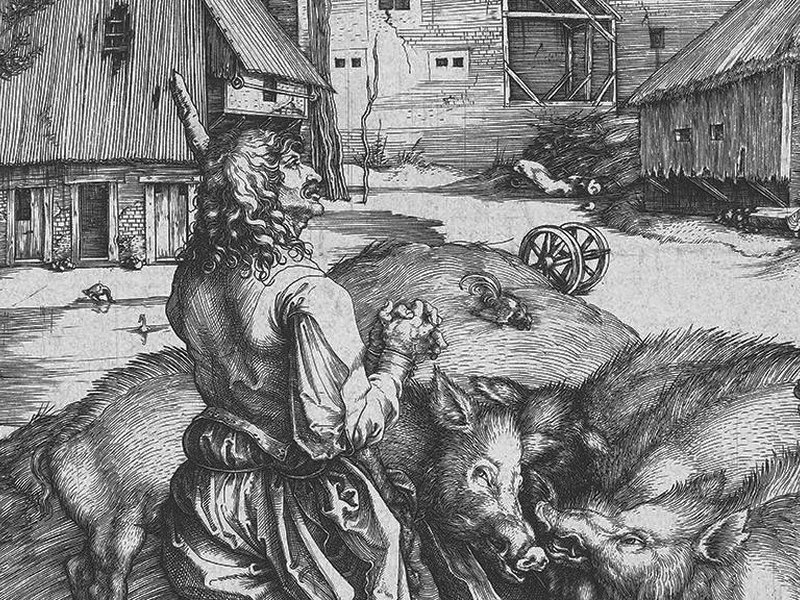
Perspectives on the Prodigal, (Part 2)

In the first essay on the parable of the Prodigal Son, I suggested that the problems commentators and others encounter in interpreting Jesus three-part parable are not accidental. These are not just problems in our ignorance of cultural background. They are intentional features of the stories —stories designed to poke…

by Ralph Allan SmithJuly 11, 2019
durer-prodigal-son-2
Luke

Perspectives on the Prodigal, (Part 1)

The story of the Prodigal Son is perhaps the most well-known story in the Bible. As others have observed, it may also be one of the most misunderstood. In two short essays, I will point out features of this story that are commonly neglected, aspects of Jesus’ parable that might…

by Ralph Allan SmithJuly 9, 2019
de-rijke-man-en-de-arme-lazarus-by-jacopo-da-ponte-16th-century
Luke

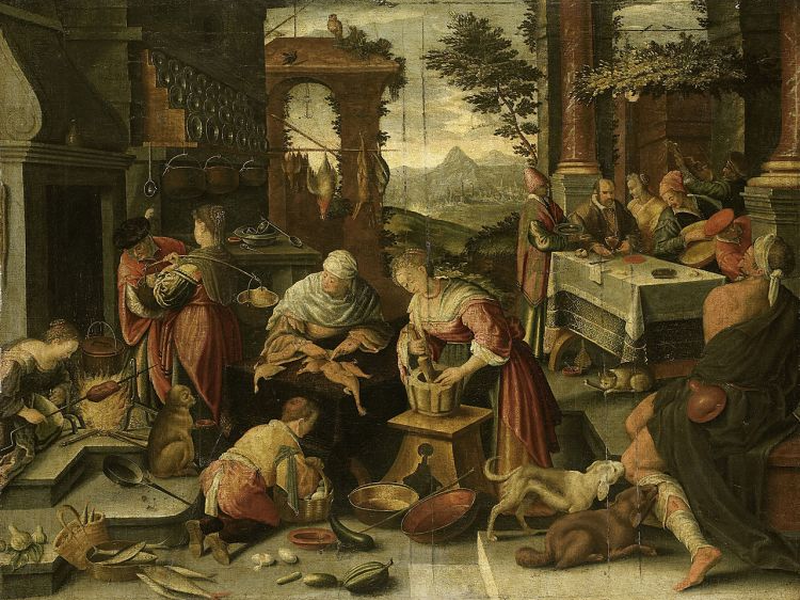
Lazarus and the Rich Man

The parable of Lazarus and the nameless rich man is not an independent story. It is part of a long context that begins in Luke 15:1, where Jesus is eating with tax collectors and sinners and the scribes and Pharisees grumble. In response to their hardheartedness, Jesus tells a three-part…

by Ralph Allan SmithJuly 4, 2019
aaron-burden-uynrnfdkjwg-unsplash
Luke

Everybody has Dropsy - Luke 14:1-24

The Bible is written so that even when a reader cannot pick up on what might be deeper or more detailed aspects of a text, there is virtually always a message to be heard. In the ancient world, where the “reader” of Scripture would likely be a church official facing…

by Ralph Allan SmithJuly 2, 2019
communion
Biblical Theology

Fruit Trees and Grain Plants

The distinction between garden (or vineyard) and field begins in Genesis 2. This relates to the ordering of the formless world. Plants of the field are contrasted with the garden planted by God in Genesis 2:5&8. Later on, under the Old Covenant the Israelites will be required to keep their…

by James B. JordanJune 27, 2019

Showing page 77 of 309

See all

Showing page 37 of 43

See all

Augustinian Optimism and Modern Science

P eter Harrison points out in his The Fall of Man and the Foundations of Science (10–11) that the Reformation coincided with the rediscovery of ancient skepticism. While the Reformers were undermining traditional Catholic sources of authority from one side, Montaigne and others were corroding certainty from the other. Descartes…

December 12, 2016

Apocalypse Preserved

Karl Shuve's contribution to Apocalypses in Context traces the Christian use of Jewish apocalyptic, especially of the Book of the Watchers from 1 Enoch, which even makes it into the universal canon of the New Testament (Jude). The Watcher story appears in Justin, who “blames ‘every evil' on the Watcher…

December 9, 2016

Constructing Modernity

Thomas Fabisiak wonders, What does the New Jerusalem have to do with modernity? ( Apocalypses in Context ). Ask most modern philosophers, and the answer will be, Not much. Fabisiak speaks of the “'rhetorical construction' of modernity” that takes the form of a dismissal or expulsion of apocalyptic and all…

December 9, 2016

Chess and Soviet Man

In a 2011 New Yorker profile of Norwegian chess champion Magnus Carlsen, D.T. Max digresses to explain the logic behind the Soviet interest in chess: “Lenin, an enthusiastic player, made the game a priority for the new nation. In 1920, Alexander Ilyin-Zhenevsky, a commissar of Soviet chess, wrote that chess,…

December 9, 2016

Erotics of Reading

In the middle stanzas of “Erotikos Logos,” watching someone else reading, Scott Cairns ( Slow Pilgrim , 278) writes, “So much, of course, depends upon your own willingness to find something worthy here, even as you bring - as you must - something worthy to the effort. So much of…

December 9, 2016

From Polemic to Propaganda

Andrew Pettegree ( Reformation and the Culture of Persuasion ) observes a shift in rhetorical tone in Protestant-Catholic debates between the early and mid sixteenth century: “While much of the polemical writing of Luther’s day was rumbustious in tone, making liberal use of ridicule and ad hominem attacks, it still…

December 9, 2016

Showing page 224 of 2212

Browse by Category

In Medias Res

Your weekly digest for all things Theopolis.

Donate

Theopolis is nearly 100% donor-supported. Consider joining us on our mission.