
Theopolis Logo

Writing

Explore our collection of theological essays, biblical studies, and reflections on faith and culture.

See all
giammarco-zeh-ljawhtg-unsplash
Biblical Horizons

OPEN BOOK: Views and Reviews

Isaac E. Mozeson, The Word: The Dictionary that Reveals the Hebrew Sources of English (Northvale, NJ: Jacob Aaronson Inc., 1995), 310 pp. Reviewed by James B. Jordan. Once there was only one language in the world, the language God spoke to Adam. At the Tower of Babel, there came to…

by James B. JordanJune 28, 1996
tim-wildsmith-j6jv-mkdzqs-unsplash
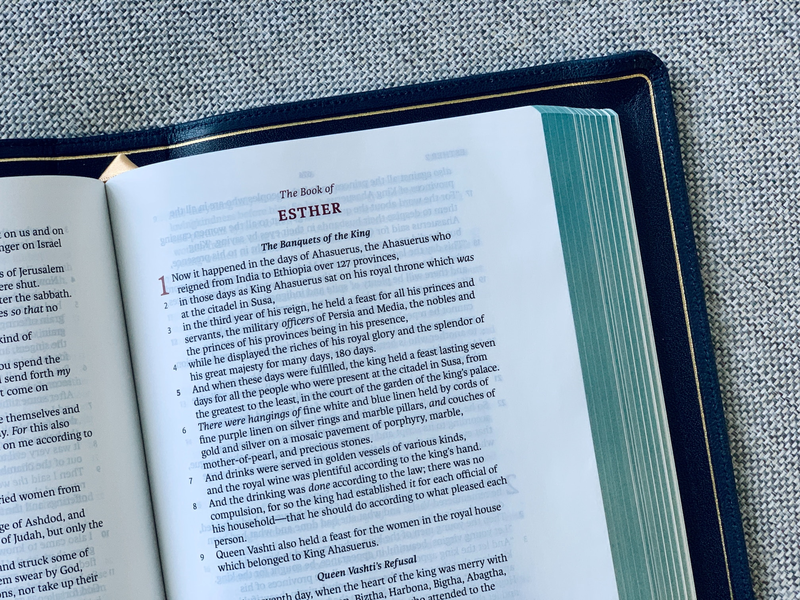
Esther

Esther: Historical & Chronological Comments (IV)

2. The Setting of the Book of Esther A. Xerxes (continued from previous issue) Ezra 6:14 says that the Jews finished building "according to the command of the God of Israel and the decree of Cyrus and Darius and Artaxerxes king of Persia." The problem with this verse is that…

by James B. JordanJune 28, 1996
ales-krivec-4mibe6zg5r0-unsplash
Acts

Jesus and Amalek

This essay goes with our previous study of the Amalek pattern back in Biblical Horizons No. 2. Since many do not have this essay, entitled "The Battle of Gog and Magog," let me cite the relevant paragraphs: Note in Genesis 12-15 that Abram moves into the land after escaping Pharaoh…

by James B. JordanJune 28, 1996
aaron-burden-1ebsmyrau-s-unsplash
Proverbs

The Strange Woman

Proverbs 7:6-23 is one of several passages early in the Proverbs in which Solomon warns his son about the wiles and dangers of the "strange woman." It is certainly quite proper to take these as straightforward warnings against sexual sins, and these are certainly warnings that need to be impressed…

by Peter LeithartJune 27, 1996
jan-kahanek-g3o5ztrk2e4-unsplash
Biblical Studies

Some Observations

1. In Luke 4:20 we read that after Jesus finished reading from Isaiah, "the eyes of all in the synagogue were fixed upon Him." This is usually taken in a psychological sense: They were amazed at Jesus somehow. I suggest that, as always, a merely psychological reading is a modern…

by James B. JordanMay 28, 1996
tim-wildsmith-j6jv-mkdzqs-unsplash
Esther

Esther: Historical & Chronological Comments (III)

2. The Setting of the Book of Esther Up to now we have assumed what we must prove, that the king in Esther is Darius the Great. While Biblical chronologists have usually taken this position, commentators on the book of Esther have often taken others as the king. One view,…

by James B. JordanMay 28, 1996

Showing page 265 of 309

See all

Showing page 37 of 43

See all

Confessing Trinity

The point of Trinitarian theology is not simply that there are three instead of one. We can’t just plug our pre-conceptions about God into the Trinity, and say that now we are Trinitarian. We can’t assume Deism, the idea that God is a watchmaker who leaves the world to run…

December 15, 2015

The Common-Sensical Bishop Berkeley, 1

. He There is often a gap between the popular perception of a philosopher’s teaching and his own conception of his teaching. But the gap in Berkeley’s case is particularly wide. On the one hand, there is his own professed plan to justify common sense and combat skepticism. He reiterates…

December 15, 2015

Fathers and Sons in Ulysses

Joyce's Ulysses has a pendulum structure. JH Raleigh (in an essay in Joyce's Ulysses , 102) points out the contrast of filius and mater as these are the poles around which the action is organized: “solitary and single vs conjoined, both licitly and illicitly; homeless rover vs statonary huswife (husey);…

December 14, 2015

The God who Predestines

Paul begins the substance of the letter to the Ephesians by “blessing” God (1:3). As is well known, in Greek, verses 3-14 form a single long sentence, with one verb, “Blessed” (v. 3). This reflects a form of Jewish prayer, called the Berekah. It is not a request for God…

December 14, 2015

Rhetoric, Classical and Christian

In his The Invention of Christian Discourse , Vernon Robbins explains how and why Christian discourse and rhetoric diverged from classical models. Ryan Leif Hanson summarizes the argument in Silence and Praise : “Classical rhetoric understands the basic social reality of persons as based in the Graeco-Roman urban environment. In…

December 14, 2015

Retreat from Scripture

Marilynne Robinson is a theological anomaly. A self-confessed Calvinist, admirer of Calvin and Edwards, defender of original sin and predestination (which, she says right, is not determinism), she is also a self-described liberal Christian who tends to take predictably liberal positions on moral and political question and to use sneering…

December 11, 2015

Showing page 341 of 2212

Browse by Category

In Medias Res

Your weekly digest for all things Theopolis.

Donate

Theopolis is nearly 100% donor-supported. Consider joining us on our mission.