Theopolis Logo

Writing

Explore our collection of theological essays, biblical studies, and reflections on faith and culture.

See all
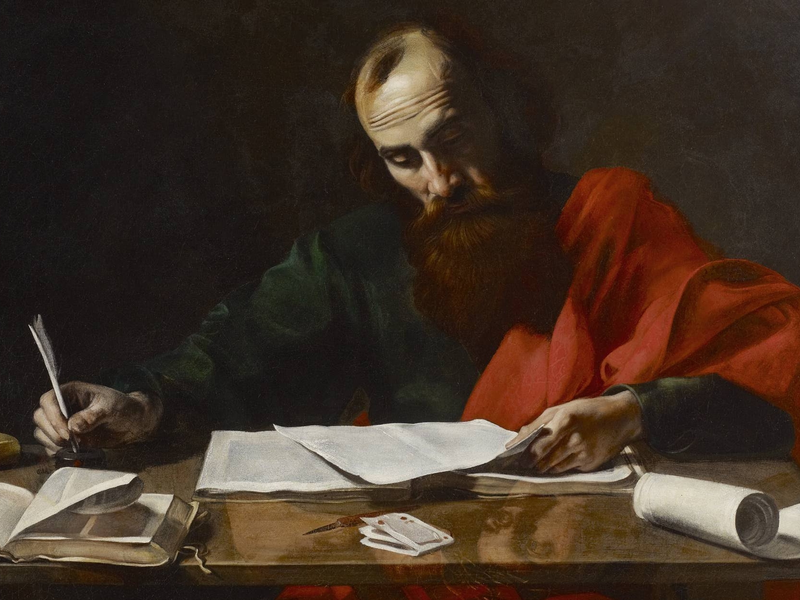
13071-probablyvalentindeboulogne-saintpaulwritinghi-1
Apologetics

Why Did Saul of Tarsus Identify Jesus of Nazareth with the God of Israel?

The god of Israel was not just any god. Two thousand years of Christian history, with it’s besetting philosophical temptations, and full-blown deist and transcendentalist and universalist problems, have obscured the fact that, in itself, the identity of the true god (or gods) cannot be predetermined, any more than the…

by Mark HorneNovember 15, 1998

ivan-aleksic-16yxcjsoaek-unsplash
Biblical Horizons

Crisis Time: Patriarchal Prologue, Part 3

Jacob and Solomon God gave wealth and possessions to Jacob, and then threatened to take them all away at Peniel. Jacob wrestled with God, and through prayer Jacob saw through the crisis by faith and was made victor (Hosea 12:4). The Kingdom period in Israel concerns the same themes. We…

by James B. JordanNovember 4, 1998
Exodus

The Third Word

In our study of the historical impact and unfolding of the Ten Words of God, we now arrive at the Third Word. The Third Word prohibits hypocrisy, and when we realize this, we can see right away that disobeying the Third Word is closely tied to the situation of Israel…

by James B. JordanNovember 4, 1998
kiwihug-l4gw27xzn1i-unsplash
Biblical Horizons

Crisis Time: Patriarchal Prologue, Part 2

Abraham and Joshua In our previous two essays, we considered aspects of the lives of Abraham and Jacob, as these display how God works with men in history. These two men carry in themselves all the future of Israel, so to speak, and their lives at the individual level correspond…

by James B. JordanOctober 4, 1998
maxime-gilbert-x-4nyxvz4r0-unsplash
Biblical Horizons

The Case Against Western Civilization, Part 7

Part 5: Laying New Foundations in a Dying World (continued) Physical Training Though it is seldom recognized any more, the fact is that no liberal arts and no science is possible apart from peace, and peace is only possible if there is a strong military presence that protects a nation.…

by James B. JordanOctober 4, 1998
screenshot-2023-09-11-at-11-34-45-am
Biblical Horizons

Crisis Time: Patriarchal Prologue, Part 1

Last month, in our essay " Patriarchal Dominion ," we observed the flow from Abraham to Jacob to Joseph. Our concern here is to advance our understanding of that narrative flow. I should mention that I am assuming much that is found in my book Primeval Saints: Studies in the…

by James B. JordanSeptember 4, 1998

Showing page 247 of 309

See all

Showing page 37 of 43

See all

Semper reformanda

In his contribution to Denominationalism , Winthrop Hudson suggests that one of the principles of English Independent ecclesiology was the refusal to “make our present judgment and practice a binding law unto ourselves for the future” (25). It's a stance based on a recognition of fallibility and proneness to sin.…

June 10, 2015

Where there's fire...?

The Greek kapnos (“smoke”) appears twelve times in Revelation. Hold that number, because it might be significant. The twelve uses are grouped into six scenes, alternating between smoke having to do with the worship and glory of God and smoke from hell or hell's allies: A. Smoke of incense, 8:4…

June 9, 2015

On Subjects and Objects

“I believe in subjects and objects,” writes David Martin at the outset of his Future of Christianity (4). He illustrates with a sociological example: He believes in “religious visions of the world to come and the objective status of the dynamics of social and political action.” Martin intends to resist…

June 9, 2015

Notes Toward a Johannine Theory of Labor

Jesus tells His disciples that they are being sent into a field to harvest where they had not sown or labored. “One sows, and another reaps” (John 4:35-38). It's a principle of ministry: Ministry starts in the middle. Even in a fresh mission field, the missionary doesn't enter a place…

June 9, 2015

Sources of Schism

In a study of American Protestant schisms between 1890 and 1990, John Sutten and Mark Chaves claim that churches don't divide for purely doctrinal reasons, but rather “in response to attempts by denominational elites to achieve organizational consolidation” (171). The 1848 schism within the Plymouth Brethren, for instance, was about…

June 9, 2015

Owen and Mather on Union

In an essay on “Rules of Walking in Fellowship,” John Owen claimed that “Union is the main aim and most proper fruit of love ; neither is there any thing or duty of the saints in the gospel pressed with more earnestness and vehemency of exhortation than this.” For Owen,…

June 8, 2015

Showing page 415 of 2212

Browse by Category

In Medias Res

Your weekly digest for all things Theopolis.

Donate

Theopolis is nearly 100% donor-supported. Consider joining us on our mission.