Theopolis Logo

Writing

Explore our collection of theological essays, biblical studies, and reflections on faith and culture.

See all
31-03-0213
Hermeneutics

Apocalyptic Eyes

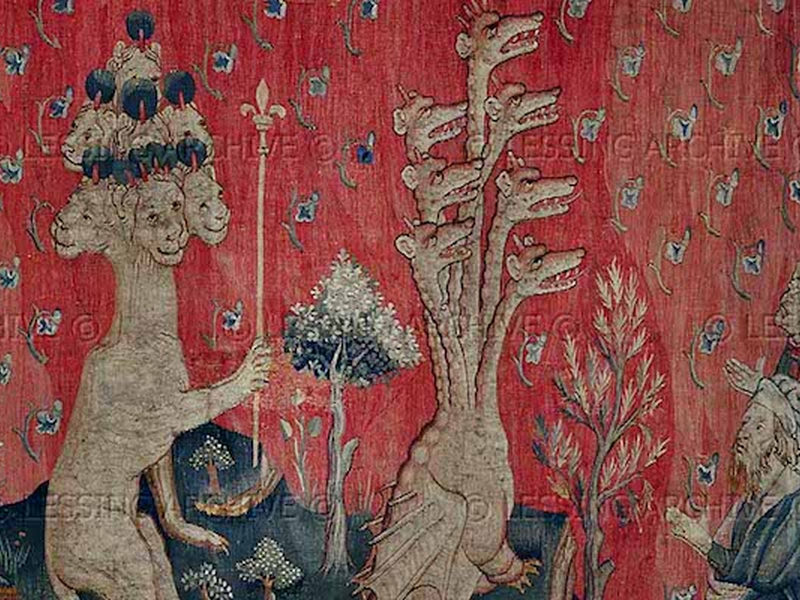
Flying scrolls. Red horses. Beasts coming out of the sea. Winged women. The list goes on. Apocalyptic literature in the Bible is like a cross between science fiction and Marvel comics. And the Bible has a fair bit of this sort of thing. Daniel sees visions in Babylon, Zechariah sees…

by Toby SumpterNovember 4, 2014

bhm-skyline-2
Theopolis News

New Name, New Look

Trinity House Institute has taken a new name, the Theopolis Institute. This striking new name expresses our unique vision and mission and captures the unified purpose behind all our specific programs and activities. We still have Bible, liturgy, and culture in our tagline. We still offer the same courses on…

by TheopolisNovember 4, 2014
istock_000012860926small
Atonement

Not Fearing the Devil

Adam Kotsko offers a socio-political variation on the Christus Victor atonement theory in his 2010 study, The Politics of Redemption: The Social Logic of Salvation . He does this by explaining "the devil" in terms of the Hegelian concept of "objective spirit," Geist . As Kotsko puts it, Geist "refers…

by Peter LeithartOctober 13, 2014
jez-timms-8muutamcwu4-unsplash
Leviticus

The Meaning of Sacrifice

Two factors keep Nahtali Meshel from discussing the meaning of sacrifice until late in his The "Grammar" of Sacrifice . The first has to do with the texts he draws from: "P says little about the meaning of its rituals" (174). The other has to do with the grammatical theory…

by Peter LeithartOctober 8, 2014
jez-timms-8muutamcwu4-unsplash
Leviticus

Praxemics

Chapter 5 of Naphtali Meshel's The "Grammar" of Sacrifice focuses on "praxemics," the physical actions of sacrificial ritual. Praxemes are constituted by six elements: an "atomact," an elementary physical act or gesture; an actor; an object that is acted up; a target for the action and often for the object…

by Peter LeithartOctober 6, 2014
markus-winkler-aid-xyrtlec-unsplash
Leviticus

Jugation and Hierarchy

Two chapters of Naphtali Meshel’s The “Grammar” of Sacrifice cover what he calls “jugation” and “hierarchies.” The first involves the addition of other materials to an animal offering. Jugates include wine, cereal, and oil that are added to the animals (zoemes) that are offered in sacrifice. Some jugates are coordinated…

by Peter LeithartOctober 1, 2014

Showing page 167 of 309

See all

Showing page 37 of 43

See all

Contra Faustum, I

As is well known from Confessions , Faustus played a crucial role in Augustine’s formation. As a young Manichean Auditor and devotee of astrology, Augustine puzzled over philosophical and quasi-scientific conundrums that he wanted to pose to a Manichean master. When Bishop Faustus visited Carthage, Augustine found him affable, humble,…

May 13, 2015

Contra Faustum, II

Though Augustine had the arsenal of the contra Iudaeos tradition at hand in responding to Faustus, he had become dissatisfied with it. After his debate with Fortunatus the Manichean, Augustine had embarked on a deep study of Paul and Genesis and came to recognize the weaknesses of this tradition, whose…

May 13, 2015

Contra Faustum, III

When Augustine turns to the typology of unclean foods in his reply to Faustus, he introduces a linguistic analogy that lays a foundation for the later arguments. Paul’s claim that all things are clean (1 Timothy 4:4) does not contradict the Old Testament, since Paul is talking about the nature…

May 13, 2015

Un-Creation

Revelation 12-14 roughly follows the sequence of the first half of the week of creation. The overall movement is from heaven to sea to earth. Genesis 1 begins with light, then the separation of waters above and below, the formation of sea and land. We can be more specific. Land…

May 12, 2015

Machen and the Monkeys

In The Dome of Eden , Stephen Webb wonders what might have happened if J. Gresham Machen, Princeton theologian and founder of Westminster Theological Seminary, had been at the Scopes trial. In Webb's account, Machen's main concern was to challenge the naturalistic presumptions of Darwinism: “Machen never rejected the basic…

May 12, 2015

Liquid life

In Purity Rabbinic Judaism (46), Jacob Neusner comments on the role of liquidity in the purity system: “Dry inanimate objects or food are not susceptible to uncleanness. What is wet is susceptible. So liquids activate the system.” A dead animal on a pile of grain contaminates only the grain that…

May 12, 2015

Showing page 427 of 2212

Browse by Category

In Medias Res

Your weekly digest for all things Theopolis.

Donate

Theopolis is nearly 100% donor-supported. Consider joining us on our mission.