Theopolis Logo

Writing

Explore our collection of theological essays, biblical studies, and reflections on faith and culture.

See all
timothy-eberly-djj49s6ud2o-unsplash
Biblical Theology

The Trinity and the Nations, (Part 2)

The Blessing of the Father The narrative of the Exodus makes it clear that Yahweh is Israel’s Father. Moses is told to declare to Pharaoh that “Israel is my firstborn son, and I say to you, ‘Let my son go that he may serve me’” (Exodus 4:22-23). In contrast to…

by Brian MarrDecember 30, 2013

aaron-burden-h8s0pf2rcqs-unsplash
Biblical Theology

The Trinity and the Nations, (Part 1)

When reading the Old Testament, the believer faces two dilemmas. First, there is a seemingly sharp discontinuity between the universal proclamation of the gospel to the whole earth and God’s singling out of the nation of Israel. Second, the New Testament says of Jesus that “there is no other name…

by Brian MarrDecember 23, 2013
heavenly-city-2
Advent

God in Man, Man in God

John 17 contains the longest prayer that we have from Jesus, and it shows us the intimate relationship between the Father and the Son in a way that few passages do. The prayer lays out the chiastic pattern noted by Athanasius (God became man so that man could become God),…

by Peter LeithartDecember 18, 2013
trnava-university-beeyeib-am8-unsplash
Books

Lordly Obedience

The following meditation on the incarnation is paraphrased and quoted from Karl Barth, The Doctrine of Reconciliation (Church Dogmatics, Vol. 4, Part 1) , pp. 185ff. In the incarnation, the eternal Son of God makes His way into a far country, and takes on the form of a servant. “But…

by Peter LeithartDecember 16, 2013
e99a2313
Baptism

Does Baptism Justify?

Peter says "baptism saves you" (1 Peter 3:21). Does the New Testament teach that "baptism justifies you"? I think the answer is Yes. That's a controversial answer, and demands some defense and explanation, but first some critical qualifications. No New Testament text states "baptism justifies you," so my argument will…

by Peter LeithartDecember 12, 2013
aaron-burden-1ebsmyrau-s-unsplash
Matthew

Treasures in Matthew's Genealogy, 1

In his THI article “ Son of David, Son of Abraham ,” Peter Leithart notes that Matthew's genealogy “contains a summary of redemptive history.” This statement is only too true and one that deserves further elucidation. Biblos genese ō s. The first two words of Matthew's Gospel are usually translated…

by Kelly KerrDecember 10, 2013

Showing page 182 of 309

See all

Showing page 37 of 43

See all

Battle of the Soul

Prudentius’s Psychomachia (5 th century AD) is one of the first and one of the most influential of medieval allegories. It is the source of the battle of Virtue and Vice that was one of the key themes of medieval allegory, which carries right into the Elizabethan allegory of Spenser's…

April 27, 2015
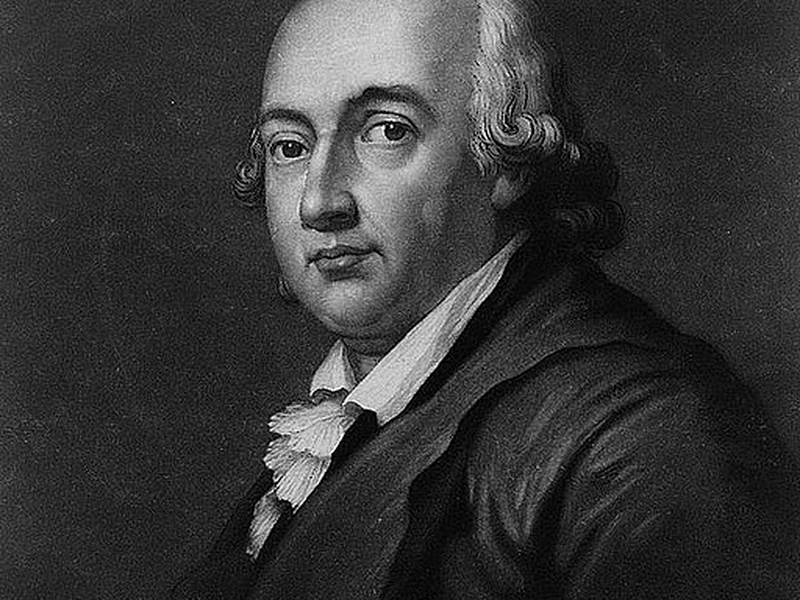
johann_gottfried_von_herder_by_john_sartain
Nationalism

Nations: Grown or Imagined?

R omantic thinkers like Johann Gottfried Herder, developed an organic conception of nationhood. For Herder, a nation is an extended family, and so a perfect nation, the most natural state, is “one nation, an extended family with one national character." (I rely on this essay by Richard White.) People have…

April 27, 2015

Imagining Finland

Nations are “imagined communities,” and one of the ways nations imagine themselves is to imagine themselves as very, very old. The Finnish epic, the Kalevala , serves as an illustration of the nexus between ancient literature and national identity. Anderson writes ( Imagined Communities , 74-5), “In the eighteenth century…

April 27, 2015

The Un-Dante

In a contribution to Petrarch: A Critical Guide to the Complete Works Teodolinda Barolini contrasts the love poetry of Petrarch's Rerum vulgarium fragmenta (also known as the Canzoniere ) with that of Dante. Petrarch continues the courtly paradigm. His interest is in the shifting psychology and drama of the male…

April 27, 2015

Deflating Humanism

In his E nglish Literature in the Sixteenth Century , CS Lewis makes two deflationary comments about the effects of Renaissance humanism. First, “The ‘barbarous’ books [of medieval Latin] have survived in the only sense that really matters: they are used as their authors meant them to be used. It…

April 24, 2015

Mystic Ark

Conrad Rudolph's The Mystic Ark is the product of impressive scholarship. Its focus is on the image of the mystic ark, a complex cosmic portrait showing “the Majesty” (looking like Jesus) enthroned, flanked by angels, holding a large disk, inscribed with a square turned sideways like a diamond. Inside the…

April 24, 2015

Showing page 435 of 2212

Browse by Category

In Medias Res

Your weekly digest for all things Theopolis.

Donate

Theopolis is nearly 100% donor-supported. Consider joining us on our mission.