Theopolis Logo

Writing

Explore our collection of theological essays, biblical studies, and reflections on faith and culture.

See all
tanner-mardis-xuxghzhibn4-unsplash-1-2
Biblical Studies

Tweets-turned-Notes on the Bible’s Chronology

Summary In what follows, I will consider the “year-stamps” employed in Scripture, i.e., statements of the form, “Such-and-such an event took place in the Xth year of Y.” In the process, I will suggest some ways in which the Biblical narrative might relate to events in the extra-Biblical world, though…

by James BejonJuly 16, 2019
durer-prodigal-son-2
Luke

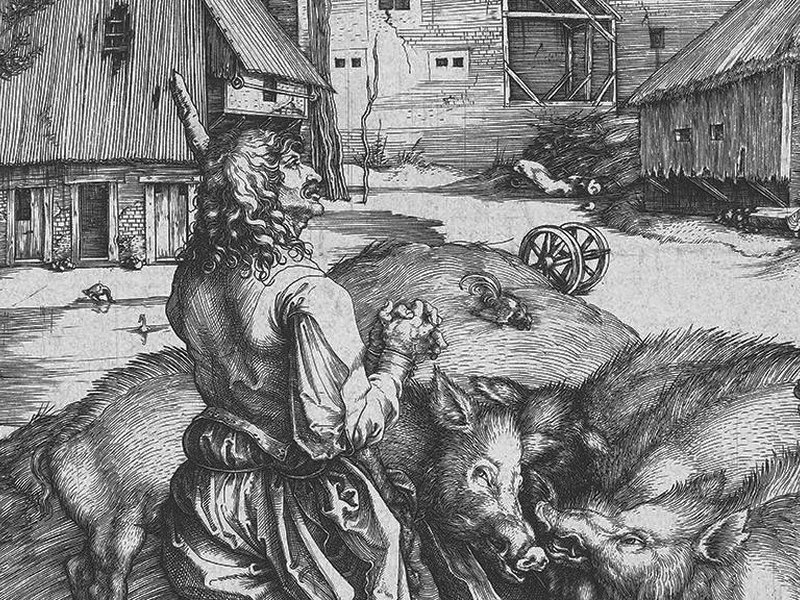
Perspectives on the Prodigal, (Part 2)

In the first essay on the parable of the Prodigal Son, I suggested that the problems commentators and others encounter in interpreting Jesus three-part parable are not accidental. These are not just problems in our ignorance of cultural background. They are intentional features of the stories —stories designed to poke…

by Ralph Allan SmithJuly 11, 2019
durer-prodigal-son-2
Luke

Perspectives on the Prodigal, (Part 1)

The story of the Prodigal Son is perhaps the most well-known story in the Bible. As others have observed, it may also be one of the most misunderstood. In two short essays, I will point out features of this story that are commonly neglected, aspects of Jesus’ parable that might…

by Ralph Allan SmithJuly 9, 2019
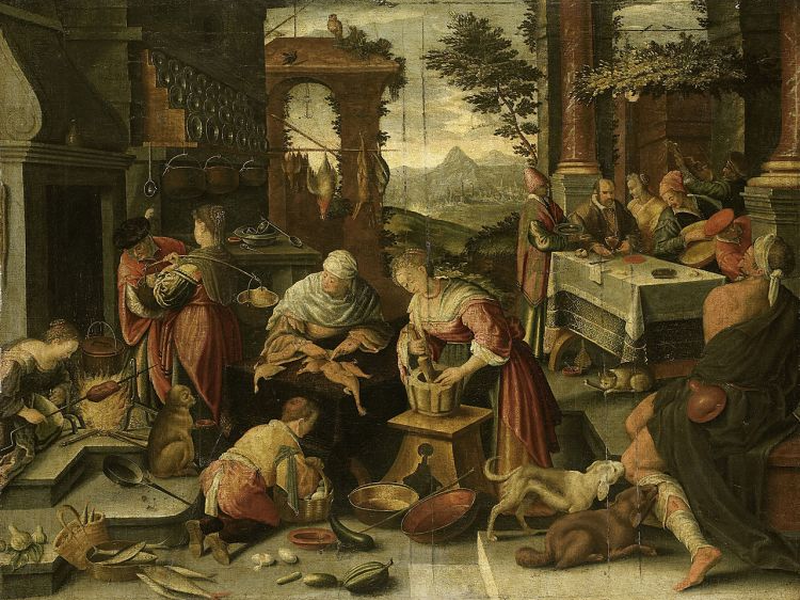
de-rijke-man-en-de-arme-lazarus-by-jacopo-da-ponte-16th-century
Luke

Lazarus and the Rich Man

The parable of Lazarus and the nameless rich man is not an independent story. It is part of a long context that begins in Luke 15:1, where Jesus is eating with tax collectors and sinners and the scribes and Pharisees grumble. In response to their hardheartedness, Jesus tells a three-part…

by Ralph Allan SmithJuly 4, 2019
aaron-burden-uynrnfdkjwg-unsplash
Luke

Everybody has Dropsy - Luke 14:1-24

The Bible is written so that even when a reader cannot pick up on what might be deeper or more detailed aspects of a text, there is virtually always a message to be heard. In the ancient world, where the “reader” of Scripture would likely be a church official facing…

by Ralph Allan SmithJuly 2, 2019
communion
Biblical Theology

Fruit Trees and Grain Plants

The distinction between garden (or vineyard) and field begins in Genesis 2. This relates to the ordering of the formless world. Plants of the field are contrasted with the garden planted by God in Genesis 2:5&8. Later on, under the Old Covenant the Israelites will be required to keep their…

by James B. JordanJune 27, 2019

Showing page 77 of 309

See all

Showing page 37 of 43

See all
Gift

Pure Gift and Promise

Since Mauss re-discovered the truism that there ain’t no such thing as a free gift, philosophers and theologians have fretted over the broken promise of the “pure gift” - a no-strings gift, a gift without expectation of return. It’s a Kantian deformation of an evangelical hope; but it’s bound to…

January 28, 2015

Brother v. Brother

When the original creation is set up, there are three zones in the material creation: heaven, earth, and sea. Corresponding to this threefold classification are the three zones on the land: garden, land, world. These are already mapped in the creation before sin, and especially after the fall they are…

January 28, 2015

Hierarchy and Oppression

To punish Israel’s sins, Yahweh threatens to remove “the whole supply of bread and the whole supply of water” (Isaiah 3:1). It sounds like a drought and famine, but as the passage goes on, the drought is a drought of leadership. Yahweh will remove bread and water insofar as he…

January 27, 2015

Living the Movies

In the NYTBR , the redoubtable Tom Shone reviews a couple of recent books that explore the borderlands between movies and live. Shone points out the paradox that all movie-lovers experience. We can’t live the movies. “A life lived at a constant pitch of screwball comedy is a recipe for…

January 27, 2015
Mathematics

Primes

Alec Wilkinson’s New Yorker profile of mathematician Yitang Zhang is a fascinating character sketch and an introduction to the world of pure mathematics. Along the way, Wilkinson lists some of the wonders and mysteries of prime numbers: “No formula predicts the occurrence of primes—they behave as if they appear randomly.…

January 27, 2015

Portrait of the Artist

Many things contribute to the fidgety discomfort one feels one reading Thomas Mann’s Death in Venice . There’s our entry into the mind of Gustav Aschenbach, an aging, highly sensitive, very famous writer. There’s the Lolita infatuation he has with Tadzio, a “beautiful” Polish boy whom Aschenbach watches from his…

January 27, 2015

Showing page 471 of 2212

Browse by Category

In Medias Res

Your weekly digest for all things Theopolis.

Donate

Theopolis is nearly 100% donor-supported. Consider joining us on our mission.