Theopolis Logo

Writing

Explore our collection of theological essays, biblical studies, and reflections on faith and culture.

See all
tanner-mardis-xuxghzhibn4-unsplash-1-2
Biblical Studies

Tweets-turned-Notes on the Bible’s Chronology

Summary In what follows, I will consider the “year-stamps” employed in Scripture, i.e., statements of the form, “Such-and-such an event took place in the Xth year of Y.” In the process, I will suggest some ways in which the Biblical narrative might relate to events in the extra-Biblical world, though…

by James BejonJuly 16, 2019
durer-prodigal-son-2
Luke

Perspectives on the Prodigal, (Part 2)

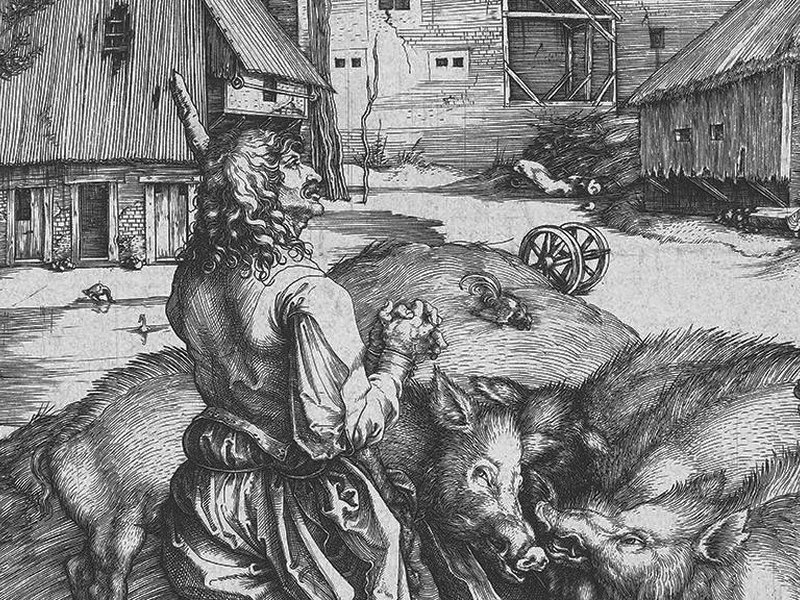
In the first essay on the parable of the Prodigal Son, I suggested that the problems commentators and others encounter in interpreting Jesus three-part parable are not accidental. These are not just problems in our ignorance of cultural background. They are intentional features of the stories —stories designed to poke…

by Ralph Allan SmithJuly 11, 2019
durer-prodigal-son-2
Luke

Perspectives on the Prodigal, (Part 1)

The story of the Prodigal Son is perhaps the most well-known story in the Bible. As others have observed, it may also be one of the most misunderstood. In two short essays, I will point out features of this story that are commonly neglected, aspects of Jesus’ parable that might…

by Ralph Allan SmithJuly 9, 2019
de-rijke-man-en-de-arme-lazarus-by-jacopo-da-ponte-16th-century
Luke

Lazarus and the Rich Man

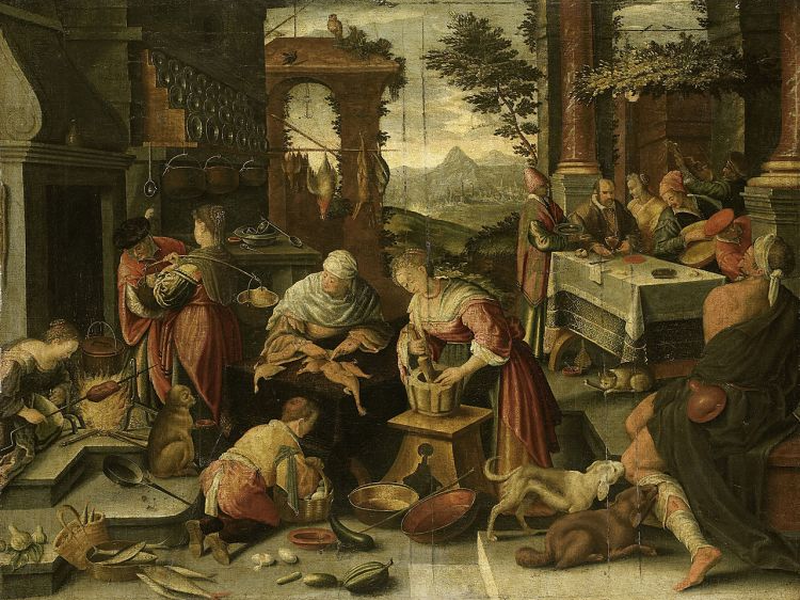
The parable of Lazarus and the nameless rich man is not an independent story. It is part of a long context that begins in Luke 15:1, where Jesus is eating with tax collectors and sinners and the scribes and Pharisees grumble. In response to their hardheartedness, Jesus tells a three-part…

by Ralph Allan SmithJuly 4, 2019
aaron-burden-uynrnfdkjwg-unsplash
Luke

Everybody has Dropsy - Luke 14:1-24

The Bible is written so that even when a reader cannot pick up on what might be deeper or more detailed aspects of a text, there is virtually always a message to be heard. In the ancient world, where the “reader” of Scripture would likely be a church official facing…

by Ralph Allan SmithJuly 2, 2019
communion
Biblical Theology

Fruit Trees and Grain Plants

The distinction between garden (or vineyard) and field begins in Genesis 2. This relates to the ordering of the formless world. Plants of the field are contrasted with the garden planted by God in Genesis 2:5&8. Later on, under the Old Covenant the Israelites will be required to keep their…

by James B. JordanJune 27, 2019

Showing page 77 of 309

See all

Showing page 37 of 43

See all

Judgment of This World

It’s a joke. It’s a comedy routine. Doom is coming! Doom doom doom! The world is ending, the kingdom is coming. Head for the hills, run, escape! The end is near! Repent! So says John, so repeats Jesus, like long-hairs with picket signs at the street corner. But then it…

November 13, 2014

How To Say, “I Am Righteous”

How many Protestants are comfortable applying the label “righteous” to themselves? How many Protestants can sing or pray the Psalms with a clean conscience, appealing to the Lord to accept them because of their righteousness? How many Protestants instead experience an instinctive mental reservation when they speak of their justification?…

November 12, 2014

1-2 Kings in nuce

This is a gloss and summary of the overview I offer in my Brazos commentary on 1-2 Kings . Though the book is detailed and sometimes convoluted, the overall shape is neatly symmetrical. A. David and Solomon found the United Kingdom; Solomon builds a house. B. Jeroboam founds the Northern…

November 12, 2014

Derrida's Paul Problem

Ward Blanton’s Materialism for the Masses provides a rebuttal to Nietzsche’s claim that Christianity was nothing but pop-Platonism. On the contrary: Paul can be read as offering a “materialist spirituality” that has never been more needed than it is today. There’s something in that, though Blanton’s meandering book makes it…

November 12, 2014
Gratitude

Jesus Was an Ingrate

Jesus was an ingrate. That’s on of the themes of Gratitude: An Intellectual History . Sign up now for the Theopolis newsletter, In Medias Res , and receive a free excerpt of the book. Fill out the simple subscription form here .

November 12, 2014

Fire, Smoke, Brimstone

The army revealed by the sixth seal (Revelation 9:13-21) wears breastplates of “fire, hyacinth, and brimstone” (v. 17a) and breathes out “fire, smoke, and brimstone” (v. 17b), with which it kills a third of humanity (v. 18). Hyacinth is an anomaly on the first list, but essentially the army wears…

November 11, 2014

Showing page 500 of 2212

Browse by Category

In Medias Res

Your weekly digest for all things Theopolis.

Donate

Theopolis is nearly 100% donor-supported. Consider joining us on our mission.