Theopolis Logo

Writing

Explore our collection of theological essays, biblical studies, and reflections on faith and culture.

See all
temp_bg
Biblical Studies

Biblical Allusion and the Meaning of Othello

Understanding Shakespeare’s Biblical references is vital for the interpretation of many, if not all, of Shakespeare’s plays. For Othello , it is especially important, not only because the interpretation of the play is contested among various approaches — feminist, homosexual, post-colonial, Marxist, Freudian, new historical, and others — but also…

by Ralph Allan SmithJune 16, 2017

e99a9492-2
Ecclesiology

Attaining Unity: A Reply to Mike Allen

Mike Allen of Reformed Theological Seminary, Orlando, scores some points in his review of The End of Protestantism . He lodges the fair complaint that my rhetoric sometimes outruns my evidence. He argues that more stress on the present reality of the church’s unity deepens the tragedy of division; divisions…

by Peter LeithartJune 13, 2017
trinity-1-2
Eschatology

Comic Trinity

I begin with two observations. First, on any millennial view, the Christian account of history is progressive, moving from the garden to the city. It is eschatological not only in that there is an end, but that the end is a glorified beginning, not merely a return to origins. To…

by Peter LeithartJune 8, 2017
e99a2225
Ecclesiology

Political Church

The church is a new form of polity that erupts into the world as much as the Son of God comes into the world. It’s a real-world political alternative to the polities of the ancient world. It resolves many of the political dilemmas of the ancient world, though not simply…

by Peter LeithartJune 6, 2017
img_1456
Baptism

Baptism Impasse: Baptists vs. Presbyterians, (Part 2)

In my last post , I explained how Baptists really have a “one-ordinance-one sacrament” ecclesiology. I said this: “what Baptists really believe, in modern parlance, is that there is one ordinance (baptism which is a sign or symbol only) and one sacrament (the Lord’s Supper in which feeding upon Jesus…

by Mani MarprelateMay 30, 2017
medieval-knights
Political Theology

Obedience of Rulers

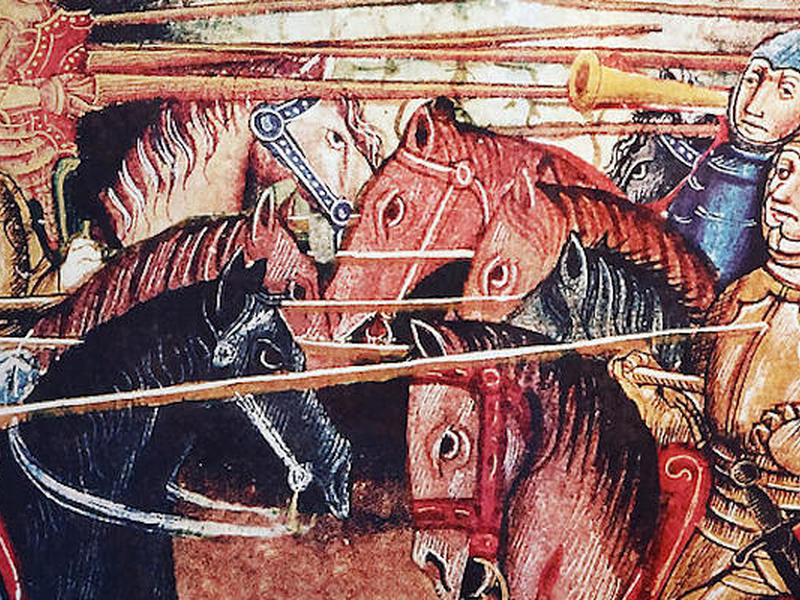
One of the most extensive and penetrating responses to the Yoder-Hauerwas attack on Constantiniansm is found in Oliver O’Donovan’s Desire of Nations , in a chapter entitled “The Obedience of Rulers.” O’Donovan defines the word “Christendom” as “a historical idea,” specifically “the idea of a professedly Christian secular political order,…

by Peter LeithartMay 30, 2017

Showing page 111 of 309

See all

Showing page 37 of 43

See all
Science

Doubts about Brain Death

Gary Greenberg raises doubts about “brain death” as a definition of death. The standard was introduced largely to facilitate organ donation and transplant, and it has become a fixture of bioethics. Greenberg points out that “brain death is not quite as certain as these bioethicists might like. A doctor cant…

January 18, 2014

Cut for Kingship

What does God commit Himself to when He makes a covenant with Abraham? Genesis 17 gives a number of specifics: Abraham will be a multitude of nations, his name will become Abraham, Yahweh will be God to Abraham and to his seed and will give them the land. Twice in…

January 17, 2014

Apocalyptic in Ordinary

Everyone is talking about “apocalyptic” today. I join the chorus and reflect on CS Lewis’s The Great Divorce as an exercise in apocalyptic theology.

January 17, 2014
Philosophy

End of Dialogue

Rosenstock-Huessy points out in one of the letters collected in Judaism Despite Christianity that Kant worked out his entire philosophy in conscious dialogue with Rousseau: “While he himself wants to stand metaphysics on its head, just as Kepler and Newton stood physics, yet he compares for his part Rousseau and…

January 17, 2014

Naive Sophistication

Rosenstock ( Judaism Despite Christianity: The 1916 Wartime Correspondence Between Eugen Rosenstock-Huessy and Franz Rosenzweig , 127-8) objects to Rosenzweig’s characterization of church history as a move from the church of the spirit to the church of dogma and tradition. Rosenstock thinks the dualism nonsense: “Every Christian experiences the dogmas…

January 17, 2014

From A to B

Rosenzweig locates a fundamental similarity between Judaism and Christianity in their mutual affirmation of protology and eschatology, which give form and meaning to the “middle things” that occur between A and B - that is, the middle things of world history. Rosenstock objects that the two are not equal simply…

January 17, 2014

Showing page 705 of 2212

Browse by Category

In Medias Res

Your weekly digest for all things Theopolis.

Donate

Theopolis is nearly 100% donor-supported. Consider joining us on our mission.