Theopolis Logo

Writing

Explore our collection of theological essays, biblical studies, and reflections on faith and culture.

See all
e99a2191
Theopolis News

New Season & New Relationships

We have moved from death to new life, from Lenten darkness to Easter light. And while Easter Sunday may have come and gone, it's effects are continually with us. This season has brought with it several new relationships, events, and signs of growth for Theopolis. We have been networking with…

by Peter LeithartMay 9, 2016
eucharist-2
Eucharist

Social Eucharist in the Middle Ages

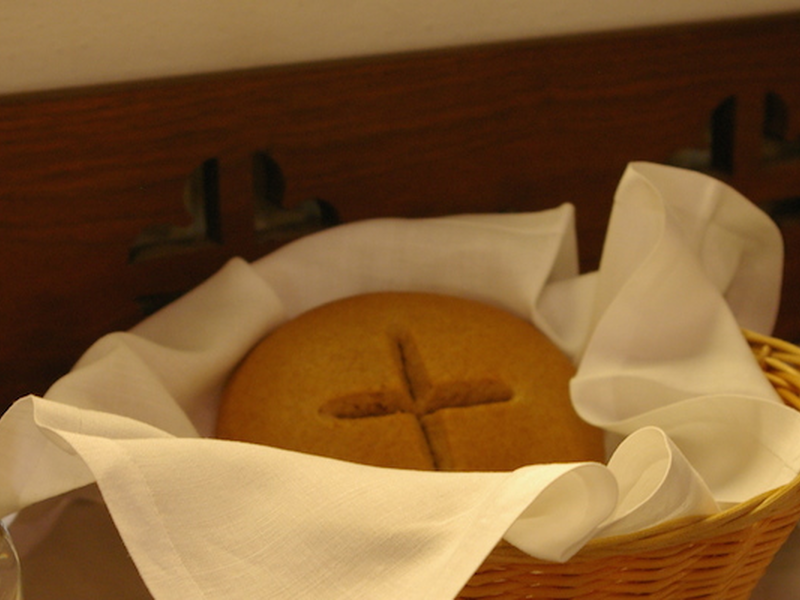
In The People's Work , a social history of Christian Worship, Frank Senn summarizes the developments of the medieval period with regard to the Eucharist. He begins by challenging the assumption that medieval society was held together by “the church.” He notes that the church was often divided and conflicted,…

by Peter LeithartMay 5, 2016
turing-machine
Biblical Theology

What Is Systematic Typology? Part 4: Wheels Within Wheels

The structure of the Bible resembles something which was grown rather than built, composed rather than assembled. Its employment of “structure-as-sign” at every level from micro- to macrocosmic leads to the conclusion that a hermeneutic worthy of Scripture requires not only training in history, art and music but also the…

by Mike BullMay 3, 2016
giotto-noli-me-3
Luke

Eighth Day, Eighth Verdict

For some in first-century Israel, Easter was anything but good news. It was a terrifying surprise. For the rulers and powers that put Jesus to death, the idea that He had been raised by some power beyond their control was chilling. Early in Luke’s gospel, we're told that Herod thought…

by Peter LeithartApril 28, 2016
sebastian-pena-lambarri-yv593oymkmo-unsplash
Hermeneutics

153 Large Fish

Simon Peter went up, and drew the net to land, full of large fish, a hundred and fifty-three; and although there were so many, the net was not torn. (John 21:11) This is one of those texts in the Bible that many people puzzle over. It is not a puzzle…

by James B. JordanApril 26, 2016
jesus-on-trial
Philemon

Pilate the Kingmaker

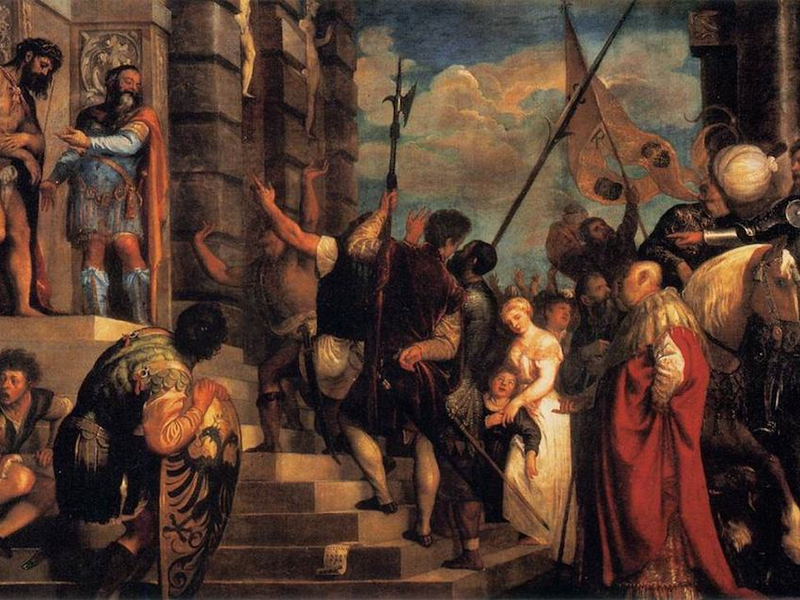
God is not mocked, Paul says. God is mocked, says Matthew. Who’s right? The two are in perfect harmony, but to see that, we need to run through the passage again. We’ll see that at every point, the mockery is being turned against the mockers. At every point, mockery is…

by Peter LeithartApril 21, 2016

Showing page 132 of 309

See all

Showing page 37 of 43

See all
Science

Doubts about Brain Death

Gary Greenberg raises doubts about “brain death” as a definition of death. The standard was introduced largely to facilitate organ donation and transplant, and it has become a fixture of bioethics. Greenberg points out that “brain death is not quite as certain as these bioethicists might like. A doctor cant…

January 18, 2014

Cut for Kingship

What does God commit Himself to when He makes a covenant with Abraham? Genesis 17 gives a number of specifics: Abraham will be a multitude of nations, his name will become Abraham, Yahweh will be God to Abraham and to his seed and will give them the land. Twice in…

January 17, 2014

Apocalyptic in Ordinary

Everyone is talking about “apocalyptic” today. I join the chorus and reflect on CS Lewis’s The Great Divorce as an exercise in apocalyptic theology.

January 17, 2014
Philosophy

End of Dialogue

Rosenstock-Huessy points out in one of the letters collected in Judaism Despite Christianity that Kant worked out his entire philosophy in conscious dialogue with Rousseau: “While he himself wants to stand metaphysics on its head, just as Kepler and Newton stood physics, yet he compares for his part Rousseau and…

January 17, 2014

Naive Sophistication

Rosenstock ( Judaism Despite Christianity: The 1916 Wartime Correspondence Between Eugen Rosenstock-Huessy and Franz Rosenzweig , 127-8) objects to Rosenzweig’s characterization of church history as a move from the church of the spirit to the church of dogma and tradition. Rosenstock thinks the dualism nonsense: “Every Christian experiences the dogmas…

January 17, 2014

From A to B

Rosenzweig locates a fundamental similarity between Judaism and Christianity in their mutual affirmation of protology and eschatology, which give form and meaning to the “middle things” that occur between A and B - that is, the middle things of world history. Rosenstock objects that the two are not equal simply…

January 17, 2014

Showing page 705 of 2212

Browse by Category

In Medias Res

Your weekly digest for all things Theopolis.

Donate

Theopolis is nearly 100% donor-supported. Consider joining us on our mission.