Theopolis Logo

Writing

Explore our collection of theological essays, biblical studies, and reflections on faith and culture.

See all
jelleke-vanooteghem-gnxb59lgu1m-unsplash
Baptism

Baptism and the Spirit

Pneumatology, the doctrine of the Holy Spirit, is often formulated along dispensational lines. The Holy Spirit’s work in the Old Testament, we tend to think, was earthly, concerned with political and military leadership, while in the New Testament the Spirit’s work has to do with mediating salvation achieved by Christ.…

by Peter LeithartMay 27, 1996

trnava-university-beeyeib-am8-unsplash
Biblical Horizons

Open Book 6: Views & Reviews

Homosexuality and the Love of Death Some years ago (September, 1980) Midge Decter published in Commentary one of the most illuminating pieces that I have ever seen on homosexuality. It was a very autobiographical piece dealing with her own summer vacation experiences on Fire Island off of New Jersey. When…

by Richard BledsoeApril 28, 1996
tim-wildsmith-j6jv-mkdzqs-unsplash
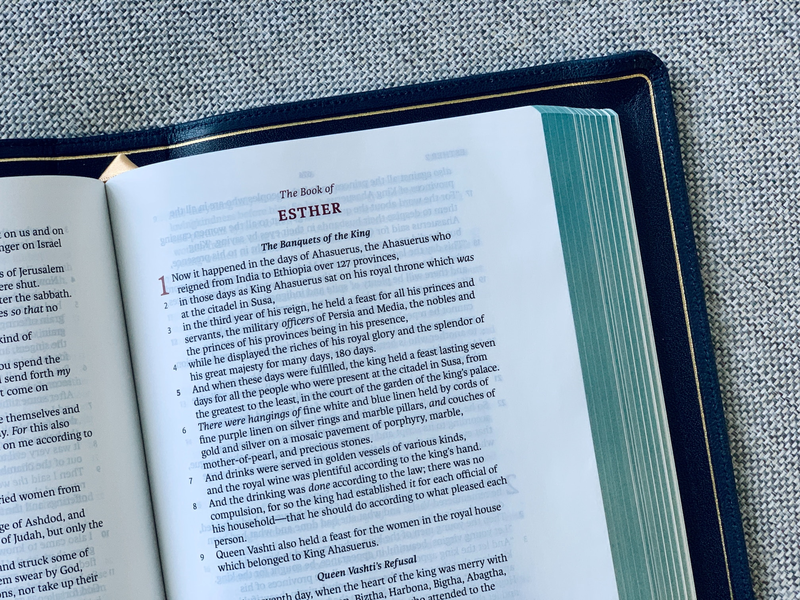
Esther

Esther: Historical & Chronological Comments (II)

C. The Battle of Gog and Magog (Ezekiel 38-39) (continued for previous issue) A final corroboration of this interpretive hypothesis comes from what we might call the "Amalek Pattern" in the Bible. Note in Genesis 12-15 that Abram moves into the land after escaping Pharaoh (ch. 12), settles down and…

by James B. JordanApril 28, 1996
image-20150409-15244-1r08rsu
Romans

Christ in the Holy of Holies: The Meaning of the Mount of Olives

Speaking of the Church, Romans 11:16-17 says, "And if the root be holy, the branches are also. But if some of the branches were broken off, and you, being a wild olive were grafted in among them and became partaker with them of the root of the fatness of the…

by James B. JordanApril 28, 1996
aaron-burden-h8s0pf2rcqs-unsplash
Romans

Committed to the Form of Teaching

But thanks be to God that though you were slaves of sin, you became obedient from the heart to that form of teaching (tupos didaskales) to which you were committed, and having been freed from sin, you became slaves of righteousness (Romans 6:17-18). In his study of the use of…

by Peter LeithartApril 27, 1996
screenshot-2023-07-27-at-10-25-35-am
Biblical Horizons

Review: Biblical Theology, by John Owen

John Owen (1616-1683), Biblical Theology, or the Nature, Origin, Development, and Study of Theological Truth in Six Books, translated by Stephen P. Westcott (Pittsburgh: Soli Deo Gloria Publications, [1661] 1994), hardcover, 911 pages, $50.00. Here for the first time in English is one of Owen’s most important Latin works, along…

by James B. JordanMarch 28, 1996

Showing page 266 of 309

See all

Showing page 38 of 43

See all
History

Converted Jerusalem

In his fascinating Rise of Christianity , Rodney Stark cites estimates that there were between 10,000 and 20,000 inhabitants of Jerusalem in the first century. Stark uses this to falsify Luke’s claims that there were 5000 Christians in Jerusalem (Acts 4:4) and “many thousands” of Jews (Acts 21:20): “Had there…

March 30, 2007

Hebraic hermeneutics

One Rhonda Wauhkonen discusses Nicholas of Lyra’s “Hebraic” semiotics and hermeneutics in a 1992 article on Chaucer. She begins by contrasting Augustine’s signum/res distinction to Lyra’s Hebraic viewpoint: “In the Hebrew system as evidenced in Scripture and as adapted by Nicholas, such stratification of signification did not exist, for the…

March 29, 2007

Last and first

Nicholas of Lyra is known for his notion of a “double literal” sense to Scripture. For him, interpretation ad litteram includes both the historical and the doctrinal/christological senses, and he suggests that the ancient Hebrews could well have seen the Messianic sense as the literal sense. He also suggests that…

March 29, 2007

Nicholas of Lyra’s afterlife

In Book 3 of Gargantua and Pantagruel, Rabelais attributes an odd opinion to the 14th-century exegete, Nicholas of Lyra: “Pantagruel, having wholly subdued the land of Dipsody, transported thereunto a colony of Utopians, to the number of 9,876,543,210 men, besides the women and little children, artificers of all trades, and…

March 29, 2007

Nicholas of Lyra’s afterlife

In Book 3 of Gargantua and Pantagruel, Rabelais attributes an odd opinion to the 14th-century exegete, Nicholas of Lyra: “Pantagruel, having wholly subdued the land of Dipsody, transported thereunto a colony of Utopians, to the number of 9,876,543,210 men, besides the women and little children, artificers of all trades, and…

March 29, 2007

Thomas on the Parable of the Workers

Steinmetz summarizes Thomas’s remarkably “NTWrightian” commentary on Matthew 20:1-16. While acknowledging an Origenist tradition that sees the hours as moments of an individual life, Thomas is more interested in the Irenaean tradition that interprets the parable in terms of redemptive history: “The hours mentioned in the parable are not stages…

March 29, 2007

Showing page 1699 of 2212

Browse by Category

In Medias Res

Your weekly digest for all things Theopolis.

Donate

Theopolis is nearly 100% donor-supported. Consider joining us on our mission.