Theopolis Logo

Writing

Explore our collection of theological essays, biblical studies, and reflections on faith and culture.

See all
ivan-aleksic-16yxcjsoaek-unsplash
Biblical Chronology

Jubilee (Part 2)

The Building of the Temple Solomon began work on the Temple in the second month of his fourth year. This was the year 2993, a sabbath year. He finished in the eighth month of his eleventh year, the year 3000, also a sabbath. (1 Ki. 6:1, 38). This is said…

by James B. JordanMarch 4, 1993

whichbooksbelongintheot
Biblical Chronology

Jubilee (Part 1)

The Bible expresses its chronology not only in sequences of years, but also in sequences of sabbath years and jubilees. This enables us to make a cross-check of our chronology, and when we find apparent problems, to refine it. If our chronology is right, we should find some significant correlations…

by James B. JordanFebruary 4, 1993
alfons-morales-ylswjsy7stw-unsplash-1
Biblical Studies

Adele Berlin, Poetics and Interpretation of Biblical Narrative

Adele Berlin, Poetics and Interpretation of Biblical Narrative Sheffield, England: Almond Press, 1983. This volume is the ninth in the "Bible and Literature Series" under the general editorship of David M. Gunn. According to its author, who teaches Hebrew at the University of Maryland, the book is an effort to…

by Peter LeithartJanuary 17, 1993
screenshot-2023-08-08-at-11-13-28-am
Ruth

The Structures of Ruth

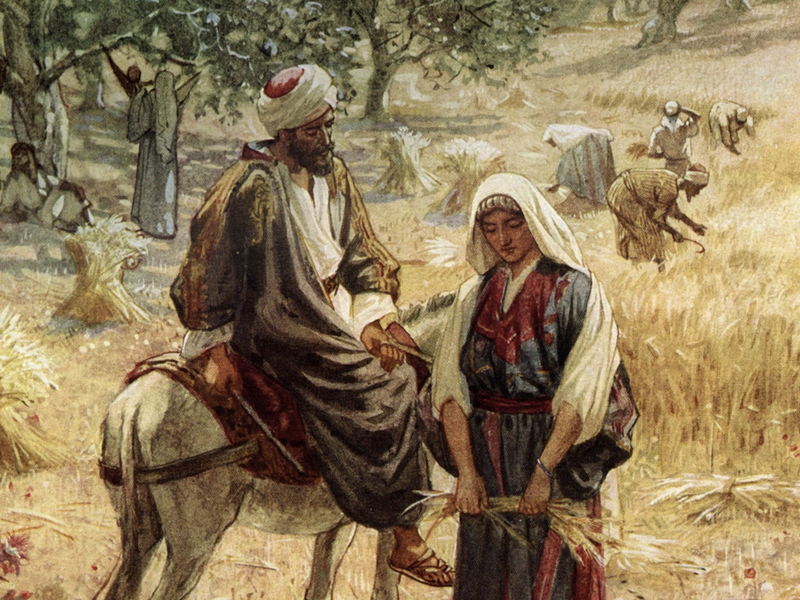
V. Propp’s classic work Morphology of the Folktale (University of Texas, 1968) argues that one of the basic structures of folk literature is "lack, lack liquidated." A king sets out to look for a wife, and the tale ends with a wedding. Often, the hero sets out on some business…

by Peter LeithartJanuary 17, 1993
painting-of-saint-luke
Luke

Second Samuel

Luke’s gospel begins and ends in the temple. It opens with Gabriel’s annunciation to the priest Zacharias (whose name, appropriately, means "Yahweh remembers") of the coming of a forerunner. Zacharias is performing priestly service at the time. The book ends with the joyful worship of a new priesthood in the…

by Peter LeithartJanuary 17, 1993
screen-shot-2023-01-26-at-3-44-00-pm
Biblical Chronology

Problems With New Testament History

Last time we arrived at the year A.M. 3960 as the date for the inauguration of the New Creation through the death, resurrection, ascension, and session of Christ, and the sending of the Holy Spirit. We also saw that this is most likely the year of Paul’s conversion. Fourteen years…

by James B. JordanJanuary 4, 1993

Showing page 286 of 309

See all

Showing page 38 of 43

See all

Preparation for justification

The medieval arguments in favor of the notion of preparation for justification through created grace are founded on anthropological and cosmological claims. McGrath summarizes the Summa Fratris Alexandri , which he calls “the first systematic discussion of the nature of created grace,” as follows: “The Holy Spirit can be said…

April 27, 2006

Active and Passive

Here is a hypothesis or suspicion, not a conclusion, much less a conviction: The notion that God rewards what we do with what we have, and the notion that we are purely passive in salvation are not, as they appear, extreme opposites, but are two positions within the same framework.…

April 27, 2006

Hodge and the deliverdict

Charles Hodge doesn’t quite get to justification as deliverdict here, but he comes close: “[Paul] had just said that the believer cannot continue to serve sin. He here [in 6:7] gives the reason: for he who has died (with Christ) is justified, and therefore free from sin, free from its…

April 26, 2006

Aquinas and merit

Strict justice, Aquinas argued, is only possible between equals, and since God and man are not equals there is never strict justice in God’s dealings with us. Further, God being God, He is never put in debt to His creatures, never obligated to give anything, unless by His own prior…

April 26, 2006

Did Christ Merit Salvation?

According to Calvin, only in a qualified sense. McGrath says, “The later Franciscan school, the via moderna and the schola Augustiniana moderna regarded the ratio meriti as lying in the divine good pleasure; nothing was meritorious unless God chose to accept it as such. This teaching was extended to include…

April 26, 2006
Philosophy

Highlights of Marion, Being Given, Books 1-2

I have been greatly helped here by Cynthia Nielsen’s online summaries of Marion’s book. 1) One of Marion’s main ambitions is to move beyond the Western concern with being with its concomitant focus on the “object.” In place of “objectness,” a static notion of the things of the world, Marion…

April 26, 2006

Showing page 1850 of 2212

Browse by Category

In Medias Res

Your weekly digest for all things Theopolis.

Donate

Theopolis is nearly 100% donor-supported. Consider joining us on our mission.