Theopolis Logo

Writing

Explore our collection of theological essays, biblical studies, and reflections on faith and culture.

See all
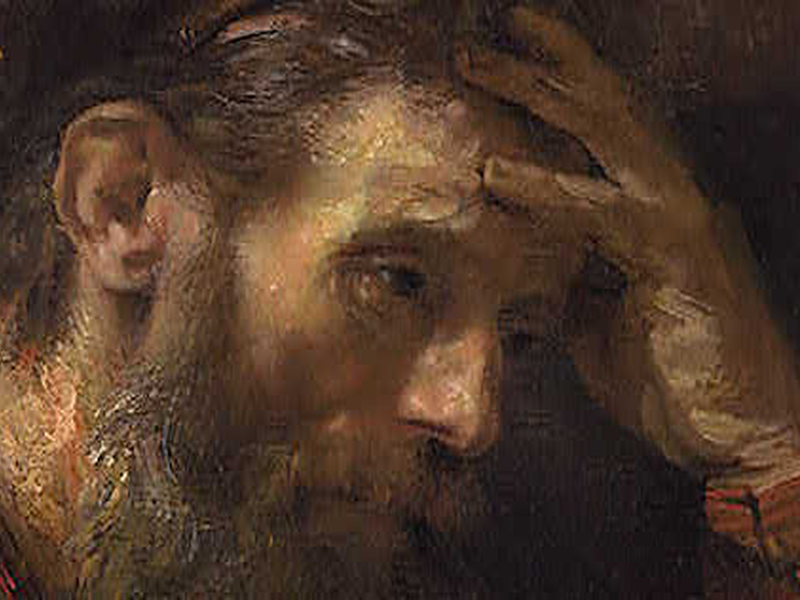
paul-rembrandt
Apostle Paul

Paul Among the People

We've all heard it, too often to count. The Apostle Paul was a misgynistic homophobic pro-slavery authoritarian, probably a repressed homosexual himself, the first Puritan - Puritan here defined as "someone who cannot sleep if someone in the world is having fun." To call this a caricature is too generous.…

by Peter LeithartAugust 28, 2018

img_1043
How to Worship

Psalms for Exile: The Narrative Progression in the Fifth Book of the Psalter

Some of our forefathers believed in reading/singing the psalms in order. Today, when the psalms are even used at all, they tend to be used randomly, though sometimes tied to a church calendar or to the pastor’s sermon. The Bible does not bind us to any particular practice, but there…

by James B. JordanAugust 23, 2018
screen-shot-2018-08-21-at-7-30-52-am
1 Corinthians

The Rock That Followed Them

". . . and all drank the same spiritual drink, for they were drinking from a spiritual rock that followed them; and the rock was Christ" (1 Corinthians 10:4). Paul’s passing comment about the rock that followed the Israelites in the wilderness has often been treated as a bit of…

by Peter LeithartAugust 21, 2018
sixteen-miles-out-al48tflf4e8-unsplash
Biblical Theology

Hezekiah’s Sign

The story of Hezekiah’s illness and recovery is familiar to every child who has attended Sunday School. Informed that he would die, faithful King Hezekiah pleaded in tears for a longer life. God heard his prayers and saw his tears, and promised fifteen more years. As a sign that He…

by Peter LeithartAugust 16, 2018
sunshine
Movies

The Last Man: Herod and Jesus in “Sunshine”

When viewed as an allegory of biblical history, the controversial third act of Danny Boyle’s gripping sci-fi adventure is transformed from an illogical divergence into a blinding revelation. The following analysis contains spoilers for the movie “Sunshine.” The Creation Week is the elementary type that orders everything God has said…

by Mike BullAugust 14, 2018
resveralife-night-blooming-cereus-1014x487
Epistemology

Seeking Integration in a Fragmented World: Integration…and Things

In my last post , I told you the story of my current desire to understand philosopher D.C. Schindler’s metaphysical work. With this post, I start in to the venture. I begin by reflecting on what it is to be a thing. This matter always makes me laugh, and makes…

by Esther Lightcap MeekAugust 9, 2018

Showing page 89 of 309

See all

Showing page 38 of 43

See all
History

Modernity and antiquity

Kumar suggests that “some of the principal hall-marks of modernity” are already evident in the Christian notions of time and history. Both Christianity and modernity separate time from nature, and humanize time; time is seen by both as “linear and irreversible”; both see history as an Aristotelian drama with beginning,…

February 24, 2006
History

First Modernity

The Latin modernus was coined in the late fifth century, as an antonym to antiquus , and variations of modernus became particularly common after the 10th century. Thus, Krishan Kumar writes, “Modernity is . . . an invention of the Christian Middle Ages,” and was used to emphasize the radical…

February 24, 2006
Philosophy

Computer Communications and the Self

Poster lists four effects that computer communications (email, chat groups, etc) have on the self: “1 they introduce new possibilities for playing with identities; 2 they degender communications by removing gender cues; 3 they destabilize existing hierarchies in relationships and re-hierarchize communications according to criterio that were previously irrelevant; and…

February 24, 2006
Philosophy

Computers, subjects and objects

Descartes famously contrasted the mind (res cogitans) with the external world (res extensa), but Mark Poster suggests that computer writing fudges that distinction: “the computer dematerializes the written trace. As inputs are made to the computer through the keyboard, pixels of phosphor are illuminated on the screen, pixels that are…

February 24, 2006
Media

Community and New Communications

Mark Poster points to a tension between the modern institutions of production and the postmodern technologies of communication, particularly as they impact the formation of the self: “If modernity or the mode of production signifies patterned practices that elicit identities as autonomous and (instrumentally) rational, postmodernity or the mode of…

February 24, 2006
Media

Telephone

Prior to World War I, Telefon Hirmondo, the telephone system of Budapest, was used as a broadcast system, with a published schedule of programs that were restricted to certain classes of people in Hungary. Only later did it develop into a communications system in which everyone could pass information to…

February 24, 2006

Showing page 1878 of 2212

Browse by Category

In Medias Res

Your weekly digest for all things Theopolis.

Donate

Theopolis is nearly 100% donor-supported. Consider joining us on our mission.