Theopolis Logo

Writing

Explore our collection of theological essays, biblical studies, and reflections on faith and culture.

See all
tanner-mardis-xuxghzhibn4-unsplash-1-2
Biblical Studies

Tweets-turned-Notes on the Bible’s Chronology

Summary In what follows, I will consider the “year-stamps” employed in Scripture, i.e., statements of the form, “Such-and-such an event took place in the Xth year of Y.” In the process, I will suggest some ways in which the Biblical narrative might relate to events in the extra-Biblical world, though…

by James BejonJuly 16, 2019
durer-prodigal-son-2
Luke

Perspectives on the Prodigal, (Part 2)

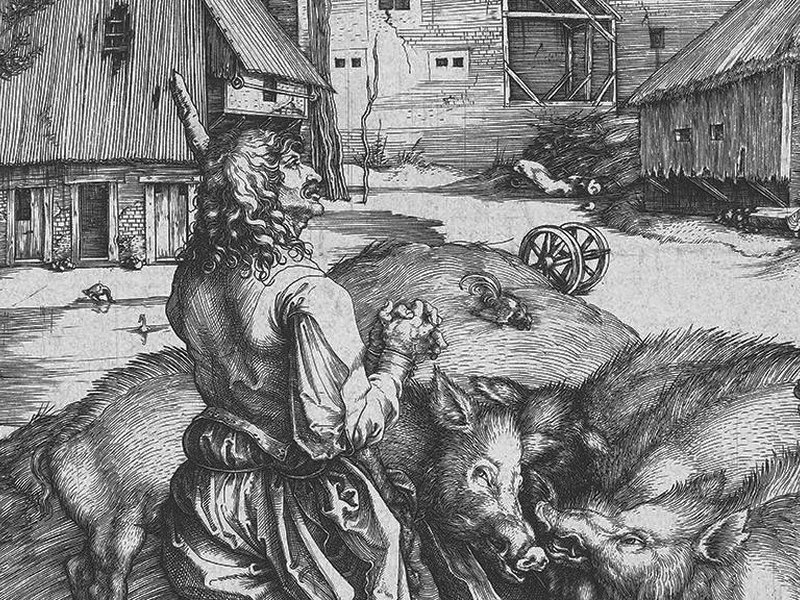
In the first essay on the parable of the Prodigal Son, I suggested that the problems commentators and others encounter in interpreting Jesus three-part parable are not accidental. These are not just problems in our ignorance of cultural background. They are intentional features of the stories —stories designed to poke…

by Ralph Allan SmithJuly 11, 2019
durer-prodigal-son-2
Luke

Perspectives on the Prodigal, (Part 1)

The story of the Prodigal Son is perhaps the most well-known story in the Bible. As others have observed, it may also be one of the most misunderstood. In two short essays, I will point out features of this story that are commonly neglected, aspects of Jesus’ parable that might…

by Ralph Allan SmithJuly 9, 2019
de-rijke-man-en-de-arme-lazarus-by-jacopo-da-ponte-16th-century
Luke

Lazarus and the Rich Man

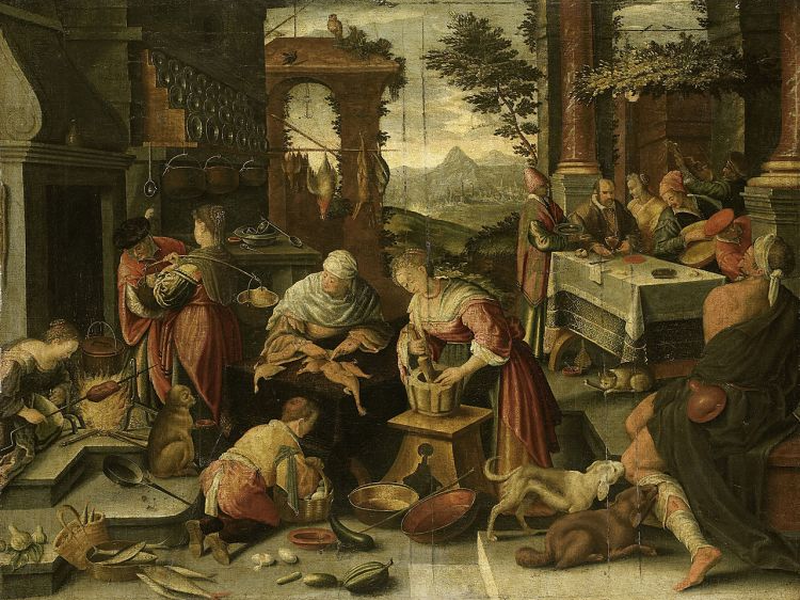
The parable of Lazarus and the nameless rich man is not an independent story. It is part of a long context that begins in Luke 15:1, where Jesus is eating with tax collectors and sinners and the scribes and Pharisees grumble. In response to their hardheartedness, Jesus tells a three-part…

by Ralph Allan SmithJuly 4, 2019
aaron-burden-uynrnfdkjwg-unsplash
Luke

Everybody has Dropsy - Luke 14:1-24

The Bible is written so that even when a reader cannot pick up on what might be deeper or more detailed aspects of a text, there is virtually always a message to be heard. In the ancient world, where the “reader” of Scripture would likely be a church official facing…

by Ralph Allan SmithJuly 2, 2019
communion
Biblical Theology

Fruit Trees and Grain Plants

The distinction between garden (or vineyard) and field begins in Genesis 2. This relates to the ordering of the formless world. Plants of the field are contrasted with the garden planted by God in Genesis 2:5&8. Later on, under the Old Covenant the Israelites will be required to keep their…

by James B. JordanJune 27, 2019

Showing page 77 of 309

See all

Showing page 38 of 43

See all

Hypocrisy and Motive

W hen Jesus condemns hypocrisy, argues Oliver O'Donovan ( Desire of Nations , 109–10), He is speaking of conformity to “public expectation.” O'Donovan suggests that the sense is captured by the word “performance.” Jesus is not speaking of motives in the modern sense of the word: “A motive, as we…

April 7, 2017
Slavery

Abolition

W hy didn't the apostles move more quickly to protest and attempt to abolish slavery? There are various answers to that, but Oliver O'Donovan's gets to the heart of the issue: The church “believed that Christ had abolished it” ( Desire of Nations , 185). Of course, the church had…

April 7, 2017

Kulturkampf

P hilip Rieff notes, “That word [ Kulturkampf ] first appeared in common German use in the early 1870s during the struggle of the National Liberal political party to disarm by law the moral/educational authority, and political punditry, of a triumphalist Roman Catholic hierarchy, revitalized as it then was by…

April 6, 2017

Fences and Neighbors

K. Luria examines the Sacred Boundaries (xxvii–xxxxi) of early modern France, in an effort to correct extremes of historiography. Some have argued that sacred boundaries between religious groups led to violence; other historians have pointed to continuous interaction between Catholics and Protestants. Both are right. Symbolic boundaries separated Catholic and…

April 6, 2017

Building the Confessional State

A 1989 article by Wolfgang Reinhard on the relationships among the Reformation, Counter-Reformation, and early modern state-building is an excellent brief summary of the relationship between Reformation and post-Reformation “confessionalization” and the formation of modern states and national identities. The Reformers' turn to the state was in the first instance…

April 5, 2017

What Solomon Made

O verall, the Chronicler's account of Solomon's temple construction (2 Chronicles 3:1-5:1) is arranged chiastically: A. Solomon begins to build, 3:1-2 B. What Solomon made, 3:3-4:10 C. What Huram-abi made, 4:11-17 B’. What Solomon made, 4:18-22 A’. Solomon completes ( shalam ) work, 5:1 The long section in B is…

April 4, 2017

Showing page 189 of 2212

Browse by Category

In Medias Res

Your weekly digest for all things Theopolis.

Donate

Theopolis is nearly 100% donor-supported. Consider joining us on our mission.