Theopolis Logo

Writing

Explore our collection of theological essays, biblical studies, and reflections on faith and culture.

See all
aaron-burden-h8s0pf2rcqs-unsplash
Galatians

The Restoration of the Galatians

While controversies over the writings of Paul continue in various corners of the intellectual globe, the word of God given through Paul and his scribe and all of the church’s interpreters and translators over the last two millennia is still readily available to the lofty and the lowly. Paul, as…

by Grace LangnessMarch 25, 2013

kiwihug-l4gw27xzn1i-unsplash
Deuteronomy

Law and History: How to Read the Law of Moses (Part 2)

The second in a series of studies in Deuteronomy. Deuteronomy 22:30: A man shall not take his father’s wife, and shall not uncover his father’s wing (Hebrew: kanaf ). There are a number of unusual features in this law that mark it out from the previous context, indicating that it…

by Ralph Allan SmithMarch 20, 2013
200403-moss-pilate-tease_pncfq5
History

Victimhood and the Gospel

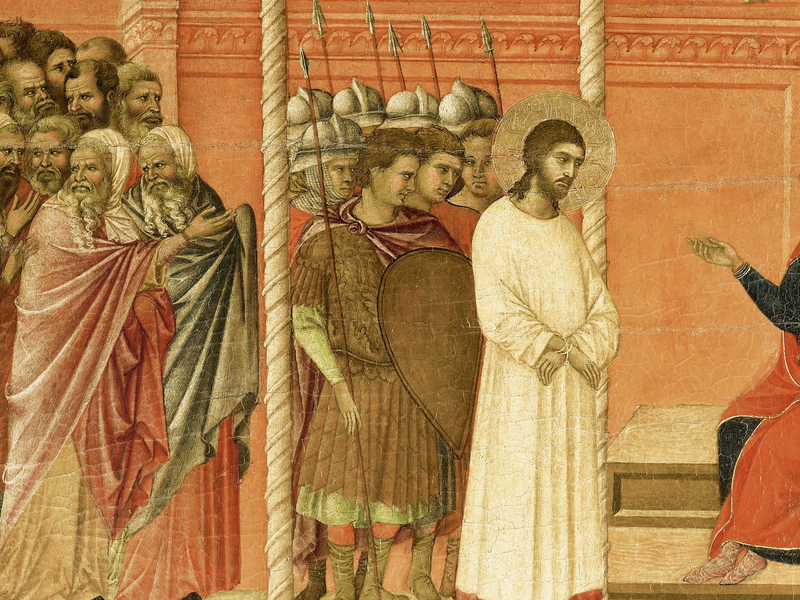
The texts of Christianity have been slowly at work, under the power of the Holy Spirit for 2000 years now. If we could be magically transported back into the world of two millennia ago, modern Americans would be shocked at the cruelty of that world. There was no concern for…

by Richard BledsoeMarch 18, 2013
aaron-burden-1ebsmyrau-s-unsplash
Luke

The Dysfunctional Family of the Gadarene Madman

The Story of the Gadarene Madman is told in all three synoptic Gospels (Matthew 8:28-34, Mark 5:1-20, Luke 8:26-37). Jesus ventures into a Gentile area when He passes over the Sea of Galilee. Upon disembarking from his boat, he is immediately met by a demon-possessed madman. Upon meeting Jesus, he…

by Richard BledsoeMarch 13, 2013
aaron-burden-1ebsmyrau-s-unsplash
Deuteronomy

Law and History: How to Read the Law of Moses

Part 1 of a multi-part series of studies on Deuteronomy 22:30-23:8. Eric Auerbach, in his classic work on Western literature, devotes his first chapter to contrasting Homer with the Bible. Of Homer, he writes of the “need of Homeric style to leave nothing which it mentions half in darkness and…

by Ralph Allan SmithMarch 12, 2013
markus-winkler-aid-xyrtlec-unsplash
Theopolis News

James Jordan in Korea, Japan

Trinity House Fellow James B. Jordan will be a speaker at an International Conference on Biblical Symbolism that will be held in Seoul on Monday, May 27 in 2013. He will address "The Importance of Biblical Symbolism and Symbolic Interpretation of the Bible." The conference will have three other speakers…

by Peter LeithartMarch 9, 2013

Showing page 197 of 309

See all

Showing page 38 of 43

See all

Architectural Justice

J ames Jordan has often called attention to Ezekiel 43:10-11, where the Lord explains the purpose of the elaborate temple vision that He has shown the prophet. When Israel hears the design and plans of the temple, its entrances and exits, it straight lines and its corners, they will “be…

March 17, 2017

Protestantism and Nature

L awrence Feingold doesn't much like de Lubac's work on the natural desire to see God . He doesn't think the neo-Thomist distinction of natural and supernatural is responsible for the rise of atheism and naturalism. On the contrary, the distinction is necessary to combat naturalism. Feingold writes, “the Thomistic…

March 17, 2017

Odysseus and Dialectics of Environment

N ear the beginning of their Dialectic of Enlightenment , Max Horkheimer and Theodore Adorno “allegorize” on an episode in the Odyssey , in which Odysseus takes his ship past the Sirens who entice mariners toward the dangerous shoals of their island with their sweet singing. Odysseus wants to hear…

March 17, 2017

Talking Trees

T rees are slow, like Ents. The electrical impulses that pass through trees travel at a rate of one-third of an inch per second. Why do trees need electricity? According to Peter Wollheben ( The Hidden Life of Trees ), they need electricity to talk to each other. He's not…

March 17, 2017

Indirect Subject

S lavoj Zizek ( Mythology, Madness, and Laughter ) explains Hegel's sublation of Kantian transcendentalism by noting that Hegel accepts Kant's root insight, the “the subjective constitution of reality, the split that separates the subject from the in-itself.” Yet Hegel doesn't stop with this acceptance: “this very split is transposed…

March 17, 2017

God the Temple

T he Bible is a narrative of architecture and city planning. The Creator is a divine architect and builder. On earth, He is first a landscape architect, designing and planning a garden, then a designer of tents and temples, finally an architect of people who builds a church of living…

March 17, 2017

Showing page 195 of 2212

Browse by Category

In Medias Res

Your weekly digest for all things Theopolis.

Donate

Theopolis is nearly 100% donor-supported. Consider joining us on our mission.