Theopolis Logo

Writing

Explore our collection of theological essays, biblical studies, and reflections on faith and culture.

See all
tanner-mardis-xuxghzhibn4-unsplash-1-2
Biblical Studies

Tweets-turned-Notes on the Bible’s Chronology

Summary In what follows, I will consider the “year-stamps” employed in Scripture, i.e., statements of the form, “Such-and-such an event took place in the Xth year of Y.” In the process, I will suggest some ways in which the Biblical narrative might relate to events in the extra-Biblical world, though…

by James BejonJuly 16, 2019
durer-prodigal-son-2
Luke

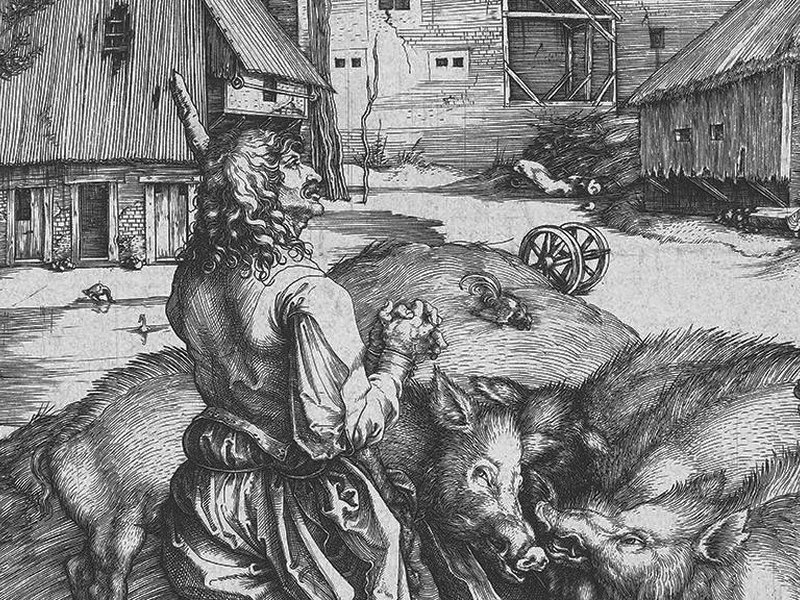
Perspectives on the Prodigal, (Part 2)

In the first essay on the parable of the Prodigal Son, I suggested that the problems commentators and others encounter in interpreting Jesus three-part parable are not accidental. These are not just problems in our ignorance of cultural background. They are intentional features of the stories —stories designed to poke…

by Ralph Allan SmithJuly 11, 2019
durer-prodigal-son-2
Luke

Perspectives on the Prodigal, (Part 1)

The story of the Prodigal Son is perhaps the most well-known story in the Bible. As others have observed, it may also be one of the most misunderstood. In two short essays, I will point out features of this story that are commonly neglected, aspects of Jesus’ parable that might…

by Ralph Allan SmithJuly 9, 2019
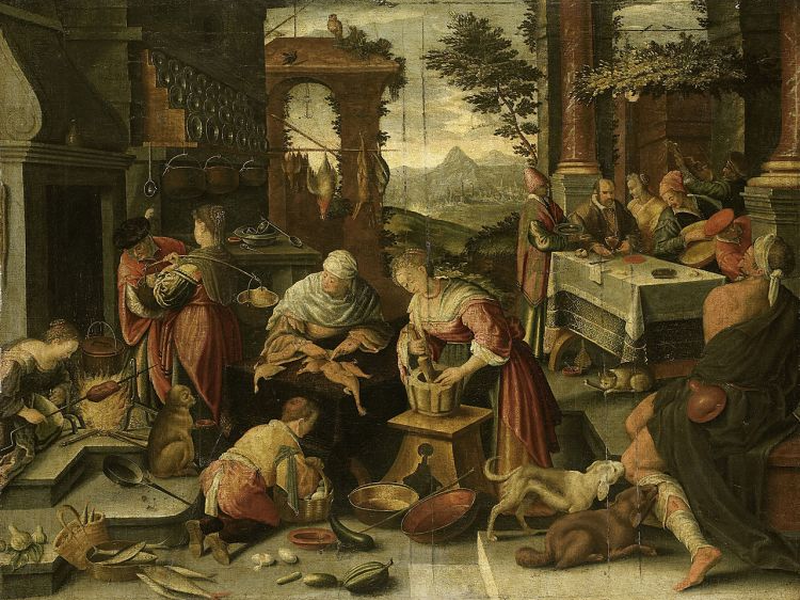
de-rijke-man-en-de-arme-lazarus-by-jacopo-da-ponte-16th-century
Luke

Lazarus and the Rich Man

The parable of Lazarus and the nameless rich man is not an independent story. It is part of a long context that begins in Luke 15:1, where Jesus is eating with tax collectors and sinners and the scribes and Pharisees grumble. In response to their hardheartedness, Jesus tells a three-part…

by Ralph Allan SmithJuly 4, 2019
aaron-burden-uynrnfdkjwg-unsplash
Luke

Everybody has Dropsy - Luke 14:1-24

The Bible is written so that even when a reader cannot pick up on what might be deeper or more detailed aspects of a text, there is virtually always a message to be heard. In the ancient world, where the “reader” of Scripture would likely be a church official facing…

by Ralph Allan SmithJuly 2, 2019
communion
Biblical Theology

Fruit Trees and Grain Plants

The distinction between garden (or vineyard) and field begins in Genesis 2. This relates to the ordering of the formless world. Plants of the field are contrasted with the garden planted by God in Genesis 2:5&8. Later on, under the Old Covenant the Israelites will be required to keep their…

by James B. JordanJune 27, 2019

Showing page 77 of 309

See all

Showing page 38 of 43

See all
Theology

Say it ain’t so, Nicholas

For reasons that I’ll detail in a subsequent post, I’m a considerable fan of Nicholas of Cusa. I was unhappy to come across this from William Cavanaugh: “The origin of the modern concept of religion can be seen clearly in the thought of two fifteenth-century Christian Platonist thinkers, Nicholas of…

May 20, 2005

Pity the satirist

Michael Budde writes, “Like the Rolling Stones and other major concert acts, the Catholic Church has now taken on corporate sponsorship to underwrite the world tours of its major performer, Pope John Paul II. To finance his 1998 visit to Mexico city, the Archdiocese of Mexico City entered into sponsorship…

May 20, 2005

The Humor of 2 Kings 1

The story of 2 Kings 1 is undoubtedly meant humorously. Ahaziah falls ill and sends messengers off to consult with Baal-zebub, baal of the flies. On the way, his messengers meet a “baal of hair,” Elijah - right title, wrong god. Yahweh will not allow Ahaziah’s men ever to get…

May 19, 2005
Literature

Garber on Richard III

Here are some highlights of Marjorie Garber?s essay on Richard III in Shakespeare After All . 1) Garber suggests that Richard is the ?first fully realized and psychologically conceived character?Ein Shakespeare?s plays. Richard?s character is fully realize because he is complex, protean, chameleon and Machiavellian (cf. 3 Henry VI 3.2.191-193).…

May 17, 2005

Luther and Aquinas

A further note from Haight: One of the criticisms he lodges against Aquinas and scholasticism is that it tended to treat grace and conversion in a mechanistic fashion: “This is a fundamental distortion of the dynamics of grace when it is seen contrasted with a personalist description, and it has…

May 17, 2005

Nature, Supernature, and Grace

Underlying different doctrines of justification, and inseparable from them, are different notions of grace. The historical issues have been ably summarized by Roger Haight in his 1979 book, The Experience and Language of Grace. Haight points out that doctrines of grace have differed partly because the reality of grace is…

May 17, 2005

Showing page 1979 of 2212

Browse by Category

In Medias Res

Your weekly digest for all things Theopolis.

Donate

Theopolis is nearly 100% donor-supported. Consider joining us on our mission.