
Theopolis Logo

Writing

Explore our collection of theological essays, biblical studies, and reflections on faith and culture.

See all
giammarco-zeh-ljawhtg-unsplash
Biblical Horizons

OPEN BOOK: Views and Reviews

Isaac E. Mozeson, The Word: The Dictionary that Reveals the Hebrew Sources of English (Northvale, NJ: Jacob Aaronson Inc., 1995), 310 pp. Reviewed by James B. Jordan. Once there was only one language in the world, the language God spoke to Adam. At the Tower of Babel, there came to…

by James B. JordanJune 28, 1996
tim-wildsmith-j6jv-mkdzqs-unsplash
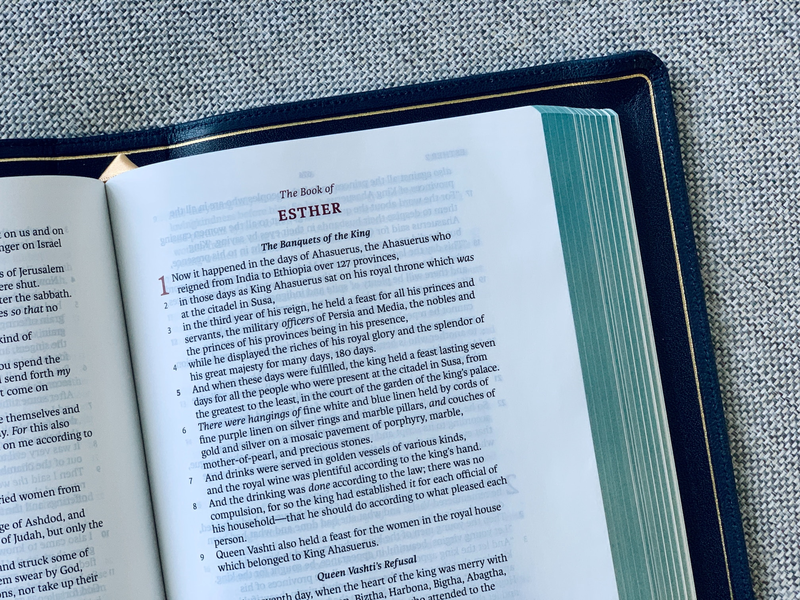
Esther

Esther: Historical & Chronological Comments (IV)

2. The Setting of the Book of Esther A. Xerxes (continued from previous issue) Ezra 6:14 says that the Jews finished building "according to the command of the God of Israel and the decree of Cyrus and Darius and Artaxerxes king of Persia." The problem with this verse is that…

by James B. JordanJune 28, 1996
ales-krivec-4mibe6zg5r0-unsplash
Acts

Jesus and Amalek

This essay goes with our previous study of the Amalek pattern back in Biblical Horizons No. 2. Since many do not have this essay, entitled "The Battle of Gog and Magog," let me cite the relevant paragraphs: Note in Genesis 12-15 that Abram moves into the land after escaping Pharaoh…

by James B. JordanJune 28, 1996
aaron-burden-1ebsmyrau-s-unsplash
Proverbs

The Strange Woman

Proverbs 7:6-23 is one of several passages early in the Proverbs in which Solomon warns his son about the wiles and dangers of the "strange woman." It is certainly quite proper to take these as straightforward warnings against sexual sins, and these are certainly warnings that need to be impressed…

by Peter LeithartJune 27, 1996
jan-kahanek-g3o5ztrk2e4-unsplash
Biblical Studies

Some Observations

1. In Luke 4:20 we read that after Jesus finished reading from Isaiah, "the eyes of all in the synagogue were fixed upon Him." This is usually taken in a psychological sense: They were amazed at Jesus somehow. I suggest that, as always, a merely psychological reading is a modern…

by James B. JordanMay 28, 1996
tim-wildsmith-j6jv-mkdzqs-unsplash
Esther

Esther: Historical & Chronological Comments (III)

2. The Setting of the Book of Esther Up to now we have assumed what we must prove, that the king in Esther is Darius the Great. While Biblical chronologists have usually taken this position, commentators on the book of Esther have often taken others as the king. One view,…

by James B. JordanMay 28, 1996

Showing page 265 of 309

See all

Showing page 38 of 43

See all

Architecture of Fancy

T he title essay of John Summerson's Heavenly Mansions sets Gothic architecture in a story of the architecture of fancy. He begins with doll houses, and moves to aedicules, originally small buildings holding the image of a god that eventually became purely decorative alcoves. In Gothic, the ornament is turned…

February 17, 2017

Slow Grow

I n his Rise and Fall of American Growth , Robert J. Gordon argues that the growth rates for the American economy have leveled because the rate of innovation has leveled. And the rate of innovation has leveled, in part, because some innovations happen only once: The flood of inventions…

February 17, 2017

Anthropology of Deficiency

A ccording to Ingolf Dalferth ( Creatures of Possibility ), Christianity “contradicts a view that understands human beings in their fundamental dependence, finitude, and passivity, not merely biologically, but anthropologically, as deficient beings , interpreting their absolute dependence as absolute neediness, their finitude as a metaphysical evil, and their experience…

February 17, 2017

Passive Creativity

C hristian theology has long taught that we are “finite copies of the infinite Creator: created creators” (Dalferth, Creatures of Possibility , 198). Christian anthropology is eschatologically oriented: “Who we are is not determined by our origin; it will become evident in our future” (198). This comes to expression in…

February 17, 2017

Slackers

I t’s a challenge to get a clear idea of what slackers are really all about. Tom Lutz isolates the dilemma in his Doing Nothing (18-19): The famous or almost-famous idlers, loafers, loungers, and slackers throughout history had to produce work about not working in order for us to know…

February 17, 2017

Living Sacrifices

J oseph Ratzinger reflects on Romans 12:1-2 in his Theology of the Liturgy (349-51), which is evident in the Roman Canon's prayer that “our sacrifice may be rationabilis .” He writes: It is not enough—indeed, it is quite wrong—to translate this as saying that it should become rational. We are…

February 17, 2017

Showing page 205 of 2212

Browse by Category

In Medias Res

Your weekly digest for all things Theopolis.

Donate

Theopolis is nearly 100% donor-supported. Consider joining us on our mission.