Theopolis Logo

Writing

Explore our collection of theological essays, biblical studies, and reflections on faith and culture.

See all
tanner-mardis-xuxghzhibn4-unsplash-1-2
Biblical Studies

Tweets-turned-Notes on the Bible’s Chronology

Summary In what follows, I will consider the “year-stamps” employed in Scripture, i.e., statements of the form, “Such-and-such an event took place in the Xth year of Y.” In the process, I will suggest some ways in which the Biblical narrative might relate to events in the extra-Biblical world, though…

by James BejonJuly 16, 2019
durer-prodigal-son-2
Luke

Perspectives on the Prodigal, (Part 2)

In the first essay on the parable of the Prodigal Son, I suggested that the problems commentators and others encounter in interpreting Jesus three-part parable are not accidental. These are not just problems in our ignorance of cultural background. They are intentional features of the stories —stories designed to poke…

by Ralph Allan SmithJuly 11, 2019
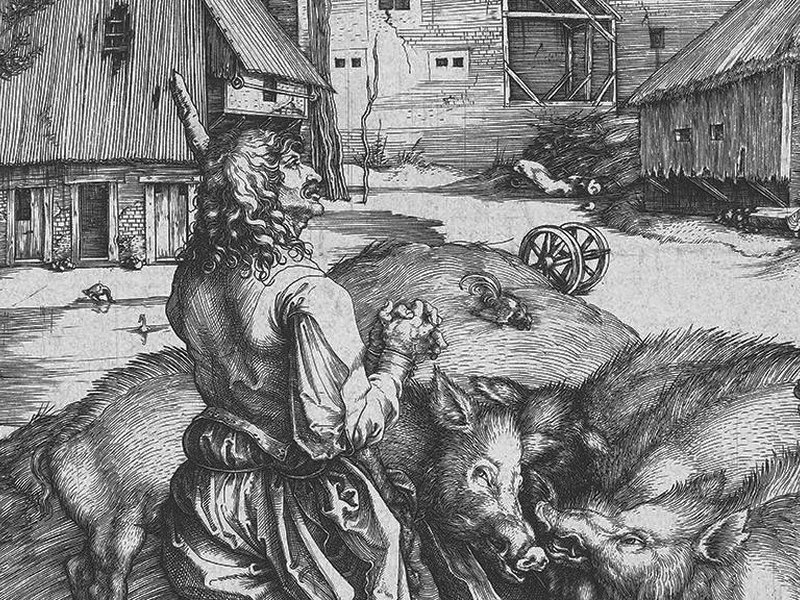
durer-prodigal-son-2
Luke

Perspectives on the Prodigal, (Part 1)

The story of the Prodigal Son is perhaps the most well-known story in the Bible. As others have observed, it may also be one of the most misunderstood. In two short essays, I will point out features of this story that are commonly neglected, aspects of Jesus’ parable that might…

by Ralph Allan SmithJuly 9, 2019
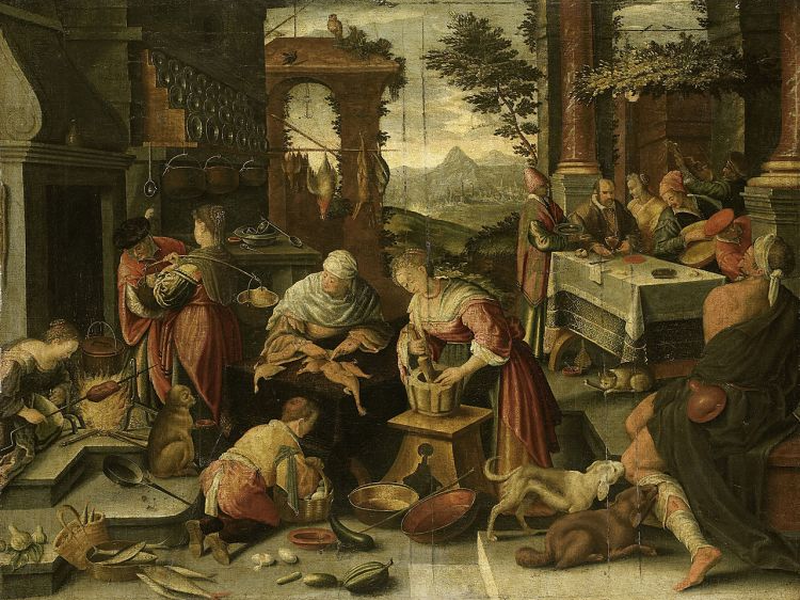
de-rijke-man-en-de-arme-lazarus-by-jacopo-da-ponte-16th-century
Luke

Lazarus and the Rich Man

The parable of Lazarus and the nameless rich man is not an independent story. It is part of a long context that begins in Luke 15:1, where Jesus is eating with tax collectors and sinners and the scribes and Pharisees grumble. In response to their hardheartedness, Jesus tells a three-part…

by Ralph Allan SmithJuly 4, 2019
aaron-burden-uynrnfdkjwg-unsplash
Luke

Everybody has Dropsy - Luke 14:1-24

The Bible is written so that even when a reader cannot pick up on what might be deeper or more detailed aspects of a text, there is virtually always a message to be heard. In the ancient world, where the “reader” of Scripture would likely be a church official facing…

by Ralph Allan SmithJuly 2, 2019
communion
Biblical Theology

Fruit Trees and Grain Plants

The distinction between garden (or vineyard) and field begins in Genesis 2. This relates to the ordering of the formless world. Plants of the field are contrasted with the garden planted by God in Genesis 2:5&8. Later on, under the Old Covenant the Israelites will be required to keep their…

by James B. JordanJune 27, 2019

Showing page 77 of 309

See all

Showing page 38 of 43

See all
Philosophy

Beliefs & Desires

A trio of authors argue in the January 2004 issue of American Philosophical Quarterly that conscious desires are impossible. They begin with a distinction between beliefs and desires, showing that the difference has to do with the “direction of fit” with the external world. Beliefs (and perceptions) arise from the…

February 27, 2004
American Religion

American Jesus

In American Jesus , Stephen Prothero traces a three-stage process that produced a uniquely American Jesus. First, Jesus was detached, through the awakenings of the nineteenth century, from the creedal and confessional Calvinism of Puritan America; then, scholars disentangled Jesus from the biblical witness, basing their faith supposedly on Jesus…

February 26, 2004
Literature

Eugene Vinaver on Romance Literature

From Eugene Vinaver, on the development of Romance literature in the high middle ages: In the third quarter of the twelfth century, some ten or fifteen years after the disaster of the Second Crusade, a remarkable event occurred on the European literary scene . . . . A series of…

February 25, 2004
History

Those Crazy Medievals

In the late twelfth century, the English writer Nigel Wireker produced the Speculum Stultorum , the ?Mirror of Dunces.?EIn this story, an ass, Brunellus, dissatisfied with his short tail, leaves home to visit the famous physician Galen to get a prescription for a longer tail. Galen sends him to Salerno,…

February 25, 2004

Chiasm in Luke 21:25-26

There’s a neat little chiasm in Luke 21:25-26: A. Signs in sun, moon stars B. on earth dismay among nations C. in perplexity at roaring of the sea and waves B. men fainting with fear and expectations of things coming upon the oikoumene A. powers of heavens shaken. A couple…

February 25, 2004

Eucharistic Meditation, February 22

In this parable, Jesus tells the story of Israel using the image of the vineyard. As we saw, this was not an invention of Jesus, but goes back to Psalms and Prophets who used the vineyard as an image of Israel. In these verses Jesus says that the vineyard is…

February 23, 2004

Showing page 2118 of 2212

Browse by Category

In Medias Res

Your weekly digest for all things Theopolis.

Donate

Theopolis is nearly 100% donor-supported. Consider joining us on our mission.