Theopolis Logo

Writing

Explore our collection of theological essays, biblical studies, and reflections on faith and culture.

See all
tanner-mardis-xuxghzhibn4-unsplash-1-2
Biblical Studies

Tweets-turned-Notes on the Bible’s Chronology

Summary In what follows, I will consider the “year-stamps” employed in Scripture, i.e., statements of the form, “Such-and-such an event took place in the Xth year of Y.” In the process, I will suggest some ways in which the Biblical narrative might relate to events in the extra-Biblical world, though…

by James BejonJuly 16, 2019
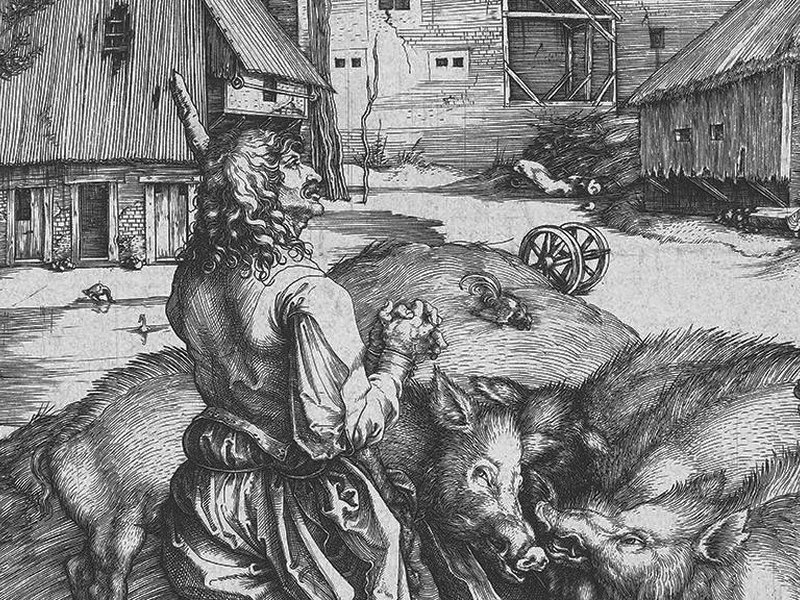
durer-prodigal-son-2
Luke

Perspectives on the Prodigal, (Part 2)

In the first essay on the parable of the Prodigal Son, I suggested that the problems commentators and others encounter in interpreting Jesus three-part parable are not accidental. These are not just problems in our ignorance of cultural background. They are intentional features of the stories —stories designed to poke…

by Ralph Allan SmithJuly 11, 2019
durer-prodigal-son-2
Luke

Perspectives on the Prodigal, (Part 1)

The story of the Prodigal Son is perhaps the most well-known story in the Bible. As others have observed, it may also be one of the most misunderstood. In two short essays, I will point out features of this story that are commonly neglected, aspects of Jesus’ parable that might…

by Ralph Allan SmithJuly 9, 2019
de-rijke-man-en-de-arme-lazarus-by-jacopo-da-ponte-16th-century
Luke

Lazarus and the Rich Man

The parable of Lazarus and the nameless rich man is not an independent story. It is part of a long context that begins in Luke 15:1, where Jesus is eating with tax collectors and sinners and the scribes and Pharisees grumble. In response to their hardheartedness, Jesus tells a three-part…

by Ralph Allan SmithJuly 4, 2019
aaron-burden-uynrnfdkjwg-unsplash
Luke

Everybody has Dropsy - Luke 14:1-24

The Bible is written so that even when a reader cannot pick up on what might be deeper or more detailed aspects of a text, there is virtually always a message to be heard. In the ancient world, where the “reader” of Scripture would likely be a church official facing…

by Ralph Allan SmithJuly 2, 2019
communion
Biblical Theology

Fruit Trees and Grain Plants

The distinction between garden (or vineyard) and field begins in Genesis 2. This relates to the ordering of the formless world. Plants of the field are contrasted with the garden planted by God in Genesis 2:5&8. Later on, under the Old Covenant the Israelites will be required to keep their…

by James B. JordanJune 27, 2019

Showing page 77 of 309

See all

Showing page 38 of 43

See all

May and Postliberalism

T he Guardian devoted a long recent editorial to an analysis of the political outlook of British Prime Minister Theresa May. Whatever Mayism might be, it is not an ideology, not Thatcherism, not David-Cameronian modernizing. For May, Toryism is not “a doctrine but as cultural inclination and a social milieu—the…

January 13, 2017

Trumpism and Paleoconservatism

I n a lengthy, admirably dispassionate New Yorker piece on “Intellectuals for Trump,” Kelefa Sanneh notes that “ Trumpism draws on a political tradition that has often been linked to white identity politics.” He draws particular attention to the work of Samuel Francis, who argued that “America needed a President…

January 13, 2017

China In Africa

I n an interview with Asia Times reporter Doug Tsuruoka, Brookings Fellow and former US Treasury emissary to China David Dollar assesses the scale and impact of Chinese investment in Africa. Overall, Dollar's assessment is bullish: China stabilizes Africa. “China is basically a stabilizing and positive force in Africa. There…

January 13, 2017

Saint Nick

I n his pre-game New Yorker profile of Alabama football coach Nick Saban, Benjamin Wallace-Wells suggests that Saban is an anomaly, perhaps an outmoded one. He starts with Saban's hair: “Men who spend a great deal of time on television tend to cultivate hair styles that look ridiculous in any…

January 13, 2017

Awesome

A t the Atlantic , Matthew Hutson summarizes recent research on the psychology of awe. The executive summary: Awe is good for you. Psychologists have described awe as the experience of encountering something so vast—in size, skill, beauty, intensity, etc.—that we struggle to comprehend it and may even adjust our…

January 13, 2017

Hope in the Hinterlands

J ames Fallows summarizes his findings from a period of travel around the US. It's good news: Erie, Pennsylvania, has a landscape of abandoned factory buildings and a generation of laid-off blue-collar workers who know that their children will never enjoy the security they did at the once-mighty GE locomotive…

January 13, 2017

Showing page 217 of 2212

Browse by Category

In Medias Res

Your weekly digest for all things Theopolis.

Donate

Theopolis is nearly 100% donor-supported. Consider joining us on our mission.