Theopolis Logo

Writing

Explore our collection of theological essays, biblical studies, and reflections on faith and culture.

See all
300298rgsdl
Biblical Studies

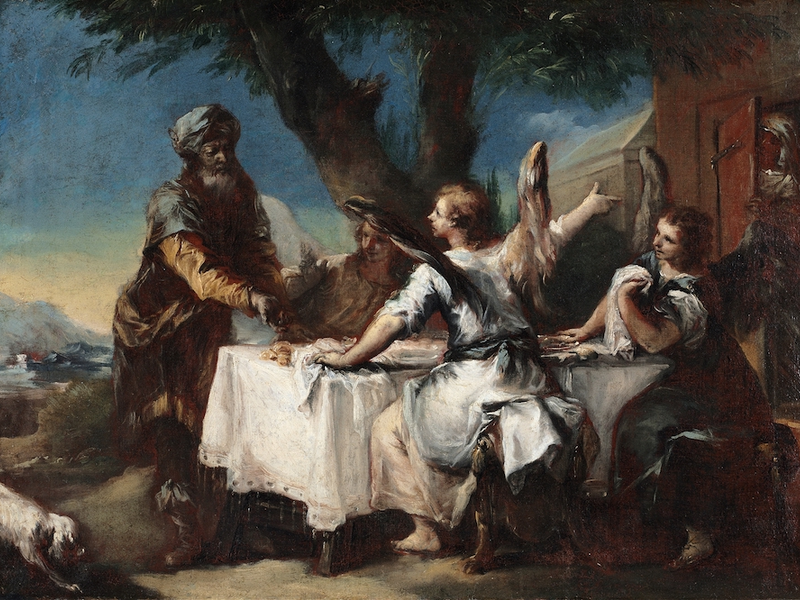
Is Abraham’s Life a Type?

The preceding essay has caused me to consider the possibility that the life of Abraham as recounted in Genesis contains a typological prophecy of the history of Israel; that is, that the events in Abraham’s life broadly anticipate events in Israel’s history. This kind of pattern is seen in the…

by James B. JordanMay 5, 2001

screen-shot-2022-05-12-at-12-07-23-pm
Hermeneutics

Thirty-Eight Years by the Sheep Pool

by: Jeff Meyers and James Jordan In the fifth chapter of John’s gospel we read of a man who had been ill for 38 years and who was lying by a pool located by the Sheep Gate of Jerusalem. This sheep waited, as did many other infirm people, for an…

by Jeff MeyersDecember 5, 2000
238070fgsdl
Biblical Horizons

How Are Women Saved?

What had been reduced to ruin by this sex, would by the selfsame sex be recovered to salvation. As Eve believed the serpent, so Mary believed the angel. The delinquency which the one occasioned by believing, the other by believing effaced. —Tertullian What is Paul saying about women and salvation…

by Jeff MeyersOctober 5, 2000
ben-white-w8qqn1pmqh0-unsplash
Jeremiah

The Return of Hamor

Back in Biblical Horizons 132 I discussed the horrible abuse of the converted men of Salem/Shechem in Genesis 34. These Hivites had joined the covenant by circumcision and then were slaughtered by Simeon and Levi. That, however, is not the end of their story. In Joshua 9 we find the…

by James B. JordanOctober 4, 2000
abraham-defeats-kings-g-jollain-2
Biblical Horizons

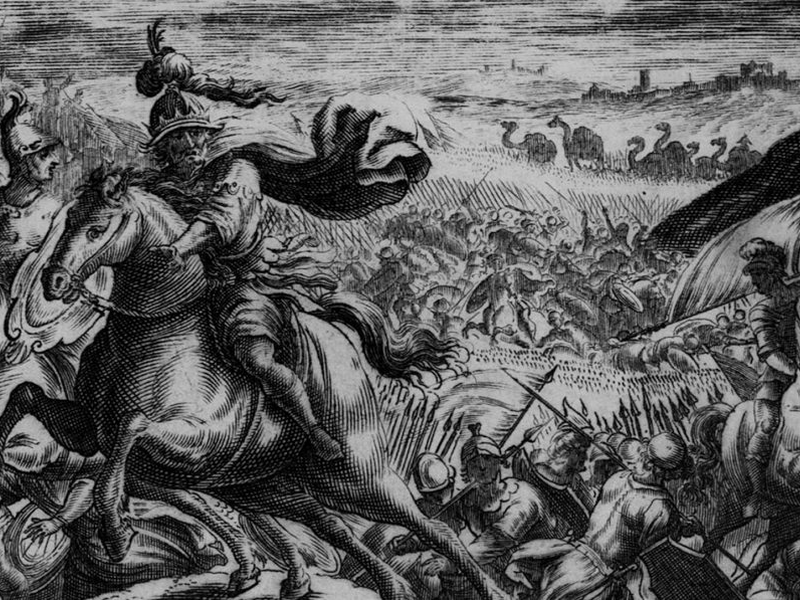
Abram’s 318 Men

Genesis 14:14 says that Abram mustered his trained men, “born in his house,” to rescue Lot, and gives their number as 318. It is clear that the precise number is provided for some reason, but what is it? S. Gevirtz notes that 318 is the sum of all the prime…

by James B. JordanSeptember 4, 2000
mikhail-preobrazhenskiy-9kszdpif_fo-unsplash
Hermeneutics

153 Large Fish

Simon Peter went up, and drew the net to land, full of large fish, a hundred and fifty-three; and although there were so many, the net was not torn. (John 21:11) This is one of those texts in the Bible that many people puzzle over. It is not a puzzle…

by James B. JordanSeptember 4, 2000

Showing page 241 of 309

See all

Showing page 38 of 43

See all

Sacrilege or Exaltation

T he Hebrew word ma’al is a key term in Chronicles. It means “act of unfaithfulness” or “sacrilege,” and is the sin that leads to Saul's fall (he ma’aled a ma’al , 1 Chronicles 10:13) and to the exile of Judah, whose officials and priests ma’aled a ma’al (2 Chronicles…

November 7, 2016
Reformational Catholicism

End of Protestantism

M y End of Protestantism (the book) deals with a number of the questions Doug Wilson raises in his brief review . Here I correct several of Doug’s misrepresentations and clarify some points, but mainly point to fuller discussions in the book. First, on John 17: Doug says that I’m…

November 7, 2016
American Politics

American Prestige in Freefall

W riting in The Australian , Paul Kelly views the state of American politics from Down Under. He gets some things wrong, I think, but he also nails some of the cultural and political toxins of which the 2016 Presidential debate is symptomatic. He lays much of the blame on…

November 4, 2016

Pain and Negation

I n her The Body in Pain , Elaine Scarry describes the “aversiveness” of our experience of pain. By that, she means that pain is sheerly negative, experienced as something set against us. Even though it is in us, it’s not us. Scarry writes: The first, the most essential, aspect…

November 4, 2016

Aging and the Unmaking of the World

A ge obliterates and collapses our world, writes Elaine Scarry in The Body in Pain (32-3): “the body works to obliterate the world and self of the old person. Something of this world dissolution is already at work even in the tendency of those in late middle age, no longer…

November 4, 2016

Divine Sentience

I n several places in Scripture, idols are characterized by their sensory deprivation (Psalms 115; 135). They have eyes but cannot see, ears but cannot hear prayer, noses but cannot smell incense of sacrifice. By implication, Yahweh the living God can do all these things. Elaine Scarry points out (…

November 4, 2016

Showing page 235 of 2212

Browse by Category

In Medias Res

Your weekly digest for all things Theopolis.

Donate

Theopolis is nearly 100% donor-supported. Consider joining us on our mission.