Theopolis Logo

Writing

Explore our collection of theological essays, biblical studies, and reflections on faith and culture.

See all
31-03-0213
Hermeneutics

Apocalyptic Eyes

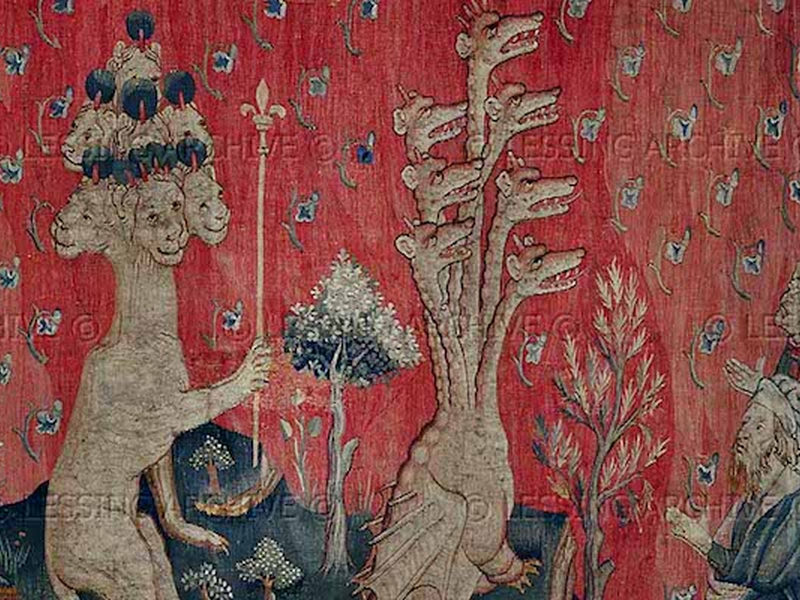
Flying scrolls. Red horses. Beasts coming out of the sea. Winged women. The list goes on. Apocalyptic literature in the Bible is like a cross between science fiction and Marvel comics. And the Bible has a fair bit of this sort of thing. Daniel sees visions in Babylon, Zechariah sees…

by Toby SumpterNovember 4, 2014

bhm-skyline-2
Theopolis News

New Name, New Look

Trinity House Institute has taken a new name, the Theopolis Institute. This striking new name expresses our unique vision and mission and captures the unified purpose behind all our specific programs and activities. We still have Bible, liturgy, and culture in our tagline. We still offer the same courses on…

by TheopolisNovember 4, 2014
istock_000012860926small
Atonement

Not Fearing the Devil

Adam Kotsko offers a socio-political variation on the Christus Victor atonement theory in his 2010 study, The Politics of Redemption: The Social Logic of Salvation . He does this by explaining "the devil" in terms of the Hegelian concept of "objective spirit," Geist . As Kotsko puts it, Geist "refers…

by Peter LeithartOctober 13, 2014
jez-timms-8muutamcwu4-unsplash
Leviticus

The Meaning of Sacrifice

Two factors keep Nahtali Meshel from discussing the meaning of sacrifice until late in his The "Grammar" of Sacrifice . The first has to do with the texts he draws from: "P says little about the meaning of its rituals" (174). The other has to do with the grammatical theory…

by Peter LeithartOctober 8, 2014
jez-timms-8muutamcwu4-unsplash
Leviticus

Praxemics

Chapter 5 of Naphtali Meshel's The "Grammar" of Sacrifice focuses on "praxemics," the physical actions of sacrificial ritual. Praxemes are constituted by six elements: an "atomact," an elementary physical act or gesture; an actor; an object that is acted up; a target for the action and often for the object…

by Peter LeithartOctober 6, 2014
markus-winkler-aid-xyrtlec-unsplash
Leviticus

Jugation and Hierarchy

Two chapters of Naphtali Meshel’s The “Grammar” of Sacrifice cover what he calls “jugation” and “hierarchies.” The first involves the addition of other materials to an animal offering. Jugates include wine, cereal, and oil that are added to the animals (zoemes) that are offered in sacrifice. Some jugates are coordinated…

by Peter LeithartOctober 1, 2014

Showing page 167 of 309

See all

Showing page 38 of 43

See all

Dualist Apocalyptic?

Ryan Leif Hansen doesn't think it's accurate to say that apocalyptic depictions of evil are “dualistic” ( Silence and Praise ). At the very least, the kind of dualism needs to be specified. Hansen writes, “evil is the result of a resistance to divine rule and order, and a transgressing…

December 17, 2015

John Knox

John Knox's influence on the modern world has been enormous. He shaped the Scottish Reformed church, and so shaped the faith and culture of the corners of the world to which Scottish Reformed missionaries and pastors spread. Yet, it's been nearly thirty years since we've seen a major biography. As…

December 17, 2015

The Common-Sensical Berkeley, 2

Berkeley is an anti-abstractionist. What is abstraction? Berkeley is basically taking on Locke, who argues (in Berkeley's telling) that our process of thought works something liek this: We have a particular thing that invariably has a combination of qualities. But those qualities are abstractions. We can see resemblances among things:…

December 16, 2015

Along the Trail of Trade

According to TLS reviewer David Morgan, Peter Frankopan's The Silk Roads is the fruit of teenage dissatisfaction with world history: “Frankopan tells us that as a teenager he became increasingly dissatisfied with the version of history he had been taught: essentially the ‘Rise of the West,' in which Greece led…

December 16, 2015

Walking the Walk

The gospel is all about teaching us to walk. Once we walked, zombie-like, in death and sin (Ephesians 2:1), but God raised us in Christ to walk in good works ( 2:10). We used to walk like the Gentiles, in darkness and dissipation, without God in the world. Now that…

December 16, 2015

Dickensian Typology

Dickens's Hard Times takes place in Coketown, a coal mining town, focused on a small cluster of characters. There’s Gradgrind, a leading citizen and MP and education reformer. The Gradgrind children, Tom and Louisa, have both been trained according to Gradgrind’s modern educational methods. Bounderby is the manager of one…

December 15, 2015

Showing page 340 of 2212

Browse by Category

In Medias Res

Your weekly digest for all things Theopolis.

Donate

Theopolis is nearly 100% donor-supported. Consider joining us on our mission.