Theopolis Logo

Writing

Explore our collection of theological essays, biblical studies, and reflections on faith and culture.

See all
kelly-sikkema-gpoh17dxqdm-unsplash
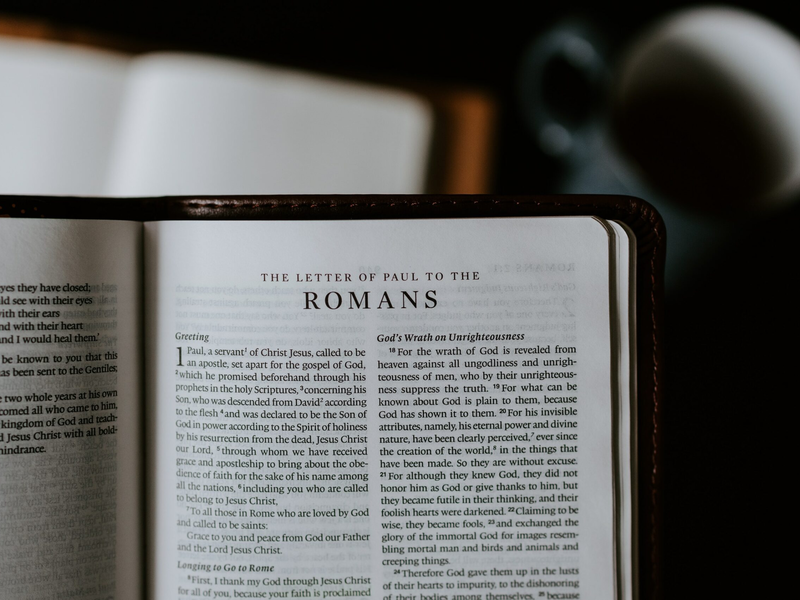
Romans

Paul’s Gospel & the Theme of Romans

Paul, a bond-servant of Christ Jesus, called as an apostle, set apart for the gospel of God, which He promised beforehand through His prophets in the holy Scriptures, concerning His Son, who was born of a descendant of David according to the flesh, who was declared the Son of God…

by Mark HorneJune 6, 2003

screenshot-2023-07-27-at-10-25-35-am
History

The Nelda Boswell Scroll: The Apostle Paul’s Town Hall Meeting in Iconium

With the surprising discovery of the Nelda Boswell scroll historians have deciphered its contents and concluded that the apostle Paul returned to the region of Galatia shortly after he wrote the letter that we call Galatians. The evidence suggests that a number of local pastors, elders, and deacons, along with…

by Jeff MeyersJune 6, 2003
aaron-burden-qjdzyt_k8xg-unsplash
Jonah

Jonah, the Judaizers, and the Gospel

Second Temple Judaism was a form of covenantal nomism, according to E. P. Sanders’ terminology. This means that Torah-observance was a way of expressing loyalty to the Lord of the covenant who had graciously elected Israel. I think Sanders’ view (taken up in bits and pieces and with some modifications…

by Rich LuskJune 6, 2003
Theologia

Gratitude or Faith?

We often hear that the key to Christian obedience is thankfulness for what God has done. But the Bible stresses faith and hope much more than gratitude. The Baptist pastor and author John Piper has written, “Nowhere in the Bible is gratitude connected explicitly with obedience as a motivation. We…

by Mark HorneJune 6, 2003
aaron-burden-qjdzyt_k8xg-unsplash
Federal Vision

God’s Righteousness & Our Justification

One of the questions that is commonly asked about Tom Wright regards his teaching about how Paul uses the term “the righteousness of God.” Since Wright’s interpretation of the term in Paul’s epistles is commonly mentioned in passing but rarely analyzed, it seems like a good idea to explicitly spell…

by Mark HorneJune 6, 2003
jordan-wozniak-xp_agmeea6s-unsplash
Genesis

Forever Means Forever: God’s Promises to the Jews

If God promised a certain land to the seed of Abraham, saying that it would be theirs “forever” (Gen. 13:15), why do Reformed churches teach that the Jews permanently lost their right to the land? What about all these Old Testament “forever” promises and prophesies made to the Jews? How…

by Jeff MeyersJune 6, 2003

Showing page 230 of 309

See all

Showing page 38 of 43

See all
Global Christianity

The Era of Christian Expansion

Protestants look back longingly to the Reformation as one of the great periods of church history, and it was in many respects. In terms of the global reach of Christianity, though, the sixteenth century was a low point. Since its beginning, Christianity has rarely been confined to so contracted an…

October 5, 2015

The One

Peter Adamson (P hilosophy in the Hellenistic and Roman Worlds ) claims that “A good case can be made for seeing Plotinus as the most in fluential Western philosopher of all time, apart from Plato and Aristotle themselves.” He fused Plato with some of Aristotle's ideas, added Stoic concepts, to…

October 5, 2015

Throne of the Beast

The fifth angel pours out his bowl on the “throne of the beast” (Revelation 16:10-110). There are a lot of beasts in Revelation. Which one is it? The fact that it is in the fifth slot gives us a clue. God created swarming things on earth and in the sea…

October 5, 2015

Mother in Israel

Deborah is the only female judge, and the only judge who does anything close to what we would recognizing as “judging.” She is a prophetess, and holds court sitting under a palm tree between Ramah and Bethel (Judges 4:5). She also does what the other Hebrew judges do - leads…

October 2, 2015
Philosophy

Autonomy or Theonomy

Peter Adamson finds some general trends in his forthcoming study of Philosophy in the Hellenistic and Roman Worlds . Hellenistic philosophy was broadly anti-Platonic, denying the existing of “immaterial entities” and devoted to physicalism. In one of his many moments of whimsy, Adamson suggests that the change is so sudden…

October 2, 2015

Egyptian Bees

The subtitle of Gene Kritsky's forthcoming Tears of Re is “Beekeeping in Ancient Egypt.” The linkage of deity, mourning, and beekeeping is too tantalizing to pass up. The title is based on a myth found in a papyrus from about 300 BC: “The god Re wept and the tears from…

October 2, 2015

Showing page 368 of 2212

Browse by Category

In Medias Res

Your weekly digest for all things Theopolis.

Donate

Theopolis is nearly 100% donor-supported. Consider joining us on our mission.