Theopolis Logo

Writing

Explore our collection of theological essays, biblical studies, and reflections on faith and culture.

See all
max-kukurudziak-qbc3zmxw0g8-unsplash
History

Report from Ukraine

We lost Crimea. That is very clear. Putin proved he was not lying when he said he would place women and children ahead of his soldiers to storm Ukrainian military bases. Russian soldiers did exactly that with women (some who volunteered and some who were forced). Russia now occupies all…

by San SanychMarch 28, 2014

screenshot-2023-09-21-at-3-59-23-pm
Church Calendar

God Gone Silent

Sound is an indicator of life and energy. “Sound signals the present use of power, since sound must be in active production to exist at all.” Things don’t have to be alive to make themselves visible, and “a primitive hunter can see, feel, smell, and taste an elephant when the…

by Peter LeithartMarch 26, 2014
web-lead-image_final_dostoevsky
Books

Dostoevsky the Liberal

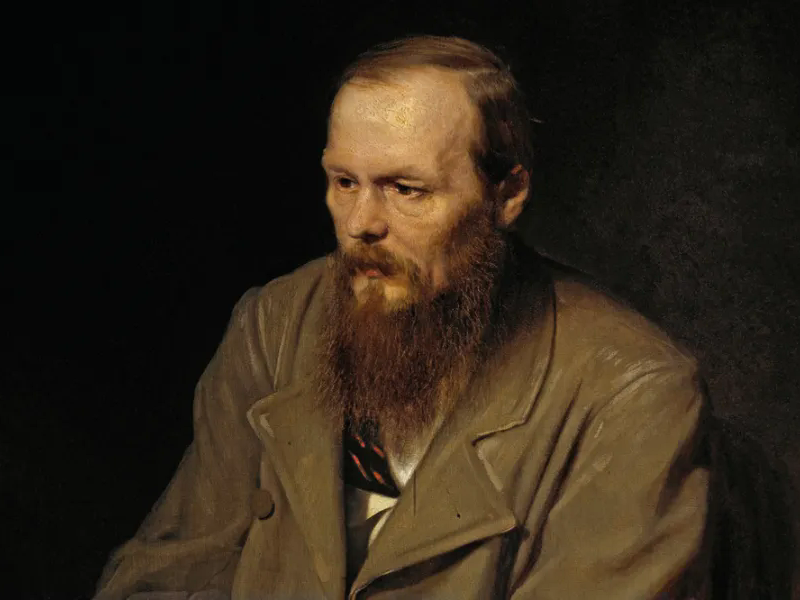
In the most famous section of his best-known novel, Dostoevsky’s Ivan Karamazov brings forward his case against God. He opens with a horrific litany of outrages against children. Turkish soldiers make a baby laugh and then shoot a pistol into his face. A little girl is beaten, thrashed, kicked by…

by Peter LeithartMarch 24, 2014
kelly-sikkema-ggs0_g6wi-i-unsplash
Epistemology

Subsidiary-Focal Integration and Liturgy

​At the heart of Esther Lightcap Meek's splendid ​Little Manual for Knowing is a concept she picked up from Michael Polanyi, "subsidiary-focal integration." The concept begins from the insight that all our knowing, all our experience, is double. We focus on something, but we are capable of "indwelling" that focal…

by Peter LeithartMarch 19, 2014
engin-akyurt-uz9qpvbol0e-unsplash
Revelation

White Stone

Jesus promises the overcomers of Pergamum "hidden manna" and a "white stone." The hidden manna is often linked with the manna stashed away in the ark of the covenant. The white stone has proved more elusive. Exodus tells us that manna was white (Exodus 16:31) and like bdellium (Numbers 11:7),…

by Peter LeithartMarch 17, 2014
226961fgsdl
Leviticus

A Theology of Festivity

Leviticus 23 begins with a reference to “Yahweh’s appointed times” ( mo’ade-YHWH ). Mo’ed is the common term for the feasts of Israel. A few dimensions to this term. First, it means “appointed time” or “designated time.” It is a time set by Yahweh. Yahweh has claimed certain times as…

by Peter LeithartMarch 12, 2014

Showing page 177 of 309

See all

Showing page 38 of 43

See all

Anti-Catholicism and Religious Freedom

John Pinheiro's Missionaries of Republicanism is, according to the subtitle, a “religious history of the Mexican-American War.” He shows how the war was infused with religious themes, linking American Protestantism with Anglo-Saxonism and Manifest Destiny. Near the heart of the religious justification of the war was anti-Catholicism: The United States…

August 17, 2015

Complacent City

John condemns harlot Babylon for her luxury. The Greek word is strenos , which is used only once in the LXX, to describe the “complacency” of Sennacherib (2 Kings 19:28). The Hebrew term behind it is sha'anan , which describe the women of Jerusalem (Isaiah 32:9, 11), those who are…

August 17, 2015

Unique Minority

In a contribution to the 1988 volume, Eliminating Racism , Thomas Pettigrew explained the uniqueness of the African-American experience, which “uniquely combines a long history of being simultaneously an integral part and on the outside of the society” (23). Few of even the most racist Americans consider blacks to be…

August 17, 2015

The Demographics of Exile

When Israel was deported to Babylonian exile, it would have been natural for Israelites to reason that they ought to limit the size of their families and wait for a return to the land. It might even be best to avoid marriage/ After all, who wants to support a wife…

August 17, 2015

Sociality in Modern Cities

Since Ferdinant Toennies introduced the categories, sociologists have often contrasted the gemeinschaftlich forms of social life in traditional societies with the gesellschaftlich forms in modernity. As Nancy Ammerman explains the distinction, the former are marked by “affectivity, particularism, ascription, and diffuseness. In such communities, relationships had emotional depth, were idiosyncratic,…

August 14, 2015

Race and Rootedness

Charles Bambach's Heidegger's Roots is an attempt to trace the roots of Heidegger's affinity for Naziism. The “roots” of the title have a double meaning - both the intellectual background to Heidegger and Heidegger's formulation of Bodenstandigkeit , “rootedness.” Early on, Bambach summarizes Ernst Bloch's “caustic and penetrating” response to…

August 14, 2015

Showing page 389 of 2212

Browse by Category

In Medias Res

Your weekly digest for all things Theopolis.

Donate

Theopolis is nearly 100% donor-supported. Consider joining us on our mission.