Theopolis Logo

Writing

Explore our collection of theological essays, biblical studies, and reflections on faith and culture.

See all
trnava-university-beeyeib-am8-unsplash
Biblical Horizons

Puritans v. Reformed Worship: (Part Two of a Book Chapter Review)

Continuing through The Worship of the English Puritans by Horton Davies: The author gives some of his own appraisals rather than immediately quoting Durel, even though that is how he began his chapter. In Davies’ opinion, while the Puritans would invoke their own interpretation of Scripture in order to condemn,…

by Mark HorneFebruary 9, 2008
kelly-sikkema-gpoh17dxqdm-unsplash
Ephesians

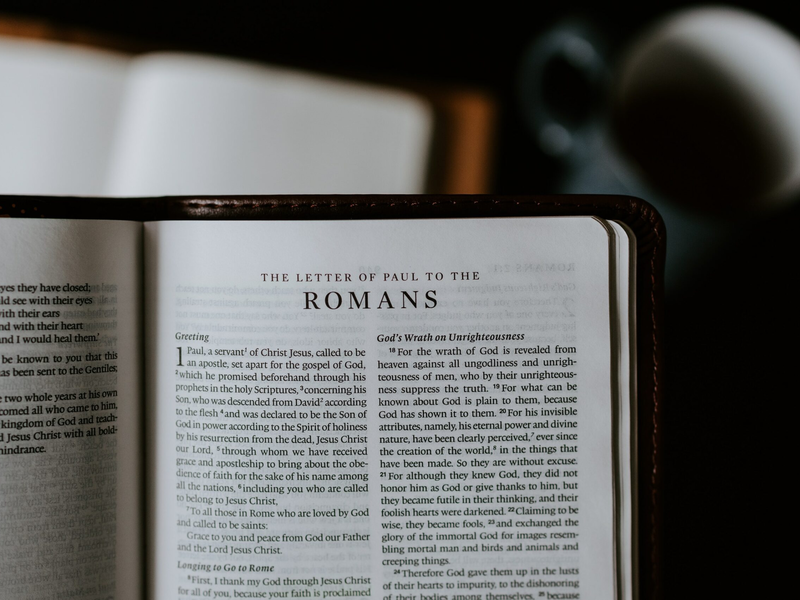
Luther Should Have Inserted “Alone” a Second Time in Romans

What follows are from a couple of posts on my blog. I hoped to do a series. If I do follow up, I will probably want to do it here on the BH blog rather than my own. Feedback welcome: It is no secret that some have been scathingly critical…

by Mark HorneFebruary 9, 2008
jim-jordan-teaching-2
Baptism

Jesus’ Baptism and ours

Jeremy Sexton wrote this in an earlier line of discussion: “Along those lines, I think what we most often miss in our theology of baptism (though Calvin didn’t miss this) is that Christian baptism — if it “is” anything that came before — is Jesus’ water baptism. In our baptism,…

by James B. JordanFebruary 8, 2008
sixteen-miles-out-d40gdcd_-he-unsplash
Numbers

Israel was not (all of) the Church

Jeff pointed out that baptism is not Christian circumcision . Looking at the comments, I think it might be helpful to point out that Israel was not the Church . In the new creation, the idea of an “unbaptized Christian” is either very temporary or an anomaly. Those who came…

by Mark HorneFebruary 6, 2008
aaron-burden-h8s0pf2rcqs-unsplash
Parables

Parables, Part I

Once a upon a time, one Sunday morning, a pastor mounted his pulpit for the sermon and said the following: A troubled young man walked into a downtown high-rise building. As he approached the directory on the wall, he took out a small booklet and looked back and forth from…

by Jeff MeyersFebruary 5, 2008
sixteen-miles-out-al48tflf4e8-unsplash
Exodus

What is a Prophet? (Friendship and Justification)

If you are, say, leading a Bible study in Genesis, you might notice that right after the covenant is renewed and circumcision is established (ch 17) that we see Abraham eating and drinking with God (ch 18). After that meal, God makes a point of saying the he should share…

by Mark HorneFebruary 3, 2008

Showing page 216 of 309

See all

Showing page 38 of 43

See all

History of Disgust

Norbert Elias’s The Civilizing Process traces modern standards of disgust and cleanliness to the development of court society during the Renaissance. Drawing on Elias, William Miller ( Anatomy of Disgust ) suggests sensitivity to disgust and being civilized are directly proportional. Martha Nussbaum ( Hiding from Humanity , 115-6) disagrees…

December 15, 2014

Islamic Revolutionaries

In his brilliant Earthly Powers (3), Michael Burleigh cites a passage from Tocqueville’s book on the French Revolution. Taking a note from Schiller about “how early modern religious wars spilled across political boundaries, which reminded Tocqueville of the ideological struggle between Jacobins and counter-revolutionaries in late-eighteenth-century Europe,” Tocqueville drew a…

December 12, 2014

Sacrificial Politics

Semyon Frank was a Russian emigre to London. Michael Burleigh ( Sacred Causes , 39) sums up his life: “Born in 1877 into a Russian-Jewish family, he had quickly outgrown a juvenile Marxism, converting to Orthodox Christianity in 1912, on the ground that the Jewish God was as remote from…

December 12, 2014
Modernity

Un-Secular Age

Our secular age can be sustained only if the secular has been carefully distinguished from the sacred, and only if the boundary between the two is vigorously, not to say violently, guarded. But boundary-drawing between the sacred and profane is the work of a priest. It is the sacred act…

December 12, 2014

Pure Aesthetics

Hugh Grady opens his Shakespeare and Impure Aesthetics (6-10) with a brief and illuminating discussion of Kant’s aesthetics of purity. By “pure” here is meant the freedom of aesthetic experience from cognitive reason and teleological judgments, from practical or moral interests. This disinterested experience of art is an encounter with…

December 12, 2014

After the Temple

Jonathan Klawans is a great one for cutting through nonsense. In his Purity, Sacrifice, and the Temple , he points to the oddity that “documents composed three, four, or even five centuries after the destruction are labeled as delayed responses to the destruction. . . the suggestion that it took…

December 11, 2014

Showing page 487 of 2212

Browse by Category

In Medias Res

Your weekly digest for all things Theopolis.

Donate

Theopolis is nearly 100% donor-supported. Consider joining us on our mission.