Theopolis Logo

Writing

Explore our collection of theological essays, biblical studies, and reflections on faith and culture.

See all
screen-shot-2021-06-03-at-8-49-15-am
Ezra

Ezra: The Aaronic Rest-Giver

If you’re a preacher looking for good commentaries on Ezra, you’ll struggle. Certainly to find ones that wrestle in good detail with the text. And certainly ones that don’t cost you an arm and a leg. There’s a good bit more for Nehemiah, which is odd, as the two are…

by Rhys LavertyJune 8, 2021

christian-lue-k1e6994p3t8-unsplash
1 John

1 John in Community

Quick thought experiment: try to pretend you’ve never read 1 John before. Read 1:1-6. Go ahead; I’ll wait. Now, on to v. 7: “But if we walk in the light as He is in the light, we have fellowship with ______….” What word would you expect in that blank, based…

by Tim NicholsJune 1, 2021
noahs-ark-genesis
Hermeneutics

Spending Time with Noah: Reflections on Prepositions in the Flood Narrative

In my work as a Bible translator, I was recently checking our translation team’s draft of Genesis 8:8, which says of Noah (translating the Hebrew quite literally): And he sent out the dove from with him to see: had the waters lessened from upon the face of the ground? Part…

by Josh JensenMay 25, 2021
86758
Philosophy

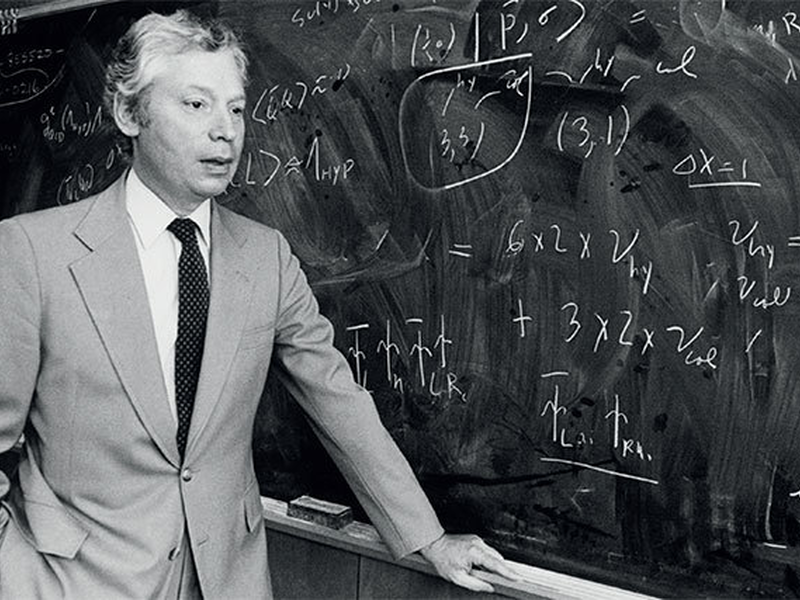
Steven Weinberg Destroyed My Faith

Just in case a reader may not know Weinberg, he is a theoretical physicist and the winner of the Nobel prize in physics in 1979, as well as countless other prizes for his research. He is also a prolific, lucid, and captivating writer. If you want to read something on…

by Ralph Allan SmithMay 18, 2021
screen-shot-2020-09-17-at-9-11-45-am
Colossians

Reconciliation in Colossians 1:20

Colossians 1:15-20 is a famous passage in Paul’s epistles because it is a succinct and powerful poem. It appears even to have been a hymn. Given the uniquely Pauline language — “reconciliation” is a term used only by Paul — it should not seem odd to attribute the poem/hymn to…

by Ralph Allan SmithMay 11, 2021
stalker_still
Movies

Terror of Knowing Myself

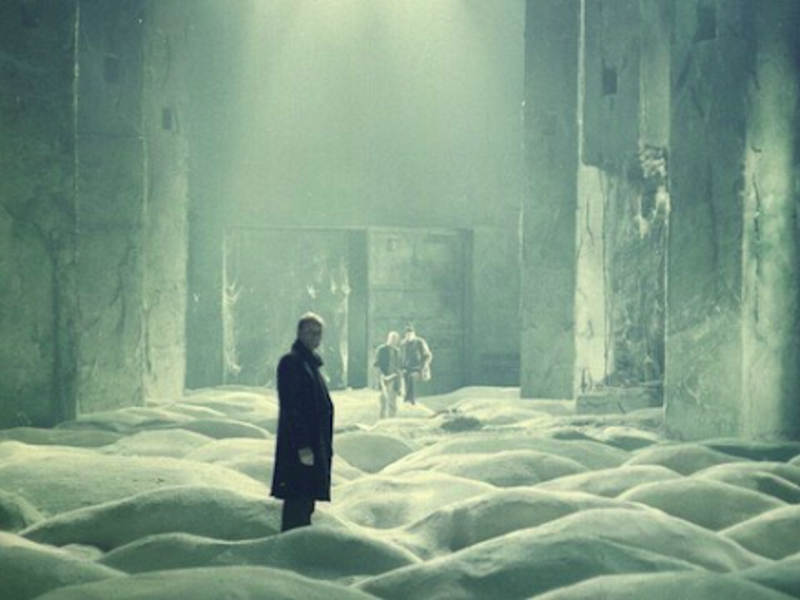
Stalker (1979) is a film by Andrei Tarkovsky based on Roadside Picnic by the Strugatsky brothers. It shows a day from the life of a stalker, a man who enters the so-called "Zone", an Alien landing site, where he leads people to a room that grants people’s innermost desires, which…

by Bogumil JarmulakMay 4, 2021

Showing page 55 of 309

See all

Showing page 38 of 43

See all

Bloody Christians

Rabbinic Judaism, Stephen Geller suggests, is the “triumph of Deuteronomy and the Word.” After the fall of the temple especially, the place of the cult was taken by prayer and the liturgy. The literary temple became far more important than any possible future building. And with the end of the…

March 7, 2014

Vocal Silence

Michel Anteby’s Manufacturing Morals is an “ethnography” of the Harvard Business School. It’s an odd book, very insight-the-HBS, but along the way he develops the intriguing notions of “vocal silence.” Routine seems to rob individuals of responsibility. But most routines, Anteby points out, require some degree of responsible judgment: “Police…

March 6, 2014

Traumatic Neighbors

In his contribution to The Neighbor , Zizek offers this typically contrarian, typically extreme, description of the impact of God’s command to love the neighbor: “What gets lost in this ‘critique of ethical violence’ is precisely the most precious and revolutionary aspect of the Jewish legacy. Let us not forget…

March 6, 2014

Rivers

Rivers have a unique place in biblical cosmology. Though watery, rivers are unlike the sea, which always threatens to overwhelm the land. Channeled, water becomes life-giving. They keep land fruitful, set boundaries between peoples or join them as liquid roads. A river is water brought into service to human needs,…

March 6, 2014

Gratitude according to Barth

Someone asked me recently if my Gratitude includes a section on Barth. It doesn’t, and I’m sure this is not the last time I will turn sheepish as I confess to a large, unconscionable gap in the book. It doesn’t make up for the oversight, but here are some summary…

March 6, 2014

Literary Facts

Stephen Geller opens an essay on blood in “P” by stating that he is treating the Pentateuch as a literary unit. What the “priestly editor” produced, he argue is not “patchwork aggregate signifying nothing” but “a work meaningful in the whole, a tapestry more than the sum of its woven…

March 6, 2014

Showing page 666 of 2212

Browse by Category

In Medias Res

Your weekly digest for all things Theopolis.

Donate

Theopolis is nearly 100% donor-supported. Consider joining us on our mission.