Theopolis Logo

Writing

Explore our collection of theological essays, biblical studies, and reflections on faith and culture.

See all
sinitta-leunen-dvibhmzsy8e-unsplash
Epistemology

A Cheer for the Mystics

Mystical theologians are often unguarded, extreme, un-nuanced, pressing to the edges of heresy, sometimes beyond. Still, the mystics are worthy of study. Why? Many reasons. Unlike some late medieval and post-Reformation dogmaticians, mystical theologians are often instinctively and richly Trinitarian. Historical-critical approaches to Scripture left mystical theologians virtually untouched; mystics…

by Peter LeithartSeptember 2, 2013
portrait-of-william-shakespeare-1564-1616-ca-1865
Literature

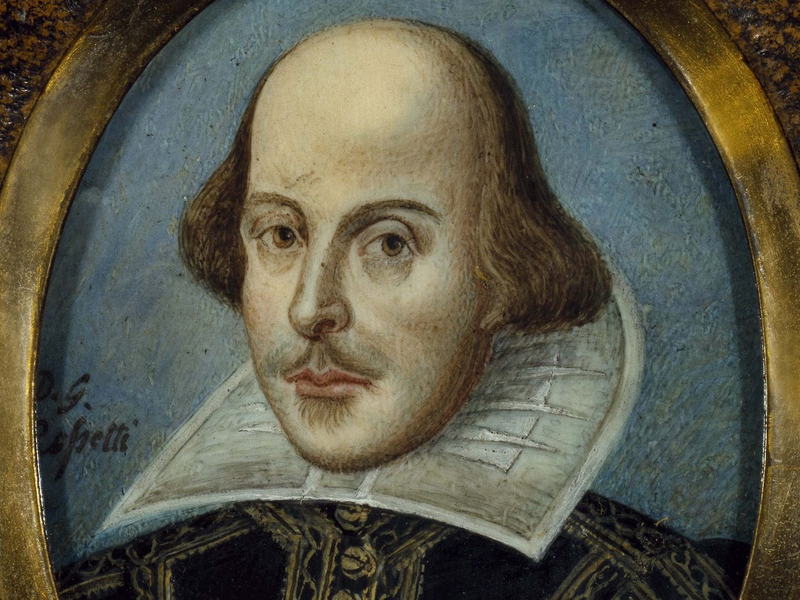
Shadow and Substance in Shakespeare's Venice

Portia of Belmont is a “lady richly left,” as Bassanio says of her in the first Act of The Merchant of Venice . Plus, she’s beautiful and wise. Suitors clamber to Belmont in hope. Her father knew it would be so, and in his will set up a fairy-tale test…

by Peter LeithartAugust 28, 2013
carlo-alberto-burato-smdx3gleu_m-unsplash
Liturgy

Liturgy Traps

[fve]http://vimeo.com/72195198[/fve]

by James B. JordanAugust 26, 2013
screen-shot-2022-05-12-at-12-07-23-pm
Deuteronomy

Victory Food

In the nature of the case, “the” Christian meditation on Deuteronomy 14:1-21 cannot be written. Meditation offers too many possibilities, opens too many doors. There is not one and only one correct set of associations for a Christian to consider when thinking of Deuteronomy 14:1-21. We could, for example, consider…

by Ralph Allan SmithAugust 21, 2013
aaron-burden-1ebsmyrau-s-unsplash
Romans

David's Sin and Israel's Salvation, Part I

Having retold the story of the cumulative sin of Israel leading to the great atonement on the cross, Paul then reemphasizes that, just as both Jew and Gentiles were locked into sin and judgment, now they are both justified by faith: Then what becomes of our boasting? It is excluded.…

by Mark HorneAugust 20, 2013
ben-white-w8qqn1pmqh0-unsplash
Deuteronomy

You are what you eat

Deuteronomy 14 is full of allusions to events of Israel’s history and other portions of Scripture. What would an Israelite learn by mediation on these allusions? The answer, I believe, is at least fourfold. Faith, Worship, War For the ancient Israelite first hearing Moses’ sermon, or perhaps hearing it read…

by Ralph Allan SmithAugust 15, 2013

Showing page 189 of 309

See all

Showing page 38 of 43

See all

The Truth of Fiction

A fine statement from Iris Murdoch on the capacity of literature to seek and reveal truth: "I think that though they are so different, philosophy and literature are both truth-seeking and truth-revealing activities. They are cognitive activities, explanations. Literature, like other arts, involves exploration, classification, discrimination, organized vision. Of course…

February 9, 2018

Genealogy of Atheism

Gavin Hyman ( A Short History of Atheism ) doesn't think contemporary atheists are aware of the origins and cultural conditions of their own unfaith. They suffer from "a lack of awareness of atheism’s own origins, of the historical, philosophical and cultural matrix out of which it emerged, of its…

February 9, 2018

After Millman-Lord

In Literacy and Orality in Ancient Greece , Rosalind Thomas surveys the current state of Homeric studies. In the background is the Millman-Lord thesis that the epics are the product of oral improvisation. Thomas discerns two schools: “On the one hand, the formulaic theory of Parry and Lord is being…

February 9, 2018

Triune Worker

Thomas Schirrmacher ( God Want You to Learn, Labor, and Love ) outlines a Trinitarian conception of labor. Work, like all human activity, has its uncreated origin in God. We are able to work because we are made in the image of a God of labor: "In the Bible, man’s…

February 8, 2018

Is God an Object?

Robert Jenson addresses this perennial question ( Systematic Theology , 1.228-9) in a characteristically Jensonian fashion, by reminding us of the dynamics of discourse: "In all true mutual discourse . . . each must be both subject for and object of the other. As I am present to address you,…

February 8, 2018
Music

How the Church Lost Its Soundscape

The following was first published in 2011 at Firstthings.com . “By the twelfth century,” Christopher Page writes in his magisterial The Christian West and Its Singers (2010), “the Latin West could be imagined as a soundscape of Latin chant.” From the eighth-century alliance of Pope Stephen with the Frankish King…

February 7, 2018

Showing page 97 of 2212

Browse by Category

In Medias Res

Your weekly digest for all things Theopolis.

Donate

Theopolis is nearly 100% donor-supported. Consider joining us on our mission.