Theopolis Logo

Writing

Explore our collection of theological essays, biblical studies, and reflections on faith and culture.

See all
tanner-mardis-xuxghzhibn4-unsplash-1-2
Biblical Studies

Tweets-turned-Notes on the Bible’s Chronology

Summary In what follows, I will consider the “year-stamps” employed in Scripture, i.e., statements of the form, “Such-and-such an event took place in the Xth year of Y.” In the process, I will suggest some ways in which the Biblical narrative might relate to events in the extra-Biblical world, though…

by James BejonJuly 16, 2019
durer-prodigal-son-2
Luke

Perspectives on the Prodigal, (Part 2)

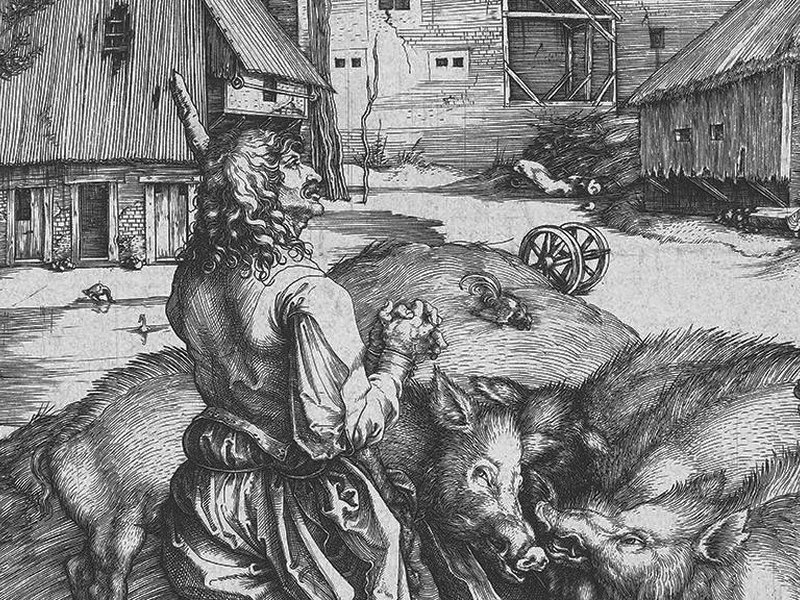
In the first essay on the parable of the Prodigal Son, I suggested that the problems commentators and others encounter in interpreting Jesus three-part parable are not accidental. These are not just problems in our ignorance of cultural background. They are intentional features of the stories —stories designed to poke…

by Ralph Allan SmithJuly 11, 2019
durer-prodigal-son-2
Luke

Perspectives on the Prodigal, (Part 1)

The story of the Prodigal Son is perhaps the most well-known story in the Bible. As others have observed, it may also be one of the most misunderstood. In two short essays, I will point out features of this story that are commonly neglected, aspects of Jesus’ parable that might…

by Ralph Allan SmithJuly 9, 2019
de-rijke-man-en-de-arme-lazarus-by-jacopo-da-ponte-16th-century
Luke

Lazarus and the Rich Man

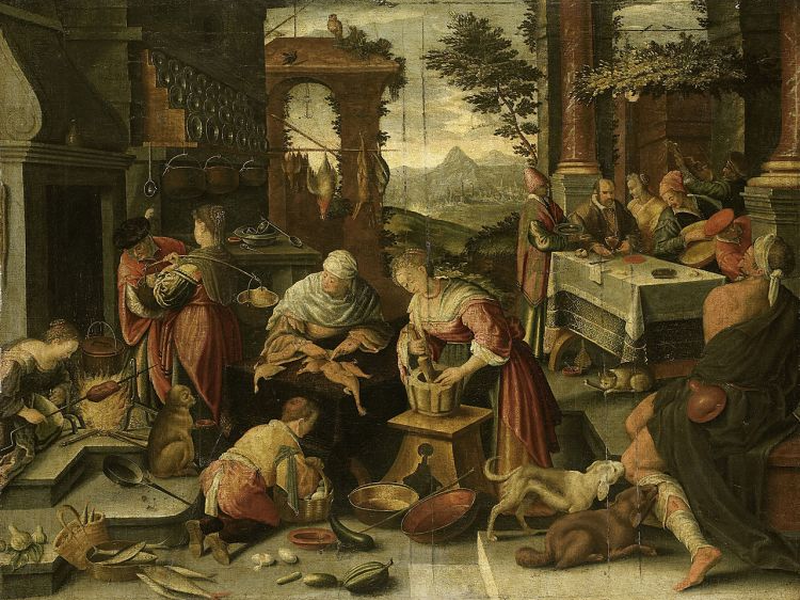
The parable of Lazarus and the nameless rich man is not an independent story. It is part of a long context that begins in Luke 15:1, where Jesus is eating with tax collectors and sinners and the scribes and Pharisees grumble. In response to their hardheartedness, Jesus tells a three-part…

by Ralph Allan SmithJuly 4, 2019
aaron-burden-uynrnfdkjwg-unsplash
Luke

Everybody has Dropsy - Luke 14:1-24

The Bible is written so that even when a reader cannot pick up on what might be deeper or more detailed aspects of a text, there is virtually always a message to be heard. In the ancient world, where the “reader” of Scripture would likely be a church official facing…

by Ralph Allan SmithJuly 2, 2019
communion
Biblical Theology

Fruit Trees and Grain Plants

The distinction between garden (or vineyard) and field begins in Genesis 2. This relates to the ordering of the formless world. Plants of the field are contrasted with the garden planted by God in Genesis 2:5&8. Later on, under the Old Covenant the Israelites will be required to keep their…

by James B. JordanJune 27, 2019

Showing page 77 of 309

See all

Showing page 39 of 43

See all

Translating Homer

Reviewing two new translations of the Iliad (by Peter Green and Barry Powell ), Hayden Pelliccia explores some of the challenges of translating Homer. It starts from the very beginning. Homer writes (in Greek word order): “Wrath sing, goddess, Peleus-son Achilles’, baneful, which hurled.” What's an English translator to do?…

October 13, 2017

Butler as Metaphor

The responses to the Nobel selection of Kazuo Ishiguro for the 2017 literature prize drew mixed, underwhelmed responses. Someone wrote that he wasn't awarded the prize for any recent books. The Paris Review , though, posted an old interview to celebrate. As readers of Ishiguro's novels would expect, the author…

October 13, 2017

The Real Proximity of God

In Introduction to Christianity , Joseph Ratzinger explains how the dogma of the Trinity emerged from early Christian experience. The apostles discovered that "in Jesus Christ one meets a man who at the same time knows and professes himself to be the Son of God. One finds God in the…

October 13, 2017
Augustine

Miniaturizing Sin

Peter Brown reviews of Sarah Ruden's new translation of Augustine's Confessions in this weeks New York Review of Books . I can't speak to the translation, but I can speak to the reviewer: Everything Peter Brown writes is worth reading. He comments on Ruden's decision to translate dominus as "master"…

October 13, 2017

Speech on the Cross

As we would expect, Rosenstock-Huessy assembles his grammatical material into a Cross. With the distinction of words and names in mind, we can see how Rosenstock-Huessy describes the function of speech in human life and society in a quadrilateral manner. He develops his point through a brief phenomenology of speech.…

October 12, 2017

Myths of Purity

Old Testament purity rules are badly understood, and a host of myths have surrounded them. Here I discuss three. Myth #1: Uncleanness is "dirtiness." Though there is some overlap between "dirt" and "impurity," the latter has a specific significance. If we take Mary Douglas's definition of dirt as “matter out…

October 12, 2017

Showing page 134 of 2212

Browse by Category

In Medias Res

Your weekly digest for all things Theopolis.

Donate

Theopolis is nearly 100% donor-supported. Consider joining us on our mission.