
Theopolis Logo

Writing

Explore our collection of theological essays, biblical studies, and reflections on faith and culture.

See all
sinitta-leunen-dvibhmzsy8e-unsplash
Epistemology

A Cheer for the Mystics

Mystical theologians are often unguarded, extreme, un-nuanced, pressing to the edges of heresy, sometimes beyond. Still, the mystics are worthy of study. Why? Many reasons. Unlike some late medieval and post-Reformation dogmaticians, mystical theologians are often instinctively and richly Trinitarian. Historical-critical approaches to Scripture left mystical theologians virtually untouched; mystics…

by Peter LeithartSeptember 2, 2013
portrait-of-william-shakespeare-1564-1616-ca-1865
Literature

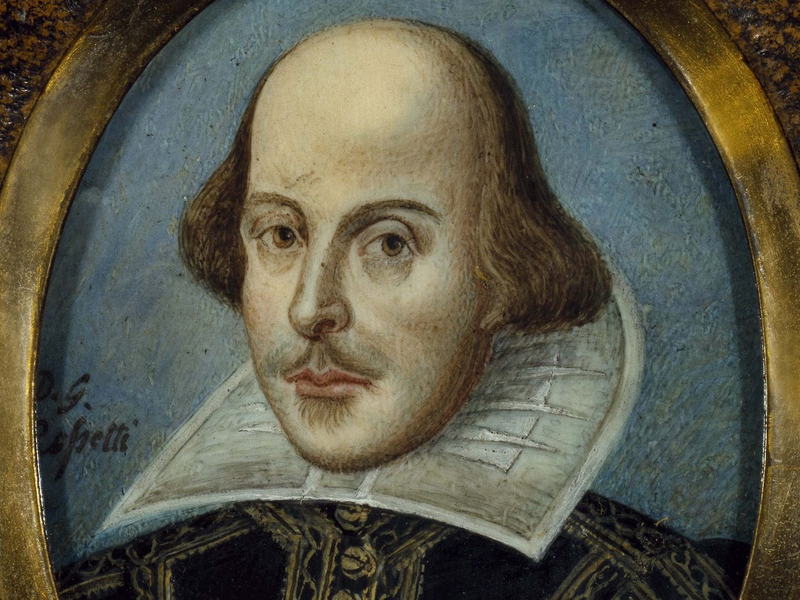
Shadow and Substance in Shakespeare's Venice

Portia of Belmont is a “lady richly left,” as Bassanio says of her in the first Act of The Merchant of Venice . Plus, she’s beautiful and wise. Suitors clamber to Belmont in hope. Her father knew it would be so, and in his will set up a fairy-tale test…

by Peter LeithartAugust 28, 2013
carlo-alberto-burato-smdx3gleu_m-unsplash
Liturgy

Liturgy Traps

[fve]http://vimeo.com/72195198[/fve]

by James B. JordanAugust 26, 2013
screen-shot-2022-05-12-at-12-07-23-pm
Deuteronomy

Victory Food

In the nature of the case, “the” Christian meditation on Deuteronomy 14:1-21 cannot be written. Meditation offers too many possibilities, opens too many doors. There is not one and only one correct set of associations for a Christian to consider when thinking of Deuteronomy 14:1-21. We could, for example, consider…

by Ralph Allan SmithAugust 21, 2013
aaron-burden-1ebsmyrau-s-unsplash
Romans

David's Sin and Israel's Salvation, Part I

Having retold the story of the cumulative sin of Israel leading to the great atonement on the cross, Paul then reemphasizes that, just as both Jew and Gentiles were locked into sin and judgment, now they are both justified by faith: Then what becomes of our boasting? It is excluded.…

by Mark HorneAugust 20, 2013
ben-white-w8qqn1pmqh0-unsplash
Deuteronomy

You are what you eat

Deuteronomy 14 is full of allusions to events of Israel’s history and other portions of Scripture. What would an Israelite learn by mediation on these allusions? The answer, I believe, is at least fourfold. Faith, Worship, War For the ancient Israelite first hearing Moses’ sermon, or perhaps hearing it read…

by Ralph Allan SmithAugust 15, 2013

Showing page 189 of 309

See all

Showing page 39 of 43

See all

TheoUrban Dreams

The following was delivered as a Convocation Address at the beginning of the 2017-18 Theopolis Institute's Junior Fellows Program on August 14, 2017 . Theopolis is the embodiment of a dream. Our name expresses the contents of that dream. We dream of a polis , a city. Every city is…

August 15, 2017

Hearts Prepared

Hezekiah's Passover (2 Chronicles 30) has a prominent place in the Chronicler's account of his reign. As William Johnstone points out ( 1 & 2 Chronicles ), Hezekiah's reign moves out from the temple to the city to the nations. He reopens and purifies the house of Yahweh (2 Chronicles…

August 15, 2017

Welcome to Leithart

Welcome to Leithart the blog. For those who are coming to the blog for the first time, please allow me to introduce myself. I am Peter Leithart, President of the Theopolis Institute , a study center and leadership training program based in Birmingham, Alabama. After spending several decades in the…

August 14, 2017
Gratitude

Pillars of Gratitude

Philip Watkins ( Gratitude and the Good Life ) identifies three “pillars of gratitude.” These are components of gratitude as an emotional “trait,” as opposed to gratitude expressed in response to specific good received or as an emotional state: “These are presumed to be three subordinate facets that contribute to…

August 11, 2017

Inventing “Emotion”

No one before the twentieth century, writes Robert Solomon ( The Passions ), paid serious philosophical attention to the emotions. There's a good reason for that, writes Thomas Dixon ( From Passions to Emotions ): The category “emotion” didn't exist prior to the 19th century. Between 1800 and 1850, there…

August 11, 2017
Epistemology

Dehumanizing Skepticism

God made us to be knowers. We long to know. Esther Meek argues ( Longing to Know ) that the frustration of this desire is one of the effects of skepticism and relativism: “To be human is to make sense of experience. There are voices today that would discourage the…

August 11, 2017

Showing page 153 of 2212

Browse by Category

In Medias Res

Your weekly digest for all things Theopolis.

Donate

Theopolis is nearly 100% donor-supported. Consider joining us on our mission.