Theopolis Logo

Writing

Explore our collection of theological essays, biblical studies, and reflections on faith and culture.

See all
tanner-mardis-xuxghzhibn4-unsplash-1-2
Biblical Studies

Tweets-turned-Notes on the Bible’s Chronology

Summary In what follows, I will consider the “year-stamps” employed in Scripture, i.e., statements of the form, “Such-and-such an event took place in the Xth year of Y.” In the process, I will suggest some ways in which the Biblical narrative might relate to events in the extra-Biblical world, though…

by James BejonJuly 16, 2019
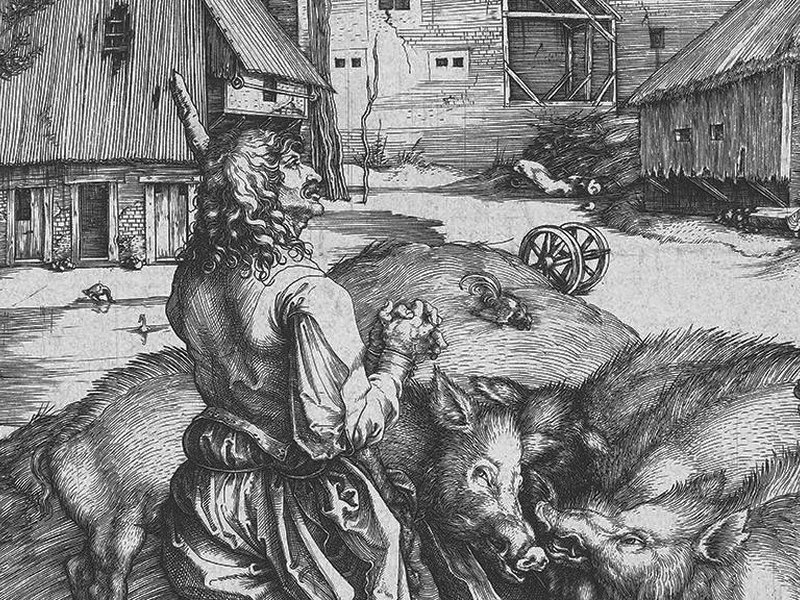
durer-prodigal-son-2
Luke

Perspectives on the Prodigal, (Part 2)

In the first essay on the parable of the Prodigal Son, I suggested that the problems commentators and others encounter in interpreting Jesus three-part parable are not accidental. These are not just problems in our ignorance of cultural background. They are intentional features of the stories —stories designed to poke…

by Ralph Allan SmithJuly 11, 2019
durer-prodigal-son-2
Luke

Perspectives on the Prodigal, (Part 1)

The story of the Prodigal Son is perhaps the most well-known story in the Bible. As others have observed, it may also be one of the most misunderstood. In two short essays, I will point out features of this story that are commonly neglected, aspects of Jesus’ parable that might…

by Ralph Allan SmithJuly 9, 2019
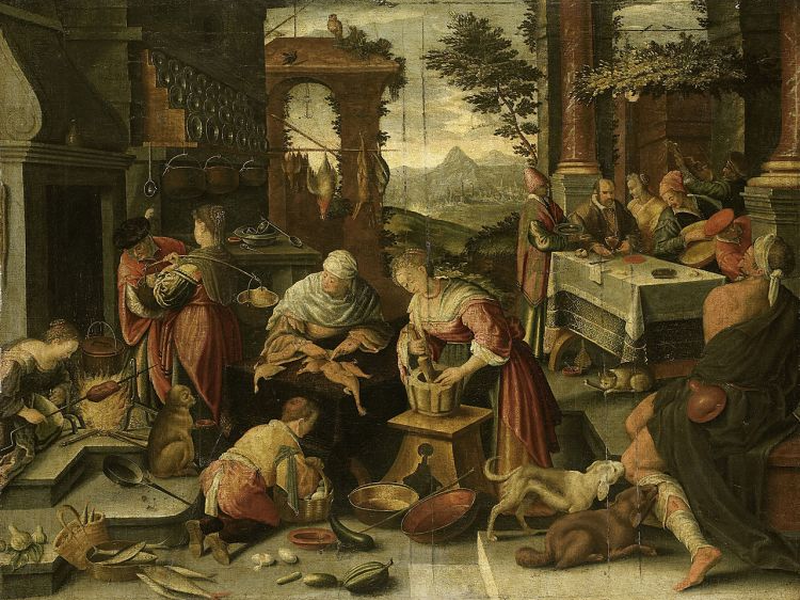
de-rijke-man-en-de-arme-lazarus-by-jacopo-da-ponte-16th-century
Luke

Lazarus and the Rich Man

The parable of Lazarus and the nameless rich man is not an independent story. It is part of a long context that begins in Luke 15:1, where Jesus is eating with tax collectors and sinners and the scribes and Pharisees grumble. In response to their hardheartedness, Jesus tells a three-part…

by Ralph Allan SmithJuly 4, 2019
aaron-burden-uynrnfdkjwg-unsplash
Luke

Everybody has Dropsy - Luke 14:1-24

The Bible is written so that even when a reader cannot pick up on what might be deeper or more detailed aspects of a text, there is virtually always a message to be heard. In the ancient world, where the “reader” of Scripture would likely be a church official facing…

by Ralph Allan SmithJuly 2, 2019
communion
Biblical Theology

Fruit Trees and Grain Plants

The distinction between garden (or vineyard) and field begins in Genesis 2. This relates to the ordering of the formless world. Plants of the field are contrasted with the garden planted by God in Genesis 2:5&8. Later on, under the Old Covenant the Israelites will be required to keep their…

by James B. JordanJune 27, 2019

Showing page 77 of 309

See all

Showing page 39 of 43

See all

Multiple Meanings

What do we do when we disagree about what the Scriptures say? Augustine's answer to that question has rarely been put into practice. This from The Literal Meaning of Genesis : “And when we read in the divine books such a vast array of true meanings, which can be extracted…

August 11, 2017

Searching for Sincerity

Jon Baskin's piece on David Foster Wallace is the best thing I've come across on Wallace. He starts with the arresting claim that in time “it will be recognized that Wallace had less in common with Eggers and Franzen than he did with Dostoevsky and Joyce.” His fiction is a…

August 10, 2017

Creative Destruction

H ezekiah “completes” a Passover (2 Chronicles 31:1a), then starts breaking things. He continues until the destruction is also “complete” (2 Chronicles 31:1b; Heb. kalah ). He breaks pillars, cuts down Asherim, and pulls down high places and altars. Hezekiah's purge is described in a single complex verse, 2 Chronicles…

August 9, 2017

Kantian Emotions

A “Kantian chapter on emotion and responsibility,” write John Sabini and Maury Silver ( Emotion, Character, and Responsibility ), ...is easy to write and quick to read: the domain of the moral is the domain of the will expressed in action; it is the domain of that for which we…

August 8, 2017

Reformation Disenchantment?

S ince at least Max Weber, historians and sociologists have assumed that the Reformation contributed to what Weber called the “disenchantment” of the world. The thesis has inspired rich historical, sociological, and philosophical studies, from Keith Thomas's Religion and the Decline of Magic to Charles Taylor's A Secular Age .…

August 8, 2017

Liturgical Repentance

T he Chronicler's account of Hezekiah's Passover (2 Chronicles 30:1–12) is arranged in a neat chiasm: A. Hezekiah sent letters of invitation to Israel to join in Passover, vv. 1–4 B. Couriers take decree throughout the land, vv. 5–6a C. Content of the invitation/decree, vv. 6b–9 B'. Couriers pass through…

August 7, 2017

Showing page 154 of 2212

Browse by Category

In Medias Res

Your weekly digest for all things Theopolis.

Donate

Theopolis is nearly 100% donor-supported. Consider joining us on our mission.