Theopolis Logo

Writing

Explore our collection of theological essays, biblical studies, and reflections on faith and culture.

See all
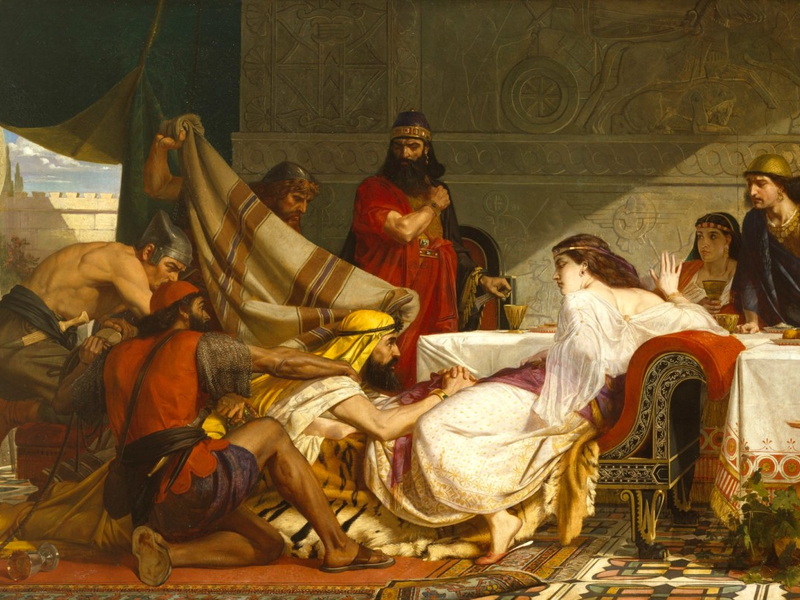
armitage-edward-the-festival-of-esther
Biblical Studies

Esther and Ruth, Grain and Fruit

1 Introduction ESTHER and RUTH are similar stories. Each details the changing fortunes of a young woman. Each begins with the protagonist in a destitute situation. The fortunes of each reverses by story’s end. Intriguing parallels exist: Scenes : The stories transition through a similar set of scenes, see Table…

by Scott FairbanksApril 29, 2021

dariusz-sankowski-abamxzlot8e-unsplash
Biblical Studies

A Hermeneutic of Riddles

Maybe this is not the best venue to reveal that I sometimes wonder about all that deep exegesis: the chiasms, the numerology, vowel modifications, the typological labyrinthes, the innumerable exodus patterns that are so often limned by Peter Leithart or James Jordan or Alastair Roberts. Maybe it’s because I am…

by John AhernApril 27, 2021
fabian-keller-kqjpiatm-om-unsplash
Culture

Building New Watchtowers

In 1923, J. Gresham Machen wrote the book he is perhaps most remembered for, “Christianity and Liberalism”. Machen wrote it to help map out the cultural currents that were impacting the church with the hope that the church could be vigilant against the dangers theological liberalism posed to historic Christianity.…

by Steve GreggApril 22, 2021
download
Matthew

THE ANNUNCIATION TO JOSEPH | (Matthew 1:18-25)

March 25, nine months before Christmas, is the date that is often associated with the Annunciation to Mary, Gabriel’s announcement to Mary that, by the coming of the Spirit upon her, she would conceive and bear the heir to David’s throne, whose kingdom would have no end. The story is…

by John BarachApril 20, 2021
screen-shot-2021-04-14-at-8-50-22-am
Book Review

Book Review: Race and Covenant: Recovering the Religious Roots for American Reconciliation

Race and Covenant: Recovering the Religious Roots for American Reconciliation , edited by Gerald R. McDermott (Grand Rapids, MI: Acton Institute), 278 pp. A group of notable thinkers gathered to discuss biblical resources for addressing racial conflict in America in February 2019 at Samford University in Birmingham. Race and Covenant…

by Ben PetersonApril 15, 2021
beyond-creation-science-illustration
Matthew

Full Preterism’s Fatal Fractal Fracture

“Covenant Creationism,” which might be the most consistent brand of full preterism, is merely dispensationalism turned inside-out. The main cause of disputes over the interpretation of the Scriptures is the practice of interpreting texts in isolation. This applies not only to interpreting a passage without reference to other passages, but…

by Mike BullApril 13, 2021

Showing page 56 of 309

See all

Showing page 39 of 43

See all

Public and Private Piety

Thanks to Jayson Grieser for sending along notes and quotations from Ramie Targoff’s 2001 Common Prayer: The Language of Public Devotion in Early Modern England . Targoff points out that, contrary to what we might think, Protestants were more interested than Catholics in communal worship. “For sixteenth-century Catholics,” she writes,…

April 7, 2007

Calvin and allegory

Calvin is harsher on allegorical interpretation than almost anyone, yet he is all in favor of typology. David, Zedekiah, Joseph, Aaron, Samson, Joshua, Zerubbabel, Cyrus and others are types of Christ. It is no easy task to discover where he draws the line between allegory and typology, though. At times,…

April 5, 2007

Yahweh/Iehave

“Yahweh” is often thought to be a purely modern rendering of the Hebrew name, but Smalley finds a medieval glossator who writes the name as “Iahave.” She goes on: “The ‘monstrous form’ Jehoveh was already known to Christians in the late thirteenth century. Henry Crossy seems to compromise between Jehoveh…

April 5, 2007

Kids in Mother’s Milk

Aquinas rejected Augustine’s dismisal of literal interpretations of the law as “absurdities,” arguing that “the end of the ceremonial precepts was twofold, for they were ordained to divine worship, for that particular time, and to the foreshadowing of Christ.” Applying this principle, he sought for a plausible literal interpretation of…

April 5, 2007

Kids in Mother’s Milk

Aquinas rejected Augustine’s dismisal of literal interpretations of the law as “absurdities,” arguing that “the end of the ceremonial precepts was twofold, for they were ordained to divine worship, for that particular time, and to the foreshadowing of Christ.” Applying this principle, he sought for a plausible literal interpretation of…

April 5, 2007

Man of Sorrows

Following Jewish exegetes of his time, Andrew of St. Victor interpreted Isaiah 53 as a prophecy of Israel. Isaiah used the phrase “man of sorrows” to speak “of the people as though of one man.” “Bearing infirmities” refers to “the people who were to suffer in the Babylonian captivity” and…

April 5, 2007

Showing page 1696 of 2212

Browse by Category

In Medias Res

Your weekly digest for all things Theopolis.

Donate

Theopolis is nearly 100% donor-supported. Consider joining us on our mission.