Theopolis Logo

Writing

Explore our collection of theological essays, biblical studies, and reflections on faith and culture.

See all
sixteen-miles-out-al48tflf4e8-unsplash
Food

Gluttony In The Bible (As Opposed To Gluttony In The American Church)

In the Bible, fatness is such a blessing, that it is especially hard to understand why wicked men are permitted to enjoy such a state. It requires a theodicy and faith in God. Thus: “For they have no pangs until death; their bodies are fat and sleek . They are…

by Mark HorneAugust 12, 2013

jeremy-yap-j39x2xx_8cq-unsplash
How to Worship

Biblical Worship (Video with James B. Jordan)

[fve]http://vimeo.com/71901553[/fve]

by Peter LeithartAugust 8, 2013
chris-bair-ndczc5739ck-unsplash
Deuteronomy

Holy Things for Holy People

The allusion to the Exodus story is contained in the first words of Deuteronomy 14:1 — “ye are the sons of Yahweh your God” — as well as in 14:2 in the use of the technical term translated “treasured possession,” “His own possession,” “peculiar people,” “precious people,” and so forth.…

by Ralph Allan SmithAugust 5, 2013
adam-and-eve-in-the-garden-of-eden-wenzel-peter
Deuteronomy

Forbidden Foods

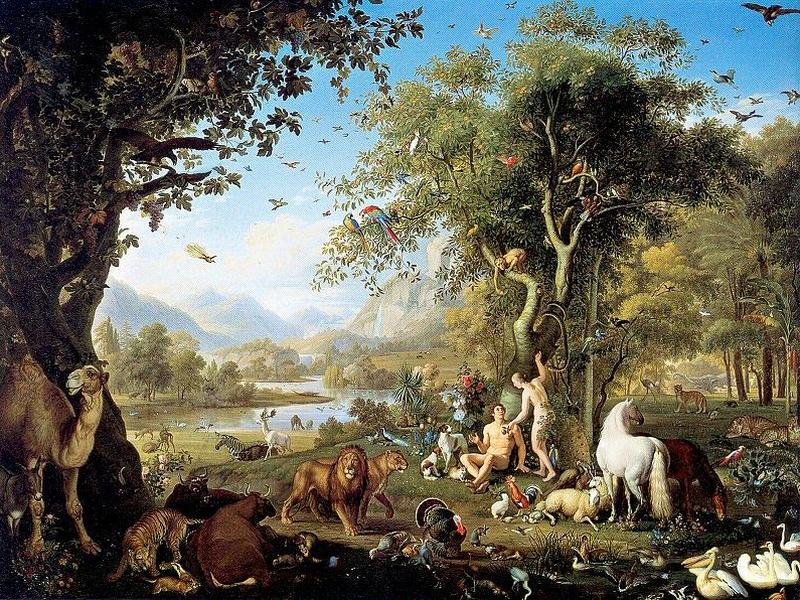
I have argued that Deuteronomy 14:1-21 is an independent literary unit that applies the Third Word to the lives of Israelites from the time of Moses and Joshua. In this short pericope, Moses suggests broad and deep meaning by means of literary allusion to the stories of the creation and…

by Ralph Allan SmithJuly 31, 2013
david-weber-fwuo_zluhnw-unsplash
How to Worship

Pro-Sacramental Reformation

In his recently republished The New Creation , the late, delightful Herbert McCabe defends the priesthood of the plebs as roundly as anyone could want. Citing Hebrews, he claims that "there is an essential difference between the Christian community and the community of the Old Law, or any other religious…

by Peter LeithartJuly 29, 2013
eric-ward-7kqe_8meex8-unsplash
Augustine

Sexual Idolatry

Augustine famously prayed, “Our hearts our restless until they rest in You.” True indeed. Being creatures, we inherently sense our ontological poverty—our innate condition of dependence—and are compelled to find a sense of security. And it is also true—as Augustine’s own narrative painfully illustrates—that one of the things we most…

by Gerald HiestandJuly 24, 2013

Showing page 190 of 309

See all

Showing page 39 of 43

See all
Art

Museums, Agents of relativism

Aesthetic consciousness - the capacity to abstract the aesthetic component in all perception, so as to view everything “aesthetically” - also implies, Gadamer argues, a particular notion of simultaneity. Because it abstracts the aesthetic value of the work, and downplays or ignores all other aspects of an aesthetic object, the…

January 4, 2007
Art

Art and appearance

After Kant, and especially after Kant’s romantic disciples, art came to be viewed as a matter of beautiful appearance, consciously defined in contrast to practical reality. This had not always been the Western conception of art. Gadamer comments, “Traditionally the purpose of ‘art,’ which also includes all conscious transformation of…

January 3, 2007
History

Unintended consequences

In 1439, representatives of Eastern and Western churches met in Florence to heal the schism of 1054. An agreement was reached, but it remained a paper agreement only. But the event had enormous consequences for the future of the Western world. Because of the good will this ecumenical meeting produced,…

January 3, 2007

Politics of sleep

Still on Rosenstock-Huessy: “How could we enjoy a restful sleep without social peace? The Gestapo in many countries changes man back to the deer whose sleep is perfunctory and scanty.” No political theory, or sociology, can be complete if it does not “include those who must wake when we are…

January 3, 2007

The limits of loyalty

Rosenstock-Huessy cites Josiah Royce’s The Philosophy of Loyalty as an example of a reductive view of human life. Royce rightly emphasizes the importance of loyalty, but then “could not resist the temptation to explain everything in terms of this one power which essentially binds us to the past.” But the…

January 3, 2007
American Religion

Christian America

Rosenstock-Huessy again: He writes that Christian conversion always involves a break with an old way of life, a breach with old loyalties and commitments, and a “verification” of that experience by an induction into a new people, “formerly overlooked or even despised, who now enable us to strengthen experience into…

January 3, 2007

Showing page 1742 of 2212

Browse by Category

In Medias Res

Your weekly digest for all things Theopolis.

Donate

Theopolis is nearly 100% donor-supported. Consider joining us on our mission.