Theopolis Logo

Writing

Explore our collection of theological essays, biblical studies, and reflections on faith and culture.

See all
tanner-mardis-xuxghzhibn4-unsplash-1-2
Biblical Studies

Tweets-turned-Notes on the Bible’s Chronology

Summary In what follows, I will consider the “year-stamps” employed in Scripture, i.e., statements of the form, “Such-and-such an event took place in the Xth year of Y.” In the process, I will suggest some ways in which the Biblical narrative might relate to events in the extra-Biblical world, though…

by James BejonJuly 16, 2019
durer-prodigal-son-2
Luke

Perspectives on the Prodigal, (Part 2)

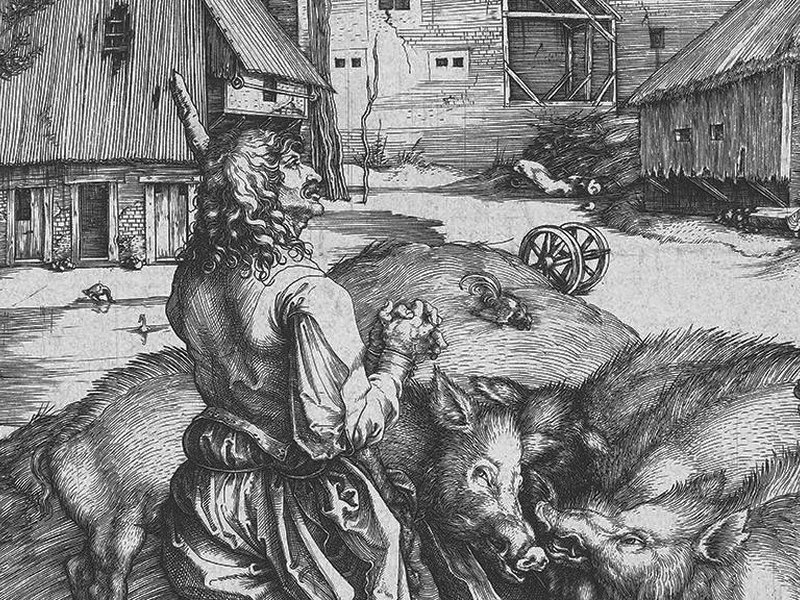
In the first essay on the parable of the Prodigal Son, I suggested that the problems commentators and others encounter in interpreting Jesus three-part parable are not accidental. These are not just problems in our ignorance of cultural background. They are intentional features of the stories —stories designed to poke…

by Ralph Allan SmithJuly 11, 2019
durer-prodigal-son-2
Luke

Perspectives on the Prodigal, (Part 1)

The story of the Prodigal Son is perhaps the most well-known story in the Bible. As others have observed, it may also be one of the most misunderstood. In two short essays, I will point out features of this story that are commonly neglected, aspects of Jesus’ parable that might…

by Ralph Allan SmithJuly 9, 2019
de-rijke-man-en-de-arme-lazarus-by-jacopo-da-ponte-16th-century
Luke

Lazarus and the Rich Man

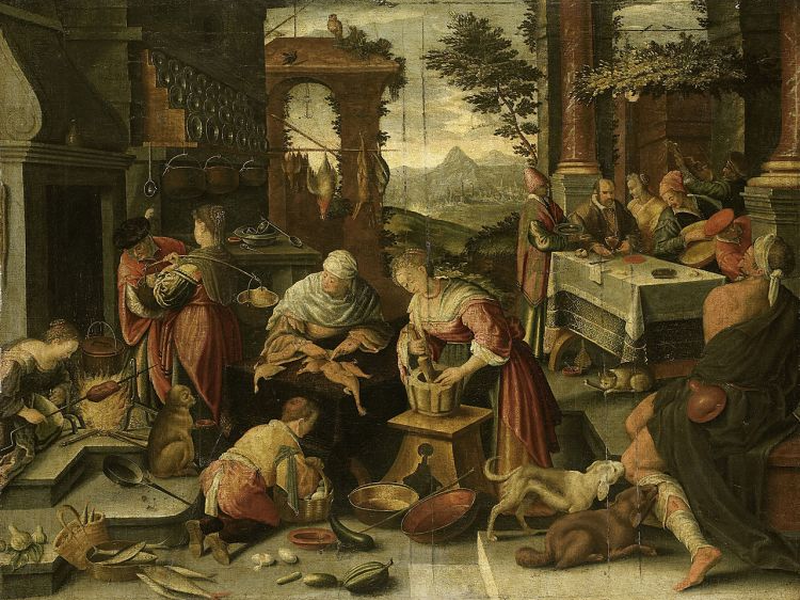
The parable of Lazarus and the nameless rich man is not an independent story. It is part of a long context that begins in Luke 15:1, where Jesus is eating with tax collectors and sinners and the scribes and Pharisees grumble. In response to their hardheartedness, Jesus tells a three-part…

by Ralph Allan SmithJuly 4, 2019
aaron-burden-uynrnfdkjwg-unsplash
Luke

Everybody has Dropsy - Luke 14:1-24

The Bible is written so that even when a reader cannot pick up on what might be deeper or more detailed aspects of a text, there is virtually always a message to be heard. In the ancient world, where the “reader” of Scripture would likely be a church official facing…

by Ralph Allan SmithJuly 2, 2019
communion
Biblical Theology

Fruit Trees and Grain Plants

The distinction between garden (or vineyard) and field begins in Genesis 2. This relates to the ordering of the formless world. Plants of the field are contrasted with the garden planted by God in Genesis 2:5&8. Later on, under the Old Covenant the Israelites will be required to keep their…

by James B. JordanJune 27, 2019

Showing page 77 of 309

See all

Showing page 39 of 43

See all
History

St. Abraham

Rosenstock-Huessy strikingly sees the spirit of Francis in the person of Abraham Lincoln: “When Lincoln, as President and Commander-in-Chief of a victorious army, walked into Richmond in 1865, on foot, without escort, St. Francis had conquered the powers of this earth. In Siberia, in Egypt, people would whisper that old…

January 3, 2007
History

Reformation of gift

Natalie Zelmon Davis writes, “In a profound sense, the religious reformations of the sixteenth century were a quarrel about gifts, that is, about whether humans can reciprocate to God, about whether humans can put God under obligation, and about what this means for what people should give to each other.”

January 3, 2007

As if it were planned

Few areas of theology have been as ridiculed in modern times as eschatology. Antichrists, dragons, beasts, final judgments - it’s all superlatively mythological for modern rationalists. Sometime in the early part of the twentieth century, however, New Testament scholars began rediscovering the centrality of eschatology in NT theology. For some,…

January 3, 2007
Economics

Work and teaching

Discussing the separation of workplace and home, Rosenstock-Huessy makes the striking observation that this divide separates labor from a man’s “right to teach, once the supreme value of a master’s earthly life.”

January 3, 2007
History

Exorcising the family

The Protestant Reformation had well-known effects on the nuclear family, but Rosenstock-Huessy notes that a parallel movement occurred in the Roman Catholic church after 1500, when Catholics began to “lay far more stress on the cult of St. Joseph and on the conception of the Holy Family.” As a result,…

January 3, 2007
History

Childbirth again

In The Christian Future , Rosenstock-Huessy again makes some passing comments about childbirth. He is talking about the character of suburban life, its ethnic and economic uniformity, its placid and indifferent external peacefulness that hides, he claims, desperate inner conflicts. For Rosenstock-Huessy, the whole situation is summarized by the fact…

January 3, 2007

Showing page 1743 of 2212

Browse by Category

In Medias Res

Your weekly digest for all things Theopolis.

Donate

Theopolis is nearly 100% donor-supported. Consider joining us on our mission.