Theopolis Logo

Writing

Explore our collection of theological essays, biblical studies, and reflections on faith and culture.

See all
trnava-university-beeyeib-am8-unsplash
Biblical Horizons

Book Review: The Keys of This Blood: The Struggle for World Dominion Between Pope John Paul II, Mikhail Gorbachev & the Capitalist West

Malachi Martin, The Keys of This Blood: The Struggle for World Dominion Between Pope John Paul II, Mikhail Gorbachev & the Capitalist West (New York: Simon and Schuster, 1990). Reviewed by Peter J. Leithart. The subtitle of this massive volume gives a good idea of its major theme. Martin, the…

by Peter LeithartJuly 6, 1991

venice-la-distruzione-del-tempio-di-gerusalemme-francesco-hayez-gallerie-accademia-venice
Biblical Horizons

The Abomination of Desolation, Part 3: An Overview of the Pattern

The Abomination of Desolation: PART 1 The Abomination of Desolation: PART 2 What I intend to do in this series of studies is this: First, in the present essay we shall survey the occurrences of the Abomination of Desolation in the Bible in a cursory way, in order to get…

by James B. JordanJune 22, 1991
venice-la-distruzione-del-tempio-di-gerusalemme-francesco-hayez-gallerie-accademia-venice
2 Thessalonians

The Abomination of Desolation, Part 2: The Man of Sin

We previously surveyed what is meant by the abomination of desolation . We suggested that it refers to sacrilegious acts performed by the religious leaders of Israel, captained by their High Priest, right in front of God’s face in the Temple. Later studies in this series will provide evidence for…

by James B. JordanJune 22, 1991
greg-rakozy-ompaz-dn-9i-unsplash-2
Biblical Chronology

The Framework Hypothesis

Throughout history, the Christian Church has had to guard against the heresy of gnosticism. Gnosticism is not an ordinary heresy, because it does not manifest itself as a set of defined beliefs. Rather, gnosticism is a tendency, a tendency to replace the historic facts of Christianity with philosophical ideas. Gnosticism…

by James B. JordanJune 22, 1991
synod-holy-fathers-large
Biblical Horizons

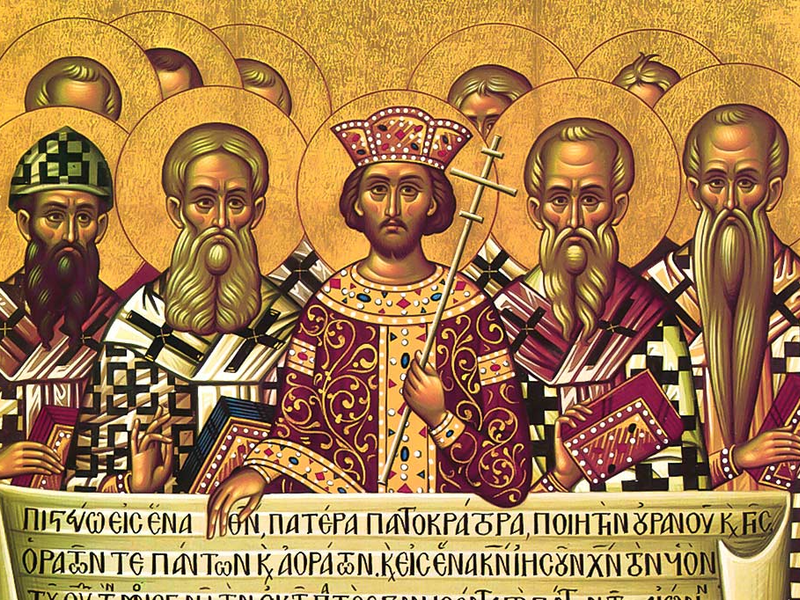
What About the “Seventh Ecumenical Council”?

In Rite Reasons Nos. 9-12, I discussed the errors of Roman Catholicism, Anglo-Catholicism, and Eastern Orthodoxy. I have had several requests to comment further on the so-called Seventh Ecumenical Council, held at Nicaea in A.D. 787. That Council ordered the excommunication of anyone who rejects the veneration of icons. 1…

by James B. JordanJune 22, 1991
debby-hudson-qa74yh6-xlc-unsplash
Philippians

The Theology of the Drink Offering

The drink offering or libation ( nesek ) is mentioned in only three places in the book of Leviticus. When the sheaf of the firstfruits was waved before the Lord, a grain offering was to be burned, along with "its libation, a fourth of a hin of wine [approx. one…

by Peter LeithartMay 30, 1991

Showing page 296 of 309

See all

Showing page 39 of 43

See all
Literature

The Politics of Playing

Plays might be promoted as a kind of opiate of the masses: Mass entertainment that keeps them from more violent entertainments like rioting and pillaging. This could be problematic, if the entertainments were too heady for most people to follow. Thomas Heywood (1612) suggested that playwrights should “ayme . .…

September 28, 2006
Literature

Shakespeare regulated

How regulated was Shakespeare’s own theater? And for what reasons? Patterson highlights various reasons for closing or permitting theaters: audience composition, including the fear that a large collection of workers might be distruptive; public health; economic concerns; religious and moral concerns, especially Sabbatarian; and “a shifting and elusive imperative to…

September 28, 2006
Literature

American Shakespeare

Shakespeare’s fortunes in the US were, understandably, different from in England. Initially, Shakespeare was America’s most popular playwright, appealing to a wide sector of the American populace. Patterson notes that “by the end of the nineteenth century ‘Shakespeare’ had become a cultural icon, the property only of the ‘legitimate theater,’…

September 28, 2006
Literature

Popular Shakespeare

Annabel Patterson notes ( Shakespeare and the Popular Voice ) that contemporary critics, whatever their own political outlook, assume that Shakespeare was an advocate of Elizabethan hierarchy. This view, however, is a product of the 19th century. Dryden, Johnson, and others criticize Shakespeare for violating the conventions of his genre,…

September 28, 2006
Literature

Courtly Shakespeare, IV

By the 18th century, acting styles also invested Shakespeare with “courtly” virtues of control, dignity, stateliness. Dobson writes, “Shakespearian acting . . . in the decades following Betterton’s death in 1710, seems to have settled into a grandiloquent vein of static declamation, best exemplified by the stout James Quin (1693-1766)…

September 28, 2006
Literature

Courtly Shakespeare, III

Dobson again: “after Charles II’s death in 1685 England would never again have another monarch with such an informed interest in the drama (or, mercifully, such a lascivious one), and deprived of royal patronage and protection the playhouses came under renewed attack from the moralists (led by the redoubtable clergyman…

September 28, 2006

Showing page 1785 of 2212

Browse by Category

In Medias Res

Your weekly digest for all things Theopolis.

Donate

Theopolis is nearly 100% donor-supported. Consider joining us on our mission.