Theopolis Logo

Writing

Explore our collection of theological essays, biblical studies, and reflections on faith and culture.

See all
lili-popper-lu15z1m_kfm-unsplash
John

Jesus is the Way to the Tree of Life

When Jesus says in the farewell discourse that his disciples know the way to where He is going, Thomas replies: “We do not know where you are going. How can we know the way?” Jesus answers Thomas, but He gives Thomas more than he asked : “I am the way,…

by Josh JensenMay 24, 2023

jordan-wozniak-xp_agmeea6s-unsplash-2
Luke

Beware of the Infection of Hypocrisy

Through the pandemic we learned a lot about infections, how to catch them, what’s contagious, how to protect yourself from getting the infection. I learned a lot of new terms, like “social distancing,” “ppe” (personal protective equipment), N95 masks, and so on. We’ve seen that people are willing to go…

by John CarpenterMay 16, 2023
noah
Biblical Theology

Noah: Man of the Soil

In Genesis 9:20, Noah is called “a man of the soil”. This phrase is a bit of a shock in the Hebrew; though it’s made up of two very common words - 'ish is “man” and 'adamah is “soil” or “ground” - these two words are never used together before…

by Donald LinnemeyerMay 9, 2023
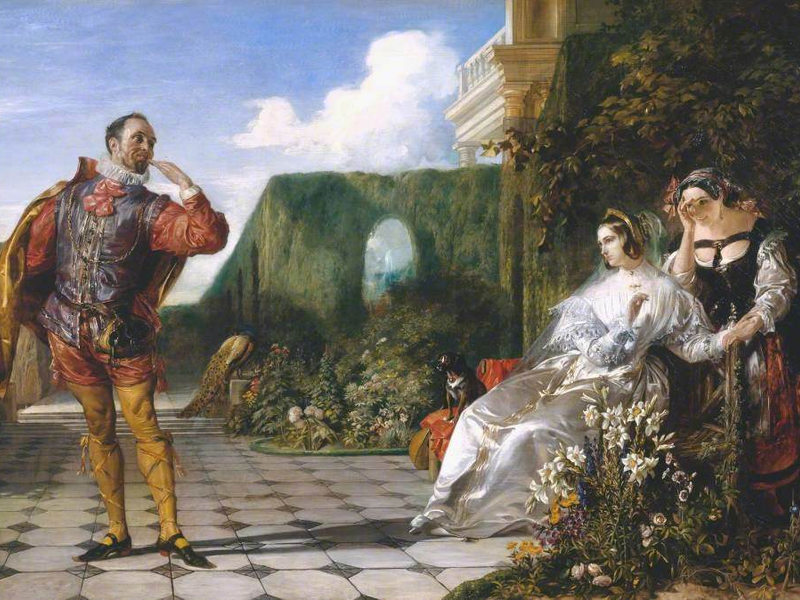
maclise-daniel-1806-1870-scene-from-twelfth-night-malvolio-and-the-countess
Literature

Twelfth Night

Harold Bloom’s discussion of Twelfth Night in his Shakespeare: The Invention of the Human is, as would be expected, insightful. It displays his deep love of poetry, and includes some truly eloquent descriptions of Orsino: “that sublimely outrageous lover of love” and “amiable erotic lunacy.” Bloom is worth reading just…

by Ralph Allan SmithMay 4, 2023
screen-shot-2023-05-02-at-1-14-25-pm
James

A Quadrigatic Reading on Marian Intercession

There have been times when Evangelicals, in an attempt to be clear about the errors of Rome and Constantinople concerning Mary, have been so denigrating of the mother of our Lord that they sounded more like cut and pasted lines from the Babylonian Talmud than they did disciples of Mary’s…

by Garrett SoucyMay 2, 2023
mike-l-8qr1ixi-rmu-unsplash-2
Theology

Awe and the Sensus Divinitatus

Awe is the phenomena experienced when one looks up and lights upon the height, majesty, and mystery of the California Redwoods. It appears the trees pierce heaven itself. Among these giant organisms are the Sequoia–while they are shorter in form, they reserve a width that spans an automobile. These trees…

by Charles JacobiApril 25, 2023

Showing page 31 of 309

See all

Showing page 39 of 43

See all
Literature

The Politics of Playing

Plays might be promoted as a kind of opiate of the masses: Mass entertainment that keeps them from more violent entertainments like rioting and pillaging. This could be problematic, if the entertainments were too heady for most people to follow. Thomas Heywood (1612) suggested that playwrights should “ayme . .…

September 28, 2006
Literature

Shakespeare regulated

How regulated was Shakespeare’s own theater? And for what reasons? Patterson highlights various reasons for closing or permitting theaters: audience composition, including the fear that a large collection of workers might be distruptive; public health; economic concerns; religious and moral concerns, especially Sabbatarian; and “a shifting and elusive imperative to…

September 28, 2006
Literature

American Shakespeare

Shakespeare’s fortunes in the US were, understandably, different from in England. Initially, Shakespeare was America’s most popular playwright, appealing to a wide sector of the American populace. Patterson notes that “by the end of the nineteenth century ‘Shakespeare’ had become a cultural icon, the property only of the ‘legitimate theater,’…

September 28, 2006
Literature

Popular Shakespeare

Annabel Patterson notes ( Shakespeare and the Popular Voice ) that contemporary critics, whatever their own political outlook, assume that Shakespeare was an advocate of Elizabethan hierarchy. This view, however, is a product of the 19th century. Dryden, Johnson, and others criticize Shakespeare for violating the conventions of his genre,…

September 28, 2006
Literature

Courtly Shakespeare, IV

By the 18th century, acting styles also invested Shakespeare with “courtly” virtues of control, dignity, stateliness. Dobson writes, “Shakespearian acting . . . in the decades following Betterton’s death in 1710, seems to have settled into a grandiloquent vein of static declamation, best exemplified by the stout James Quin (1693-1766)…

September 28, 2006
Literature

Courtly Shakespeare, III

Dobson again: “after Charles II’s death in 1685 England would never again have another monarch with such an informed interest in the drama (or, mercifully, such a lascivious one), and deprived of royal patronage and protection the playhouses came under renewed attack from the moralists (led by the redoubtable clergyman…

September 28, 2006

Showing page 1785 of 2212

Browse by Category

In Medias Res

Your weekly digest for all things Theopolis.

Donate

Theopolis is nearly 100% donor-supported. Consider joining us on our mission.