Theopolis Logo

Writing

Explore our collection of theological essays, biblical studies, and reflections on faith and culture.

See all
sodom
Judges

The Levite, the Concubine, and Israel's Story

The story of Judges 19 and the subsequent chapters are some of the most shocking and appalling accounts in all of Scripture. The callousness of the old host and the Levite, and the monstrous brutality of the men of Gibeah, leaves us feebly scrabbling for words by which to surmount…

by Alastair RobertsNovember 1, 2016
david-ark-2
Biblical Theology

Adam Ascended

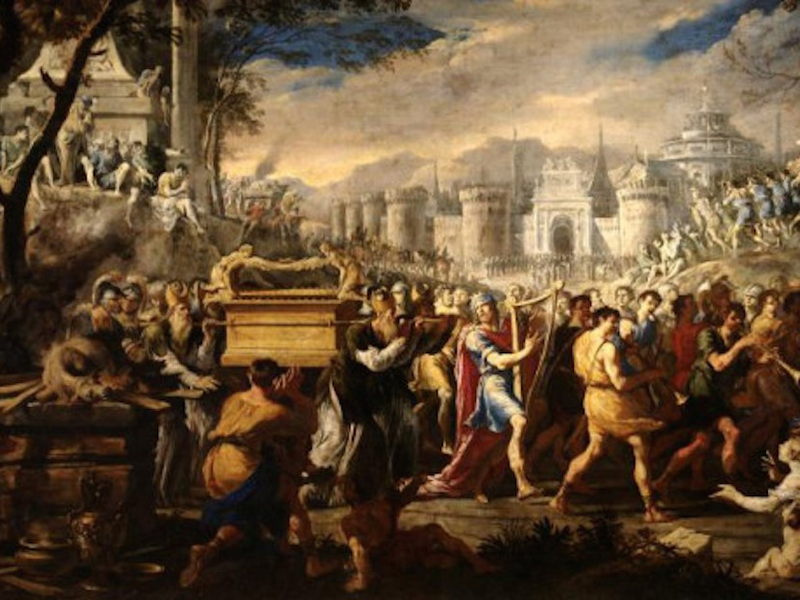
David has become king. He has conquered the capital city of Jerusalem. He has brought the ark of Yahweh into the city and placed it in a tent. He has stationed Levites at the tent to offer sacrifices of praise. An anomaly hits him: He has a cedar-paneled palace, and…

by Peter LeithartOctober 27, 2016
last-supper-2
Eucharist

The Epiclesis in the Reformed Eucharistic Prayer, 3

In Part 2 of this series we traced what we have of the development of the epiclesis in the liturgy of the Church. In this third and final part we’ll look at the theological implications of this and how we may apply what we’ve learned. As we saw in Part…

by Christopher KouOctober 25, 2016
jimpreaching
How to Worship

Reformational Catholicism, A Wish List

In a 2014 piece published in First Things , I offered a "wish list" for Protestant churches, a checklist for a future catholic Protestantism. The wish list doesn't cover everything. It doesn't mention those things that Protestants, especially Evangelicals, already do, often exceedingly well, things like missions and evangelism and…

by Peter LeithartOctober 20, 2016
last-supper-2
Eucharist

The Epiclesis in the Reformed Eucharistic Prayer, (Part 2)

In the first part of this series we examined the meaning of “blessing” in Scripture and its parallels in Jewish liturgical tradition, but did not find anything that we could properly call an epiclesis (an invocation of the Holy Spirit). We did find examples of invocation of Jesus to “come”…

by Christopher KouOctober 18, 2016
moses-gives-aaron-priesthood-39465-wallpaper
Baptism

Renewing Circumcision

When the Aaronic priests were ordained, the blood of the ram of "filling” was placed on the lobe of the right ear, the right thumb, and the right big toe (Lev. 8:22-24). Similarly, the cleansing rite for a leper included smearing the right ear lobe, thumb, and big toe with…

by Peter LeithartOctober 13, 2016

Showing page 123 of 309

See all

Showing page 39 of 43

See all
History

Hermeticism and gnosticism

In his book on the hermeticist Hegel, Magee gives this helpful sketch of the differences between gnosticism and hermeticism: “Gnosticism and Hermeticism both believe that a divine ‘spark’ is implanted in man, and that man can come to know God. However, Gnosticism involves an absolutely negative account of creation. It…

August 16, 2006
Philosophy

Hegel and Hermes

In a 2001 book (Cornell), Glenn Magee argues that Hegel must be understood as a hermetic thinker. Hegel claims to have moved beyond the ancient notion of philosophy as “pursuit of wisdom” to an absolute knowledge that is simply identical with wisdom. As Magee says, “Hegel’s claim to have attained…

August 16, 2006

MacIntyre on Heroic virtue

In After Virtue , Alasdair MacIntyre provides a neat discussion of the virtue and selfhood in Greek antiquity. The unity of ARETE, virtue, “resides . . . in the concept of that which enables a man to discharge his role,” and refers to “excellence of any kind,” whether in a…

August 16, 2006
Philosophy

Logos: Harmony and Recipe

One Marc Cohen of the University of Washington, offers this account of the “logos” of Heraclitus in an online lecture outline: First, “There is an orderly, law-governed process of change in the universe. (Compare fragment 80 with Anaximander, who equates strife with injustice; for Heraclitus, strife is justice, and is…

August 16, 2006

Life of Heraclitus

Some selections from Diogenes Laertius’ “Life of Heraclitus, from his “Lives and Opinions of Eminent Philosophers: “He was above all men of a lofty and arrogant spirit, as is plain from his writings, in which he says, ‘Abundant learning does not form the mind; for if it did, it would…

August 16, 2006
History

Asocial sociability

Seigel devotes a fascinating section of his book ( Idea of the Self ) to a summary of Mandeville’s Fable of the Bees , in which Mandeville describes what Kant characterized as the “asocial sociability” of human nature. Social in the sense that even in a natural state, prior to…

August 15, 2006

Showing page 1809 of 2212

Browse by Category

In Medias Res

Your weekly digest for all things Theopolis.

Donate

Theopolis is nearly 100% donor-supported. Consider joining us on our mission.