Theopolis Logo

Writing

Explore our collection of theological essays, biblical studies, and reflections on faith and culture.

See all
tanner-mardis-xuxghzhibn4-unsplash-1-2
Biblical Studies

Tweets-turned-Notes on the Bible’s Chronology

Summary In what follows, I will consider the “year-stamps” employed in Scripture, i.e., statements of the form, “Such-and-such an event took place in the Xth year of Y.” In the process, I will suggest some ways in which the Biblical narrative might relate to events in the extra-Biblical world, though…

by James BejonJuly 16, 2019
durer-prodigal-son-2
Luke

Perspectives on the Prodigal, (Part 2)

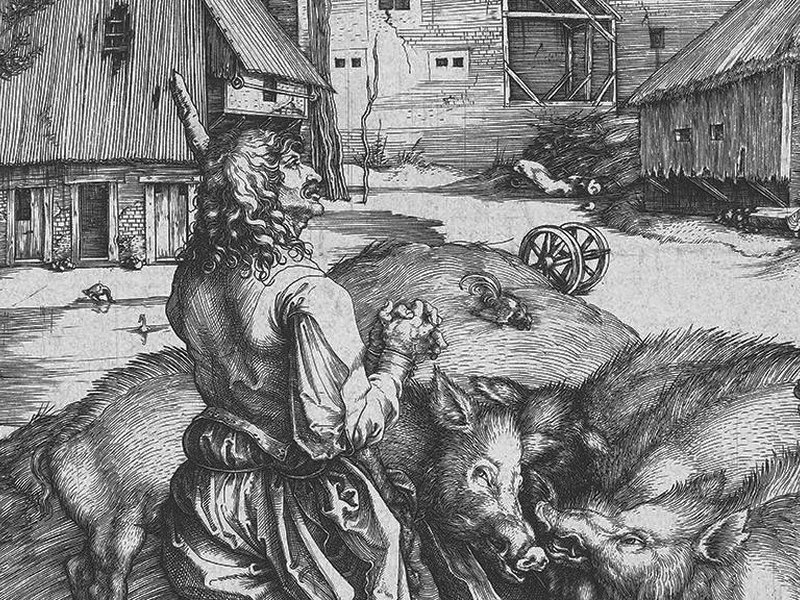
In the first essay on the parable of the Prodigal Son, I suggested that the problems commentators and others encounter in interpreting Jesus three-part parable are not accidental. These are not just problems in our ignorance of cultural background. They are intentional features of the stories —stories designed to poke…

by Ralph Allan SmithJuly 11, 2019
durer-prodigal-son-2
Luke

Perspectives on the Prodigal, (Part 1)

The story of the Prodigal Son is perhaps the most well-known story in the Bible. As others have observed, it may also be one of the most misunderstood. In two short essays, I will point out features of this story that are commonly neglected, aspects of Jesus’ parable that might…

by Ralph Allan SmithJuly 9, 2019
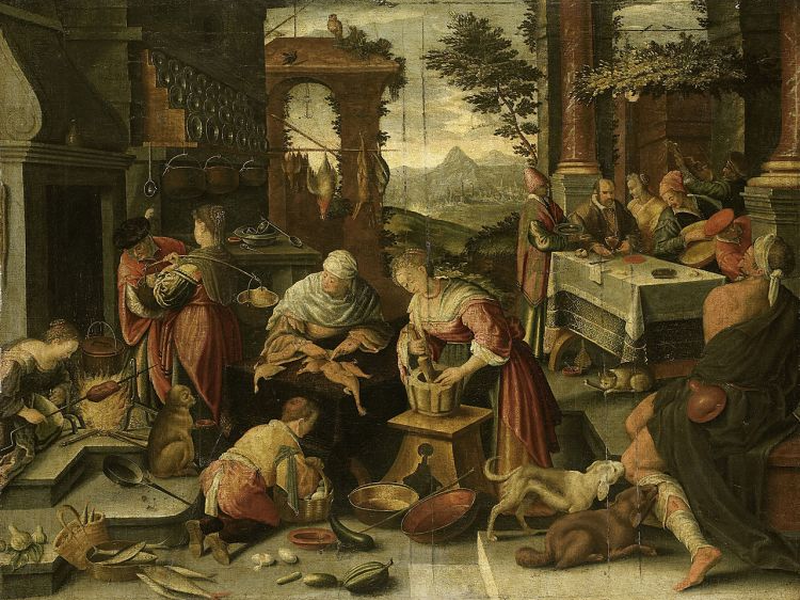
de-rijke-man-en-de-arme-lazarus-by-jacopo-da-ponte-16th-century
Luke

Lazarus and the Rich Man

The parable of Lazarus and the nameless rich man is not an independent story. It is part of a long context that begins in Luke 15:1, where Jesus is eating with tax collectors and sinners and the scribes and Pharisees grumble. In response to their hardheartedness, Jesus tells a three-part…

by Ralph Allan SmithJuly 4, 2019
aaron-burden-uynrnfdkjwg-unsplash
Luke

Everybody has Dropsy - Luke 14:1-24

The Bible is written so that even when a reader cannot pick up on what might be deeper or more detailed aspects of a text, there is virtually always a message to be heard. In the ancient world, where the “reader” of Scripture would likely be a church official facing…

by Ralph Allan SmithJuly 2, 2019
communion
Biblical Theology

Fruit Trees and Grain Plants

The distinction between garden (or vineyard) and field begins in Genesis 2. This relates to the ordering of the formless world. Plants of the field are contrasted with the garden planted by God in Genesis 2:5&8. Later on, under the Old Covenant the Israelites will be required to keep their…

by James B. JordanJune 27, 2019

Showing page 77 of 309

See all

Showing page 39 of 43

See all
Literature

The Dancing Dead

A Swiss visitor to London in 1599 saw a performance of Julius Caesar, and wrote: “On September 21st after lunch, about two o’clock, I and my party crossed the water, and there in the house with the thatched roof witnessed an excellent performance of the tragedy of the first Emperor…

May 27, 2006

Philip the Chancellor

According to Stephen Duffy, Philip, Chancellor of the University of Paris, was responsible for elaborating the theorem of the supernatural. He claims that during the Pelagian controversy Augustine had left various problems hanging: “How can one be bound to do something not in one’s power? Can the virtues of unbelievers…

May 27, 2006

Surnaturel

In his 1993 book, The Dynamics of Grace , Stephen J. Duffy offers a superb brief summary of de Lubac’s thesis in Surnaturel . According to de Lubac’s history, “Neither the Fathers nor the great schoolmen ever considered a purely natural human destiny a possibility. Their focus was on one,…

May 25, 2006

Raunch Culture Revisited

On NPR this morning, Frank Deford described how, instead of bringing feminine modesty and delicacy to the world of sports as Title IX advocates might have hoped, women athletes have adopted the culture of their male counterparts. Recent hazing incidents have brought attention to a much more extensive problem. On…

May 24, 2006

Natural/Supernatural in Adamic Covenant

Mark Karlberg charges that Francis Junius introduced a natural/supernatural scheme into the Reformed doctrine of the covenant of works. In Karlberg’s summary, “The covenant, according to Junius, was established with our first parents by God the Father in the love of his Son. It held out the promise of supernatural…

May 24, 2006

Double Adamic Covenant

Many of the Protestant Scholastics argued that a covenant of some sort is “natural” to man, not a “supernatural” addition to a pure, non-covenantal existence. But the “natural” covenant is often distinguished from the specific terms of the covenant of works, the prohibition of the tree of knowledge. Heidegger fulsomely…

May 23, 2006

Showing page 1838 of 2212

Browse by Category

In Medias Res

Your weekly digest for all things Theopolis.

Donate

Theopolis is nearly 100% donor-supported. Consider joining us on our mission.