Theopolis Logo

Writing

Explore our collection of theological essays, biblical studies, and reflections on faith and culture.

See all
hebrew-manuscript-2
Hermeneutics

The Complexity of Biblical Allusion

There is no question about the fact that the book of Deuteronomy is full of literary allusion. But there is a serious problem, even a paradox, of understanding how that allusion works. To begin with, if we assume that Deuteronomy was written by Moses — with some editorial emendations added…

by Ralph Allan SmithJanuary 23, 2018

bladerunner
Culture

The Artificial Resurrection

Genesis and Genetics in Blade Runner 2049 The power of science fiction, and what’s positive about it, is that you’re able to experience the worst-case scenario without actually having to live it. (Actor Ryan Gosling, who plays Officer “K”) (Warning: The following analysis contains spoilers for both Blade Runner films.)…

by Mike BullJanuary 18, 2018
sixteen-miles-out-d40gdcd_-he-unsplash
Biblical Studies

The Battle of Gog and Magog

The battle of Gog and Magog is found in Ezekiel 38-39. My purpose in this brief essay is to propound an explanation for this passage that I have not encountered in any of my commentaries, but that makes more sense to me than any other. I offer it here in…

by James B. JordanJanuary 16, 2018
resurrection

Deep Hope

I. Varlam Shalamov in Kolyma Tales describes his experience of the Gulag, where he spent more than a dozen of years. In a story titled The Life of Engineer Kipreev Shalamov reflects on the theme of hope in the life of a prisoner: “Hope always shackles the convict. Hope is…

by Bogumil JarmulakJanuary 11, 2018
abraham-defeats-kings-g-jollain-2
Biblical Theology

Abram’s 318 Men

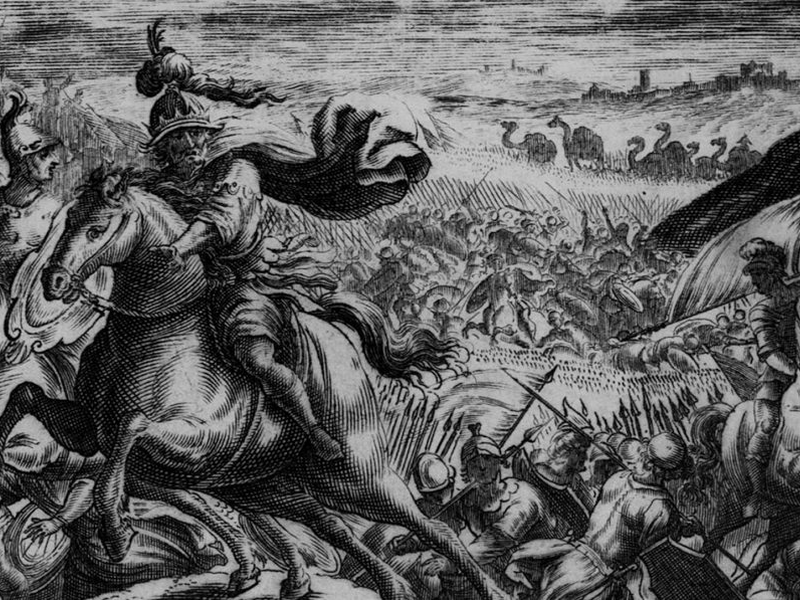
Genesis 14:14 says that Abram mustered his trained men, “born in his house,” to rescue Lot, and gives their number as 318. It is clear that the precise number is provided for some reason, but what is it? S. Gevirtz notes that 318 is the sum of all the prime…

by James B. JordanJanuary 9, 2018
tanner-mardis-xuxghzhibn4-unsplash-1
Biblical Studies

The Flying Scroll

And he said to me, "What do you see?" And I answered, "I see a flying scroll; its length is twenty cubits and its width ten cubits" (Zechariah 5:2). Immediately following his vision of the outpouring of the Spirit upon the restoration community (4:1-14), Zechariah saw a flying scroll. The…

by Peter LeithartJanuary 4, 2018

Showing page 100 of 309

See all

Showing page 39 of 43

See all
History

Nature/Supernature in Luther

According to Oberman, “Luther’s critique of Aristotle concerns the disregard of that fundamental nominalist axioma , the demarcation line between the realms of reason and faith. Provided that this distinction is respected, Aristotle is not merely useful but indeed to be respected. In a Latin sermon probably preached to the…

May 4, 2006
Theology

Person v. Being

Oberman sees a crucial shift in late medieval theology from God as being to God as person, and sees Luther as both heir and critic of the late medieval theology proper. Without the earlier shift, “the Reformation breakthrough would be inconceivable,” but this does not mean that there is “unbroken…

May 4, 2006
History

Plague and Theology

Oberman again: “The experience of the [bubonic] plague may in fact help us understand the fifteenth-century ascendency of nominalism, its innovations in the whole field ranging from theology to science, and its successful invasion of schools and universities, where it was firmly established as the via moderna . What must…

May 4, 2006
History

Cultural history and religion

Heiko Oberman notes the impact of cultural history in his posthumously published book, The Two Reformations : “By moving from established politicla history to cultural and mentality studies, historians reestablished the crucial importance of religion, although they frequently marginalized it under the misleading category of popular religion . . .…

May 4, 2006

Proverbs 14:8-15

INTRODUCTION Waltke points to links between verses 8-9 and verses 1-2 of the same chapter: Wisdom and folly are contrasted in verses 1 and 8; the image of the “way” is used in both verses; and the term “upright” appears in verse 2 and 9. These links suggests that verses…

May 4, 2006
Theology

Simmel, Faithfulness and Gratitude

Notes on Georg Simmel, “Faithfulness and Gratitude,” printed in Kurt H. Wolff, The Sociology of Georg Simmel (Free Press, 1950). 1) Simmel describes faithfulness as “the inertia of the soul.” Less impressionistically, faithfulness is “the peculiar feeling which is not directed toward the possessor’s eudaemonistic good, nor toward the other’s…

May 3, 2006

Showing page 1846 of 2212

Browse by Category

In Medias Res

Your weekly digest for all things Theopolis.

Donate

Theopolis is nearly 100% donor-supported. Consider joining us on our mission.