Theopolis Logo

Writing

Explore our collection of theological essays, biblical studies, and reflections on faith and culture.

See all
trnava-university-beeyeib-am8-unsplash
Biblical Horizons

Book Review: The Keys of This Blood: The Struggle for World Dominion Between Pope John Paul II, Mikhail Gorbachev & the Capitalist West

Malachi Martin, The Keys of This Blood: The Struggle for World Dominion Between Pope John Paul II, Mikhail Gorbachev & the Capitalist West (New York: Simon and Schuster, 1990). Reviewed by Peter J. Leithart. The subtitle of this massive volume gives a good idea of its major theme. Martin, the…

by Peter LeithartJuly 6, 1991
venice-la-distruzione-del-tempio-di-gerusalemme-francesco-hayez-gallerie-accademia-venice
Biblical Horizons

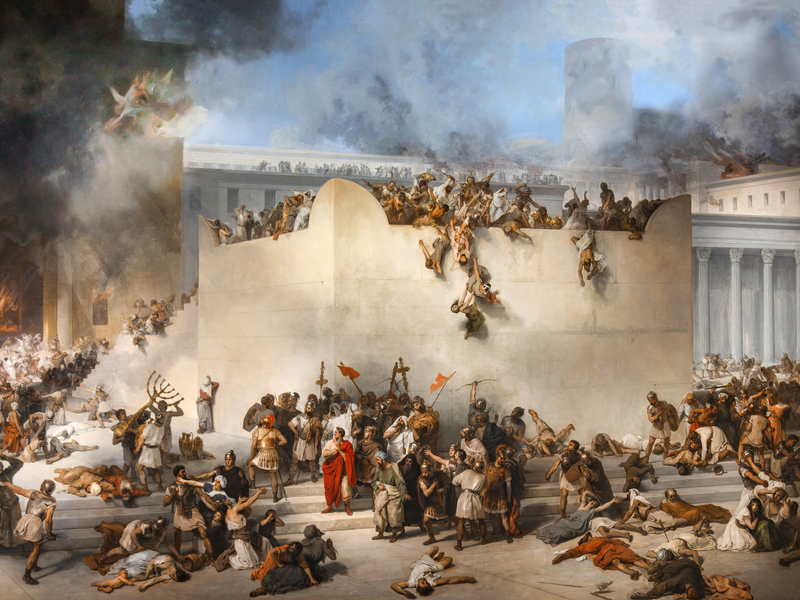
The Abomination of Desolation, Part 3: An Overview of the Pattern

The Abomination of Desolation: PART 1 The Abomination of Desolation: PART 2 What I intend to do in this series of studies is this: First, in the present essay we shall survey the occurrences of the Abomination of Desolation in the Bible in a cursory way, in order to get…

by James B. JordanJune 22, 1991
venice-la-distruzione-del-tempio-di-gerusalemme-francesco-hayez-gallerie-accademia-venice
2 Thessalonians

The Abomination of Desolation, Part 2: The Man of Sin

We previously surveyed what is meant by the abomination of desolation . We suggested that it refers to sacrilegious acts performed by the religious leaders of Israel, captained by their High Priest, right in front of God’s face in the Temple. Later studies in this series will provide evidence for…

by James B. JordanJune 22, 1991
greg-rakozy-ompaz-dn-9i-unsplash-2
Biblical Chronology

The Framework Hypothesis

Throughout history, the Christian Church has had to guard against the heresy of gnosticism. Gnosticism is not an ordinary heresy, because it does not manifest itself as a set of defined beliefs. Rather, gnosticism is a tendency, a tendency to replace the historic facts of Christianity with philosophical ideas. Gnosticism…

by James B. JordanJune 22, 1991
synod-holy-fathers-large
Biblical Horizons

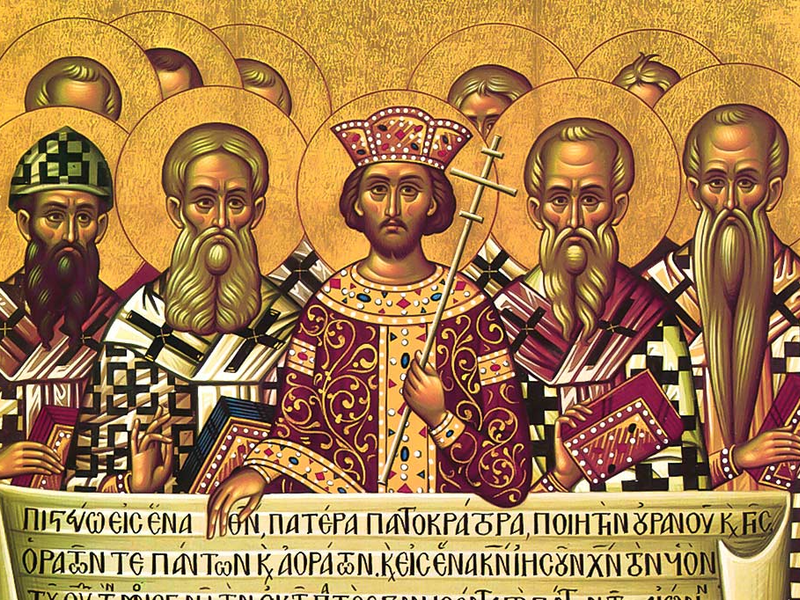
What About the “Seventh Ecumenical Council”?

In Rite Reasons Nos. 9-12, I discussed the errors of Roman Catholicism, Anglo-Catholicism, and Eastern Orthodoxy. I have had several requests to comment further on the so-called Seventh Ecumenical Council, held at Nicaea in A.D. 787. That Council ordered the excommunication of anyone who rejects the veneration of icons. 1…

by James B. JordanJune 22, 1991
debby-hudson-qa74yh6-xlc-unsplash
Philippians

The Theology of the Drink Offering

The drink offering or libation ( nesek ) is mentioned in only three places in the book of Leviticus. When the sheaf of the firstfruits was waved before the Lord, a grain offering was to be burned, along with "its libation, a fourth of a hin of wine [approx. one…

by Peter LeithartMay 30, 1991

Showing page 296 of 309

See all

Showing page 39 of 43

See all

Objective/Subjective

McGrath notes that Augustine interpreted the genitive in the phrase “righteousness of God” in Rom 1 objectively, so that it was understood as the righteousness that God gives in saving sinners (in “making” them righteous). Ambrosiaster, as I pointed out in an earliet post, interpreted the genitive subjectively - the…

April 20, 2006

Old Perspective on Paul

Ambrosiaster writes, “Iustitia est Dei, quia quod promisit dedit, ideo credens hoc esse se consecutum quod promiserat Deus per prophetas suos, iustum Deum probat et testis est iustitiae eius” (PL, 17.56b). McGrath explains: “God, having promised to give salvation, subsequently gives it, and as a result is deemed to be…

April 20, 2006
History

Unfinished Reformation

Nevin wrote: “There is more a great deal in Christianity, I firmly believe, more in the idea of hte Holy Catholic Church, than has yet been attained, either in the way of knowledge or in the way of life, by the Protestant Reformation.”

April 20, 2006

Factitive Justification

There was a consensus among the theologians of Trent, McGrath argues, that justification was “factitive,” a view that excluded that “a sinner may be justified solely as a matter of reputation or imputation, while remaining a sinner in fact.” But of course that raises the question, What exactly is a…

April 20, 2006

True Lutherans

McGrath traces the odd development in Lutheran Orthodoxy of the notion that regeneration and faith precede justification in such a way that “where Luther had understood justification to concern the unbelieving sinner, orthodoxy revised this view, referring justification to the believing sinner.” This takes Lutheran Orthodoxy back in the direction…

April 20, 2006

Ontological change

McGrath notes, “While justification was universally understood to involve the regeneration of humanity, the opinion that an ontological change is thereby effected within humans is particularly associated with the period of High Scholasticism and the development of the concept of created grace. The earlier medieval theologians expressed the change effected…

April 20, 2006

Showing page 1854 of 2212

Browse by Category

In Medias Res

Your weekly digest for all things Theopolis.

Donate

Theopolis is nearly 100% donor-supported. Consider joining us on our mission.