Theopolis Logo

Writing

Explore our collection of theological essays, biblical studies, and reflections on faith and culture.

See all
screen-shot-2023-02-24-at-1-48-41-pm
Biblical Chronology

Chronologies and Kings: Part 3

The chronology of the Kings of Judah and Israel can be divided into three periods with clearly defined boundaries. The first period begins with the death of Solomon and the accessions of Rehoboam in the south (Judah) and Jeroboam in the north (Israel). It ends with the deaths of Ahaziah…

by James B. JordanSeptember 22, 1991

johann-walter-bantz-clv9dfjlwac-unsplash-1-5
Art

Arts & Play, Part 1

Most modern people regard the arts as essentially decorative. They are hardly very important, as compared to business, politics, or religion. Yet, from a Biblical point of view, the arts lie close to the heart of human life. The universe that God created is itself an artistic masterpiece by the…

by James B. JordanSeptember 22, 1991
6273e95e0f5ac766258d8cf3_joshuasconquestoftheland-2
Exodus

Chronologies and Kings, Part 2

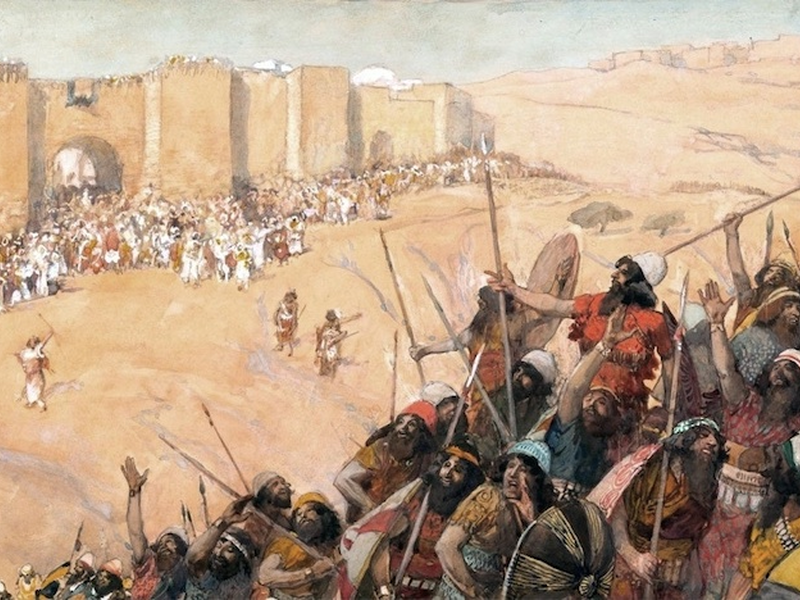
Before we move into a detailed survey of the history and chronology of the kings of Israel and Judah, let us review the chronological information that leads from creation to the kingdom. This will be helpful both to new readers of these essays, and a reminder for those who have…

by James B. JordanAugust 22, 1991
screen-shot-2023-02-24-at-1-48-41-pm
Biblical Chronology

Chronologies and Kings, Part 1

We have completed our overall survey of Biblical chronology, and now turn to a detailed examination of the Biblical information regarding the chronology of Israel’s kings. The first piece of chronological information we have regarding Israel’s kings is very cryptic, and it serves as an guide to the interpretation of…

by James B. JordanJuly 22, 1991
screenshot-2023-08-09-at-2-13-32-pm
Biblical Horizons

Book Review - To Take Place: Toward Theory in Ritual

Jonathan Z. Smith, To Take Place: Toward Theory in Ritual (Chicago: University of Chicago Press, 1987). Reviewed by Peter J. Leithart. The philosophes of the 18th century often attacked Christendom using the tools of anthropology and comparative religion. Rousseau contrasted the idyllic equality of primitive, natural peoples with the bondage…

by Peter LeithartJuly 6, 1991
screenshot-2023-08-09-at-1-47-41-pm
Biblical Horizons

Book Review: The Rise of Magic in Early Medieval Europe

Valerie I. J. Flint, The Rise of Magic in Early Medieval Europe (Princeton University Press, 1991). Reviewed by Peter J. Leithart. Valerie I. J. Flint, Professor of History at the University of Auckland, New Zealand, is refreshingly candid about her reasons for undertaking a study of The Rise of Magic…

by Peter LeithartJuly 6, 1991

Showing page 295 of 309

See all

Showing page 39 of 43

See all

Putting right

At least since the Reformation, the choices on the meaning of justification have been two: Either justification is a declaration of right standing or it’s a making-righteous (as in Bonaventure’s claim that the grace of justification purifies, illuminates, and perfects the soul). But are these the only alternatives? McGrath says…

April 20, 2006

Entry language

NT Wright’s denial that justification is “entry language” is usually taken as a criticism of evangelical Protestant treatments of justification. But his denial cuts deeper: From the high middle ages, Roman Catholic theologians taught that justification was a motus from sin to grace. From Wright’s viewpoint, the Reformers agreed with…

April 20, 2006
Philosophy

Notes on Derrida, Gift of Death

Some of the summaries below were previously posted on my site, and are reproduced to help my students. 1) Derrida begins the book with a discussion of Jan Patocka’s treatment of the distinction between “enthusiasm” or the “demonic” and “responsibility.” The former “confuses the limits among the animal, the human,…

April 19, 2006

Divine Energies and Orthodox Soteriology

In his new Being with God , Aristotle Papanikolaou points to differences between Vladimir Lossky and John Zizioulas on the issue of divine energies. For Lossky, the doctrine of divine energies is designed to “protect the real character of communion with God” in theosis while also insisting that union with…

April 19, 2006

Schmemann on Eucharist

Thanks to my student Brent McLean for the following quotation from Schmemann’s Journals: “I reflect, while writing my Eucharist, about Communion, on the strange, mysterious alienation from it in the Church (on Mt. Athos - they didn’t regularly take Communion; in our churches, those who seek frequent Communion are held…

April 19, 2006
History

Passion

Stephen Jaeger’s wonderful Ennobling Love (1999) sets up some bizarre juxtapositions. On the one hand, here is Anselm of Bec writing to two novices about the join the monastic community: “My eyes eagerly long to see your face, most beloved; my arms stretch out to your embraces. My lips long…

April 18, 2006

Showing page 1855 of 2212

Browse by Category

In Medias Res

Your weekly digest for all things Theopolis.

Donate

Theopolis is nearly 100% donor-supported. Consider joining us on our mission.