Theopolis Logo

Writing

Explore our collection of theological essays, biblical studies, and reflections on faith and culture.

See all
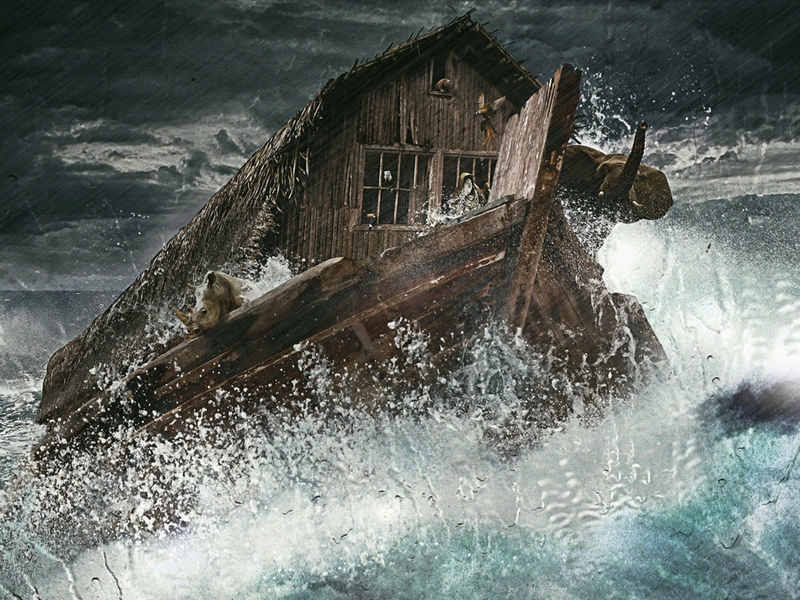
noahs-ark-genesis
Biblical Horizons

Who Rules the Land? The Meaning of the Noahic Covenant, Part 1

It is commonly held in Reformed thought that the Noahic Covenant is given to all men equally. The Noahic Covenant concerns "man," not simply "church," and establishes civil government as an institution among "mankind" — that is the theory. Sometimes the Noahic Covenant is regarded as a "covenant of common…

by James B. JordanNovember 23, 1990

tanner-mardis-xuxghzhibn4-unsplash-1-2
Daniel

The Babylonian Connection

The Fall of Jerusalem we have dated (provisionally) at 3426 Anno Mundi. In current B.C. dates this is 586 B.C. From this point forward in Biblical chronology we are required to make use of prophetic numbers rather than historical ones. Jeremiah prophesied that the captivity would last 70 years, but…

by James B. JordanNovember 16, 1990
screen-shot-2021-08-12-at-2-57-54-pm
Biblical Horizons

Taking the Situation Seriously

Evangelicals have in recent years become more interested in looking into their Bibles for wisdom to deal with modern problems. This is undoubtedly a welcome development, after many years of neglect. But there are dangers and costs as well. One of these is the tendency to fall into a modern…

by Peter LeithartOctober 19, 1990
carlo-alberto-burato-smdx3gleu_m-unsplash
Hermeneutics

The Unseen Things

Now faith is the substance of things hoped for, the evidence of things not seen (Hebrews 11:1). The famous definition of faith with which the eleventh chapter of Hebrews opens has received a number of different interpretations. The crux of the problem is the interpretation of the words translated in…

by Peter LeithartOctober 19, 1990
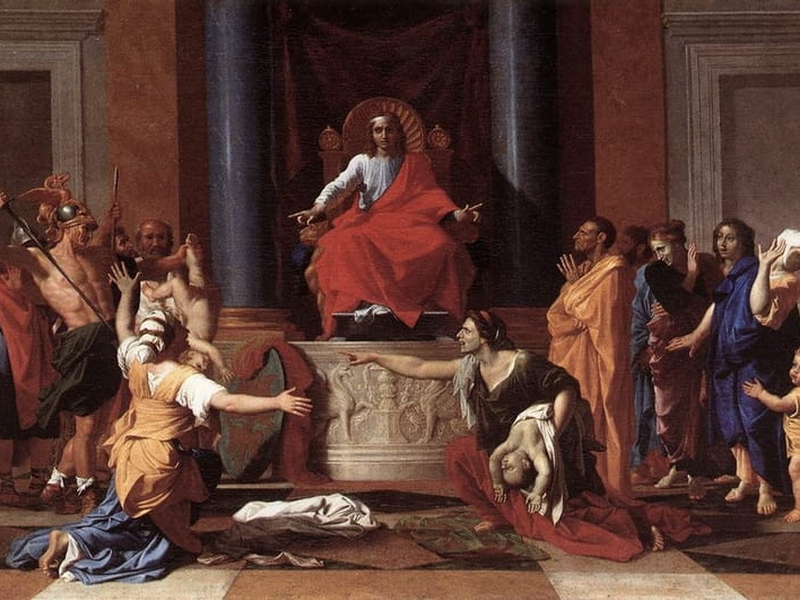
49980-nicolas_poussin_-_the_judgment_of_solomon_-_wga18330-800w-tn
Proverbs

Advice From a Sojourner, Part 8

15. The leech has two daughters, "Give," "Give." There are three things that will not be satisfied, Four that will not say, "Enough": 16. Sheol, And the barren womb, Earth, that is never satisfied with water, And fire that never says, "Enough." We are assuming, at least for the purposes…

by James B. JordanOctober 16, 1990
tanner-mardis-xuxghzhibn4-unsplash-1-2
Biblical Chronology

Confusion Among the Kings

As we have seen in previous installments in this series, the Old Testament is quite concerned with chronology, and carefully records chronological data for our use. For this reason, we can assume when we come to the chronology of the kings of Judah and Israel that the writers of the…

by James B. JordanOctober 2, 1990

Showing page 301 of 309

See all

Showing page 39 of 43

See all

Ocularity and the ancients

A TLS reviewer examines what sounds like a fascinating book on Plato and Aristotle’s appropriation of “theoria” (originally referring to spectators who watch the Olympics and other festivals in a kind of “sacralized spectating”). Along the way, the reviewer comments on recent criticisms of the “spectator theory of knowledge” often…

March 6, 2006

Eucharistic meditation, first lent

2 Kings 14:25: Jeroboam restored the border of Israel from the entrance of Hamath as far as the Sea of the Arabah, according to the word of the Lord, the God of Israel, which he spoke through His servant Jonah the son of Amittai, the prophet, who was of Gath-Hepher.…

March 5, 2006

Exhortation, First Sunday of Lent

What is the cross? Originally a Persian invention, crucifixion became a Roman method of execution, reserved for slaves and for the most dangerous political criminals. Josephus described it as the “most wretched of deaths,” as a victim slowly suffocated with the weight of his own body. One writer describes crucified…

March 5, 2006
Philosophy

Beginnings

A man went searching for the beginning of the road he was traveling. He traced his footsteps back the way he had come, until he came to where he started. But the beginning of the road was not a beginning. Something lay on the far side of the road’s beginning,…

March 4, 2006
Philosophy

Foucault on man

Another discarded fragment. Perhaps the best-known of the postmodern theories of the self is that of Michel Foucault. According to Foucault, “man” is an invention of the recent past, of the modern world. Contrary to popular opinion, “man” has not been the subject of investigation since the time of the…

March 4, 2006

Bultmannian irony

Bultmann says that we moderns who can flick on electric lights cannot believe in the dichotomous anthropology of the New Testament, which distinguishes absolutely between the spiritual core of the self and the physical body. Problem is, that’s not the New Testament anthropology. In fact, it’s ironically the product of…

March 4, 2006

Showing page 1871 of 2212

Browse by Category

In Medias Res

Your weekly digest for all things Theopolis.

Donate

Theopolis is nearly 100% donor-supported. Consider joining us on our mission.