Theopolis Logo

Writing

Explore our collection of theological essays, biblical studies, and reflections on faith and culture.

See all
johann-siemens-epy0gbjzzzu-unsplash
Apologetics

A Sabbath Conversation: How Old is the Earth?

As Adam and Eve walked to the center of the Garden of Eden to meet with the LORD on their first Sabbath they conversed about the origin and age of the earth. Adam: You know, honey, we spent a lot of time yesterday making preparations for our house, and we…

by Jeff MeyersOctober 3, 1997
img_1043
Biblical Horizons

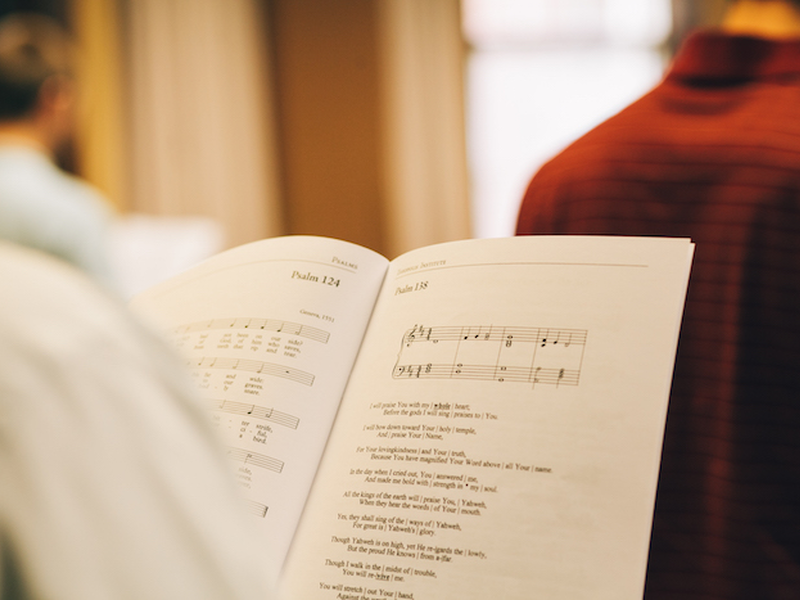
Psalms for Exile: The Narrative Progression in the Fifth Book of the Psalter

Some of our forefathers believed in reading/singing the psalms in order. Today, when the psalms are even used at all, they tend to be used randomly, though sometimes tied to a church calendar or to the pastor’s sermon. The Bible does not bind us to any particular practice, but there…

by James B. JordanSeptember 4, 1997
jordan-wozniak-xp_agmeea6s-unsplash-2
Biblical Chronology

The Anthropomorphic Days of C. John Collins, Part 2

Dr. Collins begins his essay with a brief statement of the Day Age view and then a brief statement of the Six Day view, focussing on the challenge to that view posed by modern "science." He ends this discussion by writing: "Two crucial points are at stake here: first, the…

by James B. JordanSeptember 4, 1997
john-salzarulo-wtjrpjzabcq-unsplash
Biblical Horizons

Paperweights and the Puzzles of Secularism

In his The Construction of Social Reality , Berkeley philosopher John Searle puzzles over the ontology of the products of human construction. Certain things – granite, platypi, weeping willows – occur naturally; while other realities – stone walls, zoos and parks, Chase Manhattan Bank – exist only as products of…

by Peter LeithartAugust 27, 1997
ales-krivec-4mibe6zg5r0-unsplash
Biblical Chronology

The Anthropomorphic Days of C. John Collins, Part 1

In the journal Presbyterion 20 (1994):109-130, published by Covenant Theological Seminary, Dr. C. John Collins sets forth a revision of the Day Age approach in his essay, "How Old Is the Earth? Anthropomorphic Days in Genesis 1:1–2:3." Dr. Collins’s essay has been widely accepted in evangelical Presbyterian circles as an…

by James B. JordanAugust 4, 1997
screenshot-2023-09-04-at-10-37-01-am
Biblical Horizons

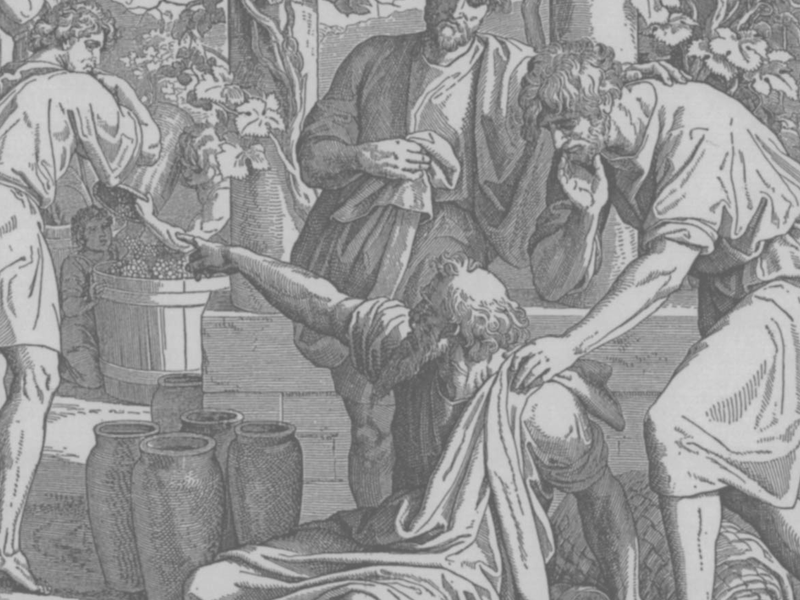
The Sin of Ham and the Curse of Canaan, Part 3 (An Exposition of Genesis 9:20-27)

The Righteousness of Shem and Japheth As noted above, the action of Shem and Japheth was purely symbolic. They did not need to cover Noah with a garment, for he was already covered by the tent. Their action was a symbolic affirmation of Noah’s authority, a symbolic rejection of Ham’s…

by James B. JordanAugust 4, 1997

Showing page 254 of 309

See all

Showing page 39 of 43

See all
History

Counter-culture and post-modern

Kumar notes that the 1960s counter-culture set itself against everything in modernism: “Pop art and pop music, the ‘new wave’ in cinema and the ‘new novel’ in literature, thne elision of the boundaries between ‘art’ and ‘life,’ the cultivation of sensibility through sex and drugs rather than aesthetic contemplation of…

February 24, 2006
History

Early McLaren?

In a 1965 essay, Leslie Fiedler celebrated the new movements of the 1960s as post-modern, post-Freudian, post-Humanist, post-Protestant, post-white, post-male.

February 24, 2006
History

Postmodernism/ity

Kumar suggests that there is no useful distinction to be made between postmodernity as a socio-political concept and postmodernism as a cultural concept. All the instincts of postmodernists are against such a differentiation of spheres. For postmodernists, it is no longer useful to distinguish subsystems within the social world -…

February 24, 2006
History

Two modernisms

Kumar defines modernism as an intellectual, cultural and artistic revolt against modernity. Yet modernism itself, especially as expressed in architecture, was complex and racked with internal contradictions: “It could denounce the ‘inauthentic’ present in the name of the future, as in Futurism and Constructivism; and it could with equal force…

February 24, 2006
History

Two modernities?

At least two: The modernity of science and technology, the factory system and city planning, of bureacracy and management. And on the other hand the modernity of sensibility, literature, hedonism, the lust for ever-new experience. On the one hand, Industrialization; on the other, the Romanticism that challenged it. On the…

February 24, 2006
History

Liquid modernity

“Constant revolutionizing of production, uninterrupted disturbance of all social conditions, everlasting uncertainty and agitation . . . All fixed, fast-frozen relationships . . . are swept away, all new-formed ones become antiquated before they can ossify.” Zygmunt Bauman? No: Marx and Engels, in the Communist Manifesto .

February 24, 2006

Showing page 1877 of 2212

Browse by Category

In Medias Res

Your weekly digest for all things Theopolis.

Donate

Theopolis is nearly 100% donor-supported. Consider joining us on our mission.