Theopolis Logo

Writing

Explore our collection of theological essays, biblical studies, and reflections on faith and culture.

See all
alfons-morales-ylswjsy7stw-unsplash-1
Biblical Horizons

Fun Reading

The name of Harry Turtledove is well known to readers of fantasy and science fiction. Turtledove is an historian, and most of what he writes is in the "alternative history" genre. A fine collection of short stories, available in paperback, is his Agent of Byzantium . These stories are set…

by James B. JordanAugust 28, 1996

paul-bill-u2tjtlje4z0-unsplash
Biblical Horizons

Concerning Unicorns

In answer to a question, the following about the unicorn, a supposed "New Age" symbol: The unicorn, or monoceros (one-horn), was known around the ancient world. Some scholars believe it may have been the one-horned goat that is still bred today. Others think it may have originated in tales of…

by James B. JordanAugust 28, 1996

tim-wildsmith-j6jv-mkdzqs-unsplash
Esther

Esther: Historical & Chronological Comments (VI)

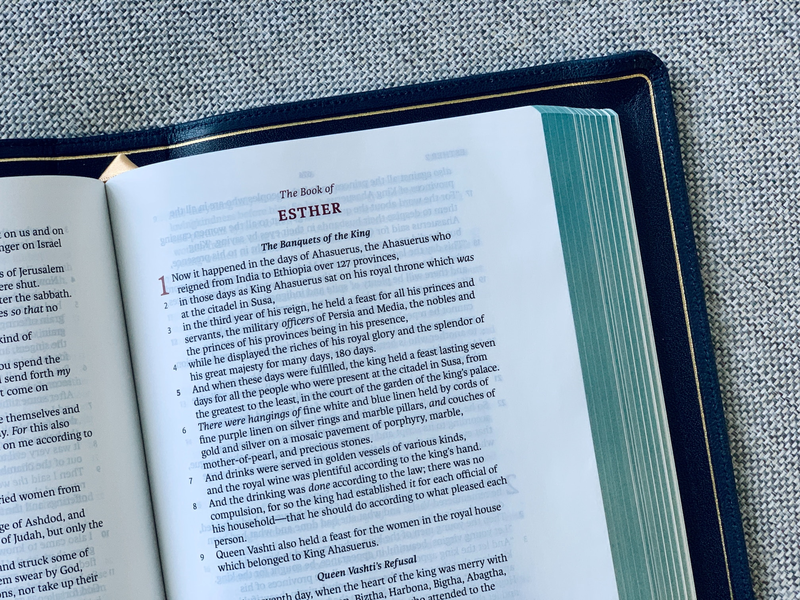
3. A Brief Survey of Esther (continued from the previous issue) Haman told the king that "a certain people" were rebellious against him, and that Haman wanted to rid the king of their noxious presence. The king agreed, and the two sat down to a feast. This is the third…

by James B. JordanAugust 28, 1996
sacre-bleu-r__kixb0i5m-unsplash
Biblical Horizons

Concerning Halloween

It has become routine in October for some Christian schools to send out letters warning parents about the evils of Halloween, and it has become equally routine for me to be asked questions about this matter. "Halloween" is simply a contraction for All Hallows’ Eve. The word "hallow" means "saint,"…

by James B. JordanAugust 28, 1996
tim-wildsmith-j6jv-mkdzqs-unsplash
Esther

Esther: Historical & Chronological Comments (V)

2. The Setting of the Book of Esther (continued from previous issue) Astyages E. W. Faulstich presents his arguments in his book History, Harmony, The Exile & Return . 1 To understand it, we have to have some background. The Assyrians ruled the near east. Median king Cyaxeres decided to…

by James B. JordanJuly 28, 1996
516976ldsdl
Revelation

Jephthah’s Daughter

In my commentary on Judges, I demonstrated that Jephthah in his Spirit-led vow intended to offer to Yahweh the first person who greeted him from the doors of his house after the battle. Since it was a custom for the young women to come out dancing to greet the returning…

by James B. JordanJune 28, 1996

Showing page 264 of 309

See all

Showing page 39 of 43

See all

Times

Choon-Leong Seow has some helpful comments about the “time for this, time for that” poem in Ecclesiastes 3. He points out that the thrust of the section is about God’s control of times and portions. As evidence, he notes that the word “season” us normally used “of predetermined or appointed…

January 7, 2006
Philosophy

Objectivity and incarnation

In his early work on Husserl’s treatise on the origins of geometry, Derrida highlights the critical insight that the objectivity and universality of geometric axioms depends, paradoxically, on their embodiment in writing. On the one hand, geometry is “there for ‘everyone.’” Yet, “how does geometrical ideality (just like that of…

January 7, 2006
Philosophy

The Hebraism of Postmodernism

Postmodernism, as I’ve indicated in previous posts, is many things, some of which are quite inimical to Christian faith. But in important respects, postmodernism - especially the thought of Derrida - is a Hebraic protest against Hellenized philosophy. In his fine recent book on Derrida, James KA Smith suggests that…

January 7, 2006
History

Paradox of Community

Bauman suggests that postmodernity, which is the “age of contingency fur sich,” is also the age of community. Yet, the communities that are possible within postmodern culture are inherently unstable; they are “clouds of communities”: “Such communities will never be anything like Tonnies’s cosy and unreflective (cosy because unreflective) homes…

January 6, 2006
Philosophy

Skepticism

The arguments in favor of skepticism were summarized by Aenesidemus in the first century B.C. in his Pyrrhonian Principles . Aenesidemus brought together the arguments under “ten modes” or “ten tropes,” helpfully summarized at http://plato.stanford.edu/entries/skepticism-ancient/#LPA as they were stated by Sextus Empricus. The ten modes are reproduced below. (Mates refers…

January 6, 2006

Quenching Spirit

Reflecting further on the pastoral applications of Solomon’s phrase “shepherding wind”: Every believer is born of the Spirit, and blows where he wills, and a pastor is in the business of shepherding wind. In this context, “quenching the Spirit” might refer to poor shepherding that tries to suppress the wind.…

January 6, 2006

Showing page 1902 of 2212

Browse by Category

In Medias Res

Your weekly digest for all things Theopolis.

Donate

Theopolis is nearly 100% donor-supported. Consider joining us on our mission.