Theopolis Logo

Writing

Explore our collection of theological essays, biblical studies, and reflections on faith and culture.

See all
tanner-mardis-xuxghzhibn4-unsplash-1-2
Biblical Studies

Tweets-turned-Notes on the Bible’s Chronology

Summary In what follows, I will consider the “year-stamps” employed in Scripture, i.e., statements of the form, “Such-and-such an event took place in the Xth year of Y.” In the process, I will suggest some ways in which the Biblical narrative might relate to events in the extra-Biblical world, though…

by James BejonJuly 16, 2019
durer-prodigal-son-2
Luke

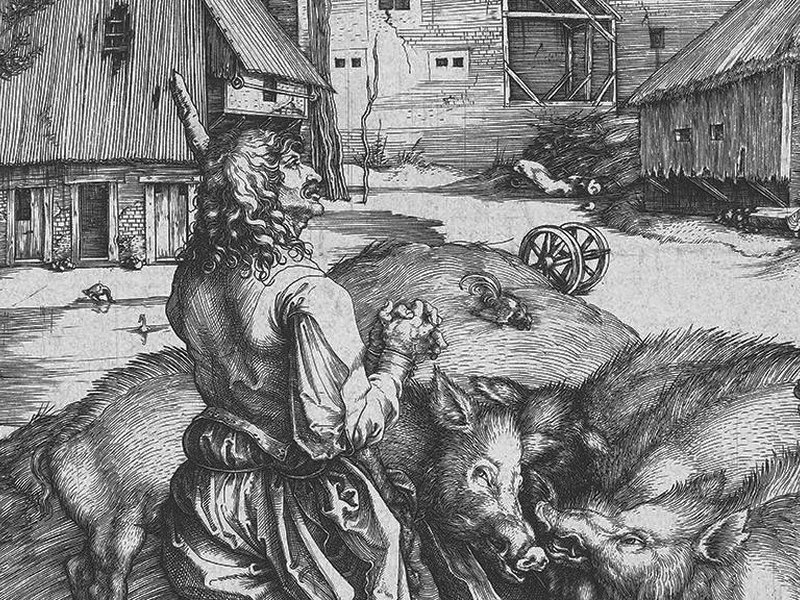
Perspectives on the Prodigal, (Part 2)

In the first essay on the parable of the Prodigal Son, I suggested that the problems commentators and others encounter in interpreting Jesus three-part parable are not accidental. These are not just problems in our ignorance of cultural background. They are intentional features of the stories —stories designed to poke…

by Ralph Allan SmithJuly 11, 2019
durer-prodigal-son-2
Luke

Perspectives on the Prodigal, (Part 1)

The story of the Prodigal Son is perhaps the most well-known story in the Bible. As others have observed, it may also be one of the most misunderstood. In two short essays, I will point out features of this story that are commonly neglected, aspects of Jesus’ parable that might…

by Ralph Allan SmithJuly 9, 2019
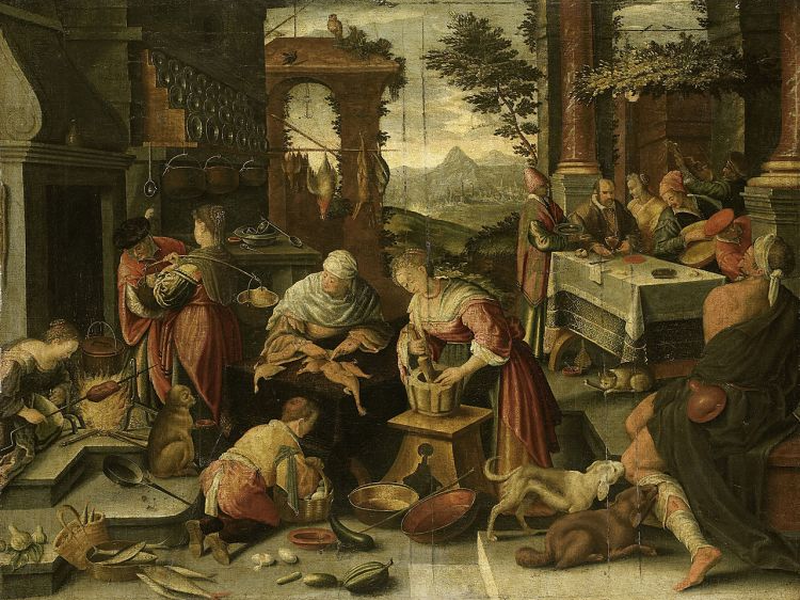
de-rijke-man-en-de-arme-lazarus-by-jacopo-da-ponte-16th-century
Luke

Lazarus and the Rich Man

The parable of Lazarus and the nameless rich man is not an independent story. It is part of a long context that begins in Luke 15:1, where Jesus is eating with tax collectors and sinners and the scribes and Pharisees grumble. In response to their hardheartedness, Jesus tells a three-part…

by Ralph Allan SmithJuly 4, 2019
aaron-burden-uynrnfdkjwg-unsplash
Luke

Everybody has Dropsy - Luke 14:1-24

The Bible is written so that even when a reader cannot pick up on what might be deeper or more detailed aspects of a text, there is virtually always a message to be heard. In the ancient world, where the “reader” of Scripture would likely be a church official facing…

by Ralph Allan SmithJuly 2, 2019
communion
Biblical Theology

Fruit Trees and Grain Plants

The distinction between garden (or vineyard) and field begins in Genesis 2. This relates to the ordering of the formless world. Plants of the field are contrasted with the garden planted by God in Genesis 2:5&8. Later on, under the Old Covenant the Israelites will be required to keep their…

by James B. JordanJune 27, 2019

Showing page 77 of 309

See all

Showing page 39 of 43

See all

Times

Choon-Leong Seow has some helpful comments about the “time for this, time for that” poem in Ecclesiastes 3. He points out that the thrust of the section is about God’s control of times and portions. As evidence, he notes that the word “season” us normally used “of predetermined or appointed…

January 7, 2006
Philosophy

Objectivity and incarnation

In his early work on Husserl’s treatise on the origins of geometry, Derrida highlights the critical insight that the objectivity and universality of geometric axioms depends, paradoxically, on their embodiment in writing. On the one hand, geometry is “there for ‘everyone.’” Yet, “how does geometrical ideality (just like that of…

January 7, 2006
Philosophy

The Hebraism of Postmodernism

Postmodernism, as I’ve indicated in previous posts, is many things, some of which are quite inimical to Christian faith. But in important respects, postmodernism - especially the thought of Derrida - is a Hebraic protest against Hellenized philosophy. In his fine recent book on Derrida, James KA Smith suggests that…

January 7, 2006
History

Paradox of Community

Bauman suggests that postmodernity, which is the “age of contingency fur sich,” is also the age of community. Yet, the communities that are possible within postmodern culture are inherently unstable; they are “clouds of communities”: “Such communities will never be anything like Tonnies’s cosy and unreflective (cosy because unreflective) homes…

January 6, 2006
Philosophy

Skepticism

The arguments in favor of skepticism were summarized by Aenesidemus in the first century B.C. in his Pyrrhonian Principles . Aenesidemus brought together the arguments under “ten modes” or “ten tropes,” helpfully summarized at http://plato.stanford.edu/entries/skepticism-ancient/#LPA as they were stated by Sextus Empricus. The ten modes are reproduced below. (Mates refers…

January 6, 2006

Quenching Spirit

Reflecting further on the pastoral applications of Solomon’s phrase “shepherding wind”: Every believer is born of the Spirit, and blows where he wills, and a pastor is in the business of shepherding wind. In this context, “quenching the Spirit” might refer to poor shepherding that tries to suppress the wind.…

January 6, 2006

Showing page 1902 of 2212

Browse by Category

In Medias Res

Your weekly digest for all things Theopolis.

Donate

Theopolis is nearly 100% donor-supported. Consider joining us on our mission.