Theopolis Logo

Writing

Explore our collection of theological essays, biblical studies, and reflections on faith and culture.

See all
31-03-0213
Hermeneutics

Apocalyptic Eyes

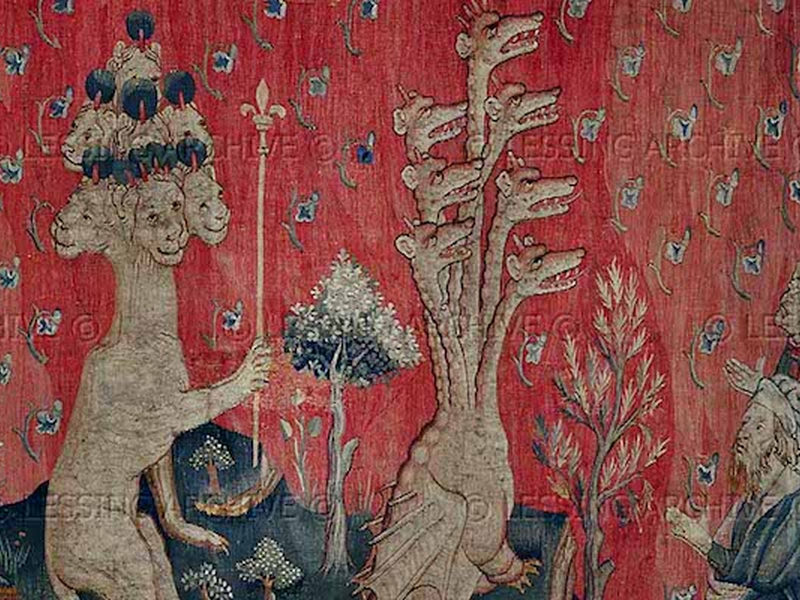
Flying scrolls. Red horses. Beasts coming out of the sea. Winged women. The list goes on. Apocalyptic literature in the Bible is like a cross between science fiction and Marvel comics. And the Bible has a fair bit of this sort of thing. Daniel sees visions in Babylon, Zechariah sees…

by Toby SumpterNovember 4, 2014

bhm-skyline-2
Theopolis News

New Name, New Look

Trinity House Institute has taken a new name, the Theopolis Institute. This striking new name expresses our unique vision and mission and captures the unified purpose behind all our specific programs and activities. We still have Bible, liturgy, and culture in our tagline. We still offer the same courses on…

by TheopolisNovember 4, 2014
istock_000012860926small
Atonement

Not Fearing the Devil

Adam Kotsko offers a socio-political variation on the Christus Victor atonement theory in his 2010 study, The Politics of Redemption: The Social Logic of Salvation . He does this by explaining "the devil" in terms of the Hegelian concept of "objective spirit," Geist . As Kotsko puts it, Geist "refers…

by Peter LeithartOctober 13, 2014
jez-timms-8muutamcwu4-unsplash
Leviticus

The Meaning of Sacrifice

Two factors keep Nahtali Meshel from discussing the meaning of sacrifice until late in his The "Grammar" of Sacrifice . The first has to do with the texts he draws from: "P says little about the meaning of its rituals" (174). The other has to do with the grammatical theory…

by Peter LeithartOctober 8, 2014
jez-timms-8muutamcwu4-unsplash
Leviticus

Praxemics

Chapter 5 of Naphtali Meshel's The "Grammar" of Sacrifice focuses on "praxemics," the physical actions of sacrificial ritual. Praxemes are constituted by six elements: an "atomact," an elementary physical act or gesture; an actor; an object that is acted up; a target for the action and often for the object…

by Peter LeithartOctober 6, 2014
markus-winkler-aid-xyrtlec-unsplash
Leviticus

Jugation and Hierarchy

Two chapters of Naphtali Meshel’s The “Grammar” of Sacrifice cover what he calls “jugation” and “hierarchies.” The first involves the addition of other materials to an animal offering. Jugates include wine, cereal, and oil that are added to the animals (zoemes) that are offered in sacrifice. Some jugates are coordinated…

by Peter LeithartOctober 1, 2014

Showing page 167 of 309

See all

Showing page 39 of 43

See all

Solomon’s imagination

Iain Provan doubts that Solomon wrote Ecclesiastes . One of the “striking” bits of evidence is “that many of the later passages in Ecclesiastes appear to be written from a non-Solomonic point of view (i.e., from the perspective of the subject rather than the ruler, e.g., 5:8-9; 8:1-9).” It’s a…

December 31, 2005

Vapor and Wind

More thoughts on Ecclesiastes, stealing, as always, from James Jordan . The image of “shepherding wind” has a particular application to the king, who is the shepherd of flock of Israel. Solomon recognizes that ruling a kingdom is like trying to shepherd wind, which is of course impossible for human…

December 31, 2005

Remnant and reunion

Some additional thoughts about the role of the “remnant” in Israel’s history, which supercede earlier posts on the subject. 1) The word “remnant” in the OT normally refers to the whole of Israel that survives a judgment, rather than to some sub-division of Israel that remains faithful during a period…

December 30, 2005
History

Christopher Dawson and the New Age

Christopher Dawson, who died in 1970, was one of the leading historians of the twentieth century. A devout Roman Catholic, hededicated his career, and some 25 books, to understanding andexplaining history, particularly Western history, from aChristian perspective. One little book, Christianity and the New Age, provides a glimpse of thewisdom…

December 30, 2005
Philosophy

What I Think of Postmodernism

As if anyone cares, here are some unfinished and amateurish comments on “what I think of postmodernism.” 1) First, it is helpful to distinguish, as many writers do, between postmodernism and postmodernity. The latter is a cultural/political mood or condition, referring to movements in architecture, film, and other arts that…

December 30, 2005
Theology

Foundationalism and Inerrancy

Somewhere in his blog discussion of Brian McLaren’s Generous Orthodoxy , Doug Wilson indicated that McLaren considers inerrancy a sell-out to modernist foundationalism. To support this, Doug pointed me to this quotation from John Franke’s foreword to McLaren’s book: “In the nineteenth and twentieth centuries, the foundationalist impulse produced a…

December 30, 2005

Showing page 1906 of 2212

Browse by Category

In Medias Res

Your weekly digest for all things Theopolis.

Donate

Theopolis is nearly 100% donor-supported. Consider joining us on our mission.