
Theopolis Logo

Writing

Explore our collection of theological essays, biblical studies, and reflections on faith and culture.

See all
giammarco-zeh-ljawhtg-unsplash
Biblical Horizons

OPEN BOOK: Views and Reviews

Isaac E. Mozeson, The Word: The Dictionary that Reveals the Hebrew Sources of English (Northvale, NJ: Jacob Aaronson Inc., 1995), 310 pp. Reviewed by James B. Jordan. Once there was only one language in the world, the language God spoke to Adam. At the Tower of Babel, there came to…

by James B. JordanJune 28, 1996
tim-wildsmith-j6jv-mkdzqs-unsplash
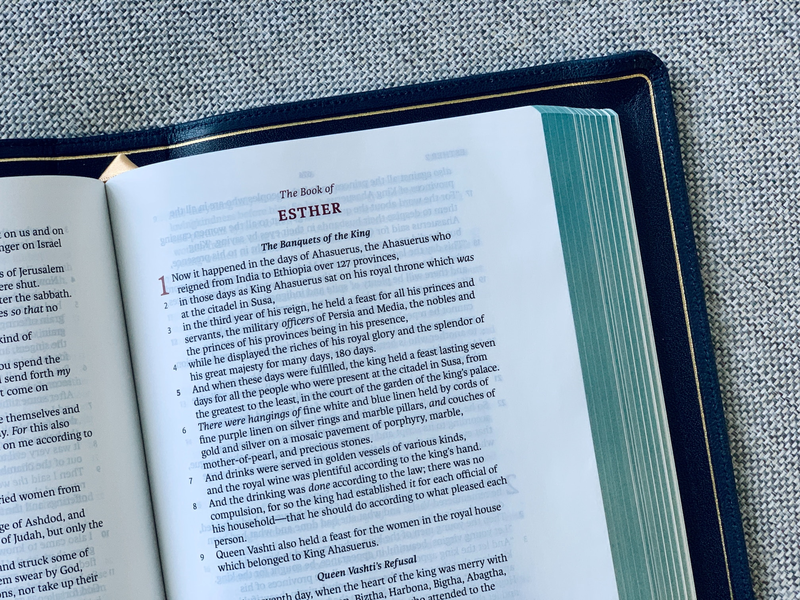
Esther

Esther: Historical & Chronological Comments (IV)

2. The Setting of the Book of Esther A. Xerxes (continued from previous issue) Ezra 6:14 says that the Jews finished building "according to the command of the God of Israel and the decree of Cyrus and Darius and Artaxerxes king of Persia." The problem with this verse is that…

by James B. JordanJune 28, 1996
ales-krivec-4mibe6zg5r0-unsplash
Acts

Jesus and Amalek

This essay goes with our previous study of the Amalek pattern back in Biblical Horizons No. 2. Since many do not have this essay, entitled "The Battle of Gog and Magog," let me cite the relevant paragraphs: Note in Genesis 12-15 that Abram moves into the land after escaping Pharaoh…

by James B. JordanJune 28, 1996
aaron-burden-1ebsmyrau-s-unsplash
Proverbs

The Strange Woman

Proverbs 7:6-23 is one of several passages early in the Proverbs in which Solomon warns his son about the wiles and dangers of the "strange woman." It is certainly quite proper to take these as straightforward warnings against sexual sins, and these are certainly warnings that need to be impressed…

by Peter LeithartJune 27, 1996
jan-kahanek-g3o5ztrk2e4-unsplash
Biblical Studies

Some Observations

1. In Luke 4:20 we read that after Jesus finished reading from Isaiah, "the eyes of all in the synagogue were fixed upon Him." This is usually taken in a psychological sense: They were amazed at Jesus somehow. I suggest that, as always, a merely psychological reading is a modern…

by James B. JordanMay 28, 1996
tim-wildsmith-j6jv-mkdzqs-unsplash
Esther

Esther: Historical & Chronological Comments (III)

2. The Setting of the Book of Esther Up to now we have assumed what we must prove, that the king in Esther is Darius the Great. While Biblical chronologists have usually taken this position, commentators on the book of Esther have often taken others as the king. One view,…

by James B. JordanMay 28, 1996

Showing page 265 of 309

See all

Showing page 39 of 43

See all
History

Calvin’s Theocracy

Lindberg points out that “Calvin’s Protestant contemporaries did not view Geneva as a vengeful theocracy. Thousands of religious refugees flocked to Geneva from nearly every province in France, as well as from England, Scotland, Holland, Italy, Spain, Germany, Poland, and Bohemia. When they returned hom, they took Calvinism with them.”…

December 9, 2005
History

Monks and culture

Lindberg summarizes the important, if sometimes inadvertent, cultural contributions of monasticism: “Monastic culture was not limited to copying texts from the past, but also engaged in a variety of intellectual pursuits related to monastic life. These included maintaining a liturgical calendar; mathematics for managing estates; calculations for determining times of…

December 9, 2005
Theology

Typology of heresy

In his recent Brief History of Christianity , Carter Lindberg suggests that “orthodoxy is the language that preserves the promise character of the gospel, that salvation is received from God, not achieved by humans.” By contrast, “heresy is the language that in one way or another vitiates the promise of…

December 9, 2005

Eschatological Vindication

In his book on the work of Christ, Robert Letham has this neat summary of the relation of present to future justification: “faith has an eschatological side to it. Paul can say we are justified by faith (Rom. 5:1) but he can equally talk of our being saved in hope…

December 7, 2005
Literature

Shield of Aeneas

Philip Hardie argues that the shield of Aeneas in Virgil’s Aeneid makes significant use not only of the Homeric description of the shield of Achilles but of ancient allegorizations of Homer’s description: “The central feature of ancient exegesis is its insistence that the great circle of the Shield of Achilles,…

December 7, 2005
Philosophy

Aesthetics and counter-modern philosophy

Andrew Bowie’s *Aesthetics and subjectivity from Kant to Nietzsche* emphasizes the role of aesthetic theory in the development of post-Kantian notions of the subject. He points out that some philosophers challenged Cartesian and Kantian views by direct appeal to aesthetic experience: “these theories . . . regard the experience of…

December 6, 2005

Showing page 1915 of 2212

Browse by Category

In Medias Res

Your weekly digest for all things Theopolis.

Donate

Theopolis is nearly 100% donor-supported. Consider joining us on our mission.