Theopolis Logo

Writing

Explore our collection of theological essays, biblical studies, and reflections on faith and culture.

See all
tanner-mardis-xuxghzhibn4-unsplash-1-2
Biblical Studies

Tweets-turned-Notes on the Bible’s Chronology

Summary In what follows, I will consider the “year-stamps” employed in Scripture, i.e., statements of the form, “Such-and-such an event took place in the Xth year of Y.” In the process, I will suggest some ways in which the Biblical narrative might relate to events in the extra-Biblical world, though…

by James BejonJuly 16, 2019
durer-prodigal-son-2
Luke

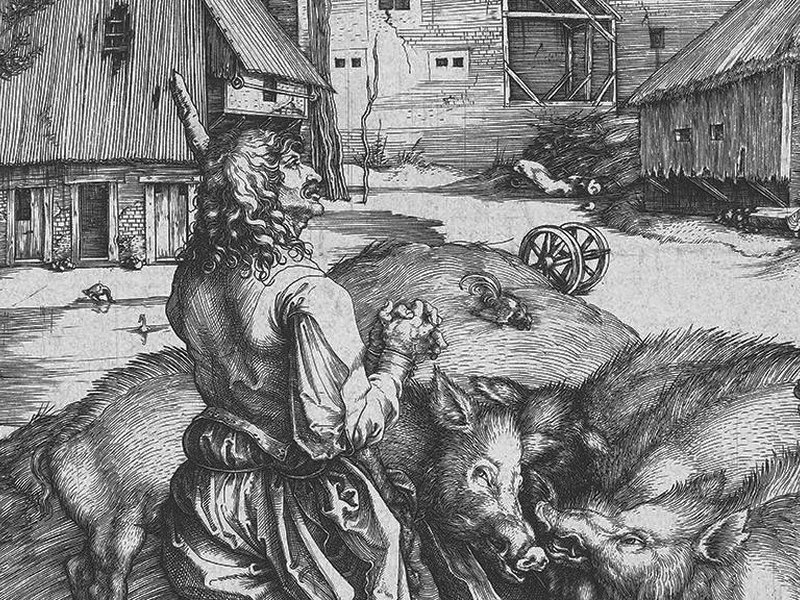
Perspectives on the Prodigal, (Part 2)

In the first essay on the parable of the Prodigal Son, I suggested that the problems commentators and others encounter in interpreting Jesus three-part parable are not accidental. These are not just problems in our ignorance of cultural background. They are intentional features of the stories —stories designed to poke…

by Ralph Allan SmithJuly 11, 2019
durer-prodigal-son-2
Luke

Perspectives on the Prodigal, (Part 1)

The story of the Prodigal Son is perhaps the most well-known story in the Bible. As others have observed, it may also be one of the most misunderstood. In two short essays, I will point out features of this story that are commonly neglected, aspects of Jesus’ parable that might…

by Ralph Allan SmithJuly 9, 2019
de-rijke-man-en-de-arme-lazarus-by-jacopo-da-ponte-16th-century
Luke

Lazarus and the Rich Man

The parable of Lazarus and the nameless rich man is not an independent story. It is part of a long context that begins in Luke 15:1, where Jesus is eating with tax collectors and sinners and the scribes and Pharisees grumble. In response to their hardheartedness, Jesus tells a three-part…

by Ralph Allan SmithJuly 4, 2019
aaron-burden-uynrnfdkjwg-unsplash
Luke

Everybody has Dropsy - Luke 14:1-24

The Bible is written so that even when a reader cannot pick up on what might be deeper or more detailed aspects of a text, there is virtually always a message to be heard. In the ancient world, where the “reader” of Scripture would likely be a church official facing…

by Ralph Allan SmithJuly 2, 2019
communion
Biblical Theology

Fruit Trees and Grain Plants

The distinction between garden (or vineyard) and field begins in Genesis 2. This relates to the ordering of the formless world. Plants of the field are contrasted with the garden planted by God in Genesis 2:5&8. Later on, under the Old Covenant the Israelites will be required to keep their…

by James B. JordanJune 27, 2019

Showing page 77 of 309

See all

Showing page 39 of 43

See all
Theology

Riches for the world

David Klinghoffer argues in his Why the Jews Rejeced Jesus that pagan Europeans would not have embraced Jesus if the Jews had not rejected Him: “If you value the great achievements of Western civilization and of American society, thank the Jews for their decision to cleave to their ancestral religion…

November 13, 2005

Nation of Rebels

A few quotations from Joseph Heath and Andrew Potter’s Nation of Rebels , which are all the more revealing because they come from men decidedly on the left of the spectrum (though, in their terminology, they belong not to the “ameliorative” rather than the utopian “transformative” left). “Consumerism always seems…

November 13, 2005

More on coffee

Marcus Rench of Cary, North Carolina, sent along the following quotations from H. E. Jacob’s Coffee: The Epic of a Commodity . Note that all these quotations are about coffee , not today’s expensive imitations - which will remain unmentioned - that allow people who dislike coffee to hang out…

November 11, 2005

Coffee

Jules Michelet said: “Coffee, the sober drink, the mighty nourishment of the brain, which unlike other spirits, heightens purity and lucidity; coffee, which clears the clouds of the imagination and their gloomy weight; which illuminates the reality of things suddenly with the flash of truth.”

November 11, 2005

Division and reunion

Some notes for a disputatio talk on church unity. Thanks to Rusty Reno for clarification at several points. It is evident in the text, and it is evident in church history, that there is good and bad union and good and bad division. 1-2 Kings explores the first of these…

November 10, 2005

Disfigured Israel

By my count, there are twelve disfigurements listed in Leviticus 21:18-20 that disqualify a priest from serving at the altar and in the tabernacle: blind, lame, slit, deformed, broken foot, broken hand, hunchback, dwarf, defect of eye, eczema, scabs, crushed testicles. The listed disfigurements point to a disfigured Israel, twelve…

November 10, 2005

Showing page 1926 of 2212

Browse by Category

In Medias Res

Your weekly digest for all things Theopolis.

Donate

Theopolis is nearly 100% donor-supported. Consider joining us on our mission.